Cassava Pelleting Machine


Product Introduction
What Is a Cassava Pelleting Machine
Capacity: 1-40 T/H
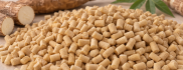
A cassava pelleting machine is a machine mainly used to produce animal feed pellets. It can take processed loose cassava raw materials through steam conditioning and roller extrusion. Finally, it cuts them into cassava pellets with a diameter range of 2-12mm and uniform length. Besides this main use, by changing the ring die and adjusting parameters, it can also produce cassava starch cat litter and biomass fuel pellets.
If you want to process large amounts of cassava raw materials, this tapioca pellet machine may help you gain more economic benefits.

Cassava Pelleting Machine Video
RICHI is committed to providing customers with industry-leading tapioca pellet mills. Driven by this vision, our equipment has been sold worldwide. The video below shows real applications of RICHI tapioca pellet machines in customer production lines. For more videos, please click to watch on YouTube.
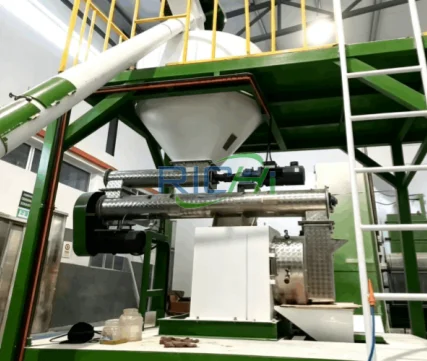
1–2 T/H Cassava Pelleting Machine in Malaysia

3–4 T/H Tapioca Pellet Machine in Uzbekistan
Raw Materials Suitable for Cassava Pelleting Machine
Different types of cassava raw materials have different compositions. Their starch and fiber contents also vary. Our cassava pelleting machine has strong adaptability. By adjusting parameters and configurations, it can process the following common cassava raw materials.
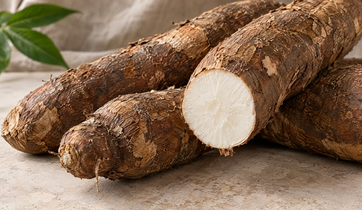
Fresh Cassava Roots
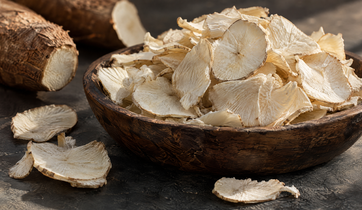
Tapioca Chips
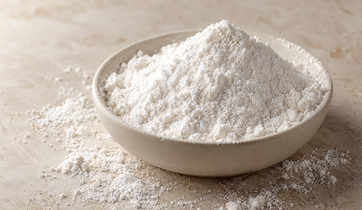
Tapioca Flour
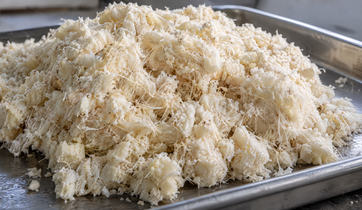
Cassava Residue
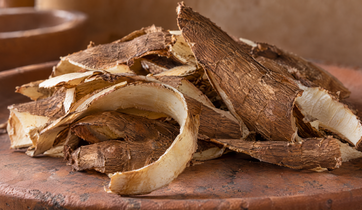
Cassava Peel
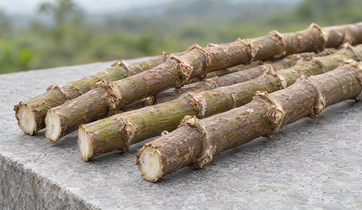
Cassava Stalks
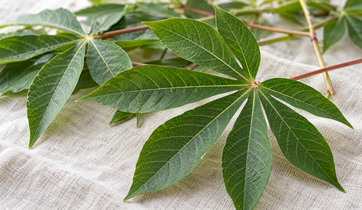
Cassava Leaves
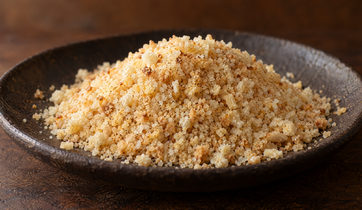
Garri Dregs
What Products Can a Cassava Pelleting Machine Make
The same cassava raw material does not necessarily make only one type of finished product. After extrusion and cutting by the cassava pelleting machine, cassava can be made into various pellets for diverse application scenarios.
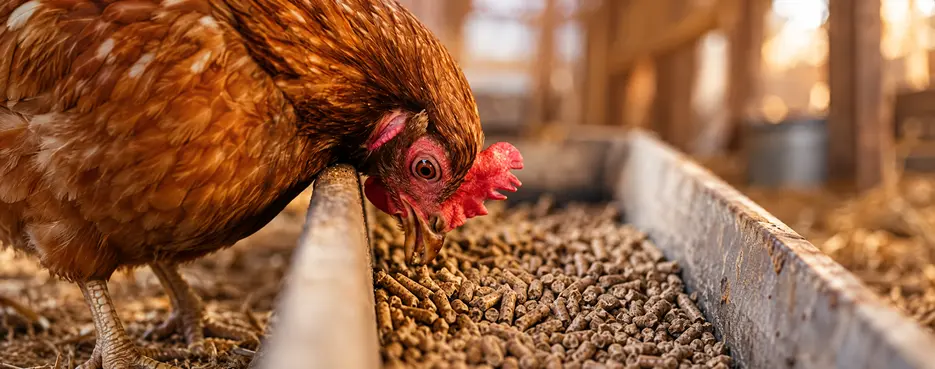
Poultry and Livestock Feed
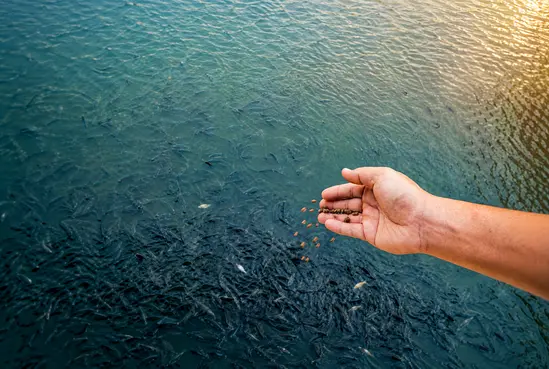
Aquatic Feed
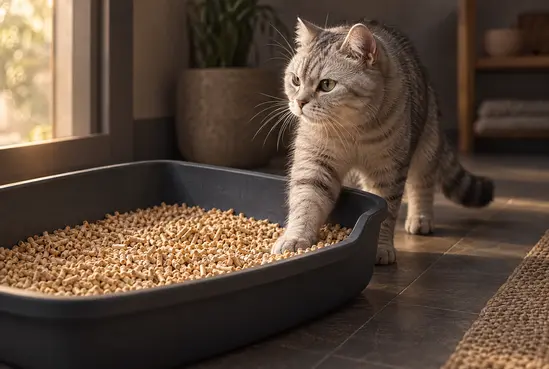
Cat Litter
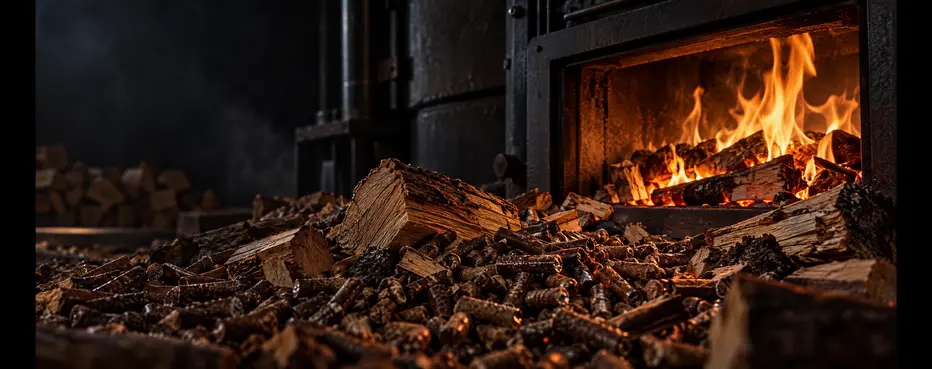
Biomass Fuel
Cassava Pelleting Machine Structure
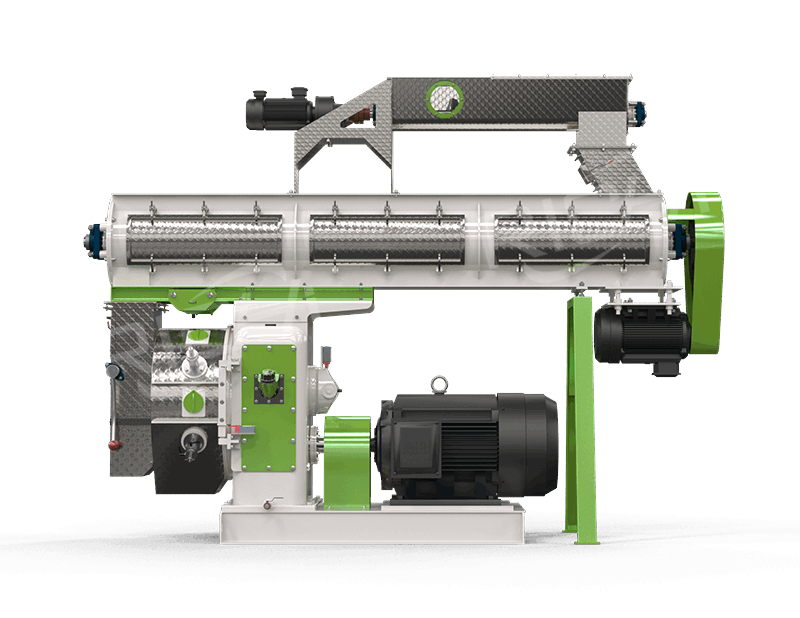
From the outside, the cassava pellet making machine looks like a unified whole. In detail, it mainly consists of several systems, such as feeding, conditioning, and pelleting. Related parts in these systems work together. They turn the cassava raw material into pellets.
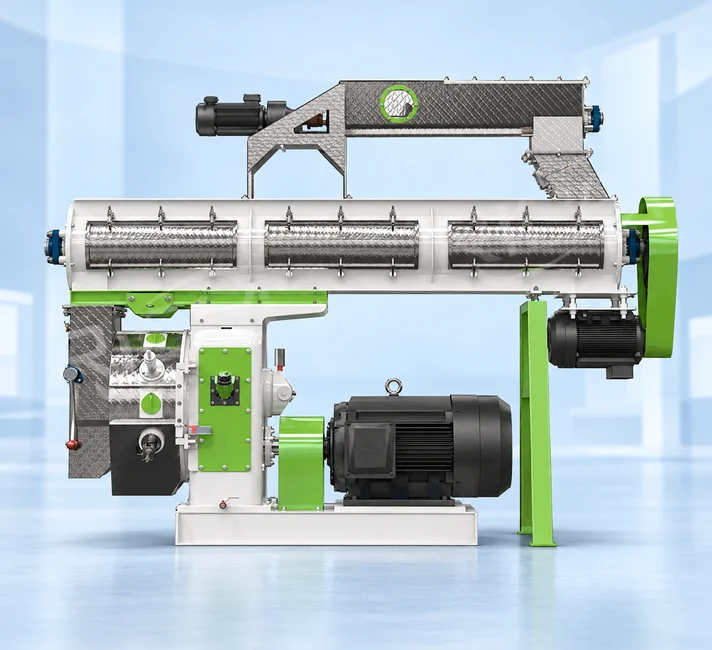
Feeding Port
This port is equipped with a variable-frequency feeding auger. It can feed material at a uniform speed and adjust the feeding speed. It also prevents cassava flour from bridging.
Conditioner
Steam is injected here to condition cassava flour. This helps the starch gelatinize and improves pellet forming.
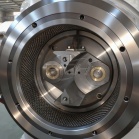
Pelleting Chamber
The conditioned material is squeezed by the pressure rollers and ring die here, extruded into long strips, and then cut into uniform cassava pellets by a cutter.
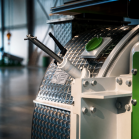
Adjusting Rod
The adjusting rod adjusts the distance between the ring die and the pressure roller. It is used to adapt to cassava raw materials under different pelleting formulas and to control pellet compactness.
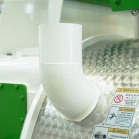
Exhaust Port
The cassava pelleting machine produces extra moisture during conditioning and extrusion. The exhaust port can discharge this moisture. This prevents the material from clumping and blocking the equipment.
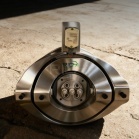
Safety Pin
This is an overload protection device. Once a hard object enters the tapioca pellet machine or the load exceeds the limit, it automatically shears off and forces the machine to stop.

Cassava Pelleting Machine Parameters
We have developed different models of cassava pelleting machines after careful research and refinement. They can fit various scales and working conditions. If you cannot decide, or the table below does not list the model you need, you can contact us for customization service.
| Model | SZLH250 | SZLH320 | SZLH350 | SZLH420 | SZLH508 | SZLH558 | SZLH678 | SZLH768 |
|---|---|---|---|---|---|---|---|---|
| Main Motor Power ( kW ) | 22 | 37 | 55 | 110 | 160 | 185 | 250 | 315 |
| Feeder Power ( kW ) | 1.1 | 1.5 | 1.5 | 1.5 | 1.5 | 1.5 | 1.5 | 2.2 |
| Modulator Power ( kW ) | 1.5 | 4 | 4 | 7.5 | 7.5 | 11 | 11 | 11 |
| Ring Die Inner Diameter ( mm ) | 250 | 320 | 350 | 420 | 508 | 558 | 673 | 762 |
| Finished Pellet Diameter ( mm ) | 2-12 | 2-12 | 2-12 | 2-12 | 2-12 | 2-12 | 2-12 | 2-12 |
| Production Volume ( T/H ) | 1.0-1.5 | 3-4 | 5-6 | 10-12 | 15-16 | 20-22 | 30-33 | 38-40 |
Note: The above production data is the output of the whole production line under rated working conditions. Actual output depends on raw materials and their moisture content. Please do not treat it as an absolute guarantee.
Cassava Pelleting Machines Global Case Studies
Our cassava pelleting machines have been exported to more than 140 countries and regions. During customer selection, we follow the principle of exclusivity. We recommend and customize an exclusive machine for each customer. This helps them maximize the value of their cassava pellet making machine.
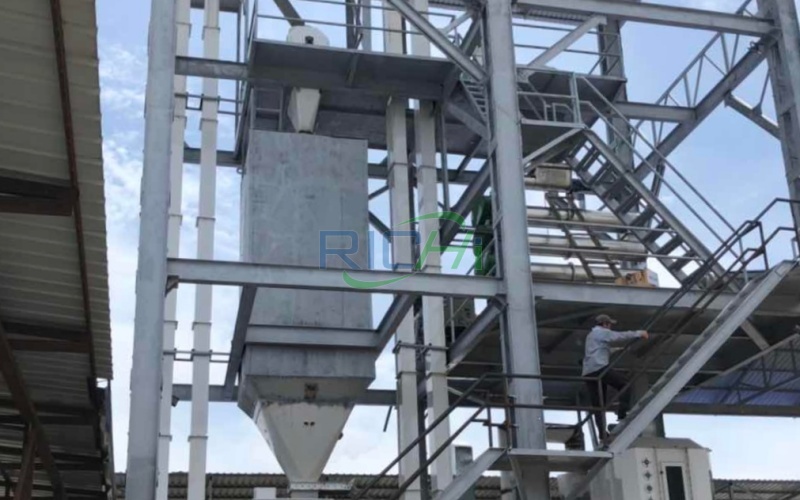
5 T/H Cassava Pelleting Machine in Thailand
Raw materials: cassava flour, cassava residue, and additives for fish and shrimp feed formulas.
Pellet diameter: 2.5mm
The customer is a large aquatic feed mill in Thailand. The local area has abundant cassava resources. The customer processes cassava into sinking aquatic feed for sale. To improve the water resistance time of the feed pellets, we added a multi-layer conditioner to this cassava pellet producing machine. This makes the cassava starch gelatinize to a higher degree.
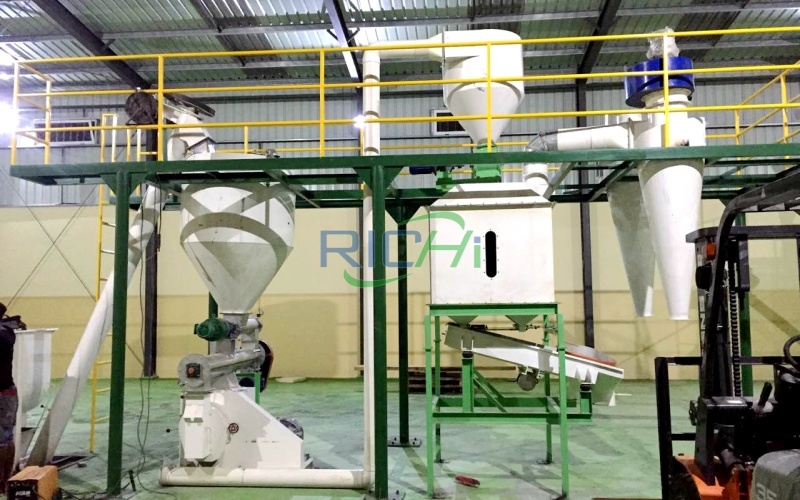
2 T/H Cassava Pellet Machine in Nigeria
Raw materials: cassava leaves, cassava residue, cassava peel, and hay.
Pellet diameter: 6mm
This is a livestock cooperative. The customer wanted to use cheap local cassava byproducts. They wanted to buy a tapioca residue pellet machine to make ruminant feed pellets for cattle and sheep. They required the machine to match local power conditions and have a low operating threshold. To help the customer process complex raw materials smoothly, we added a forced feeder to prevent equipment blockage.
3 T/H Tapioca Pellet Machine in Brazil
Raw materials: cassava chips, cassava flour, corn, and soybean meal.
Pellet diameter: 4mm and 5mm
This is an animal feed project. The customer uses cassava as the main raw material to produce feed pellets for broilers and pigs. They already had a complete production line, so they only needed a new cassava pellet machine. We helped the customer connect and debug the cassava pelleting machine with other equipment. The line was put into smooth production.
1 T/H Tapioca Pellet Mill in Australia
Raw materials: cassava starch and corn starch.
Pellet diameter: 2mm
The customer wanted to make flushable and biodegradable eco-friendly cat litter. They planned to sell it as a pet brand product. After buying a single tapioca pellet machine, they also added screening and packaging equipment. The pellets have stable shape and low dust. They are very suitable for cat owners who are prone to allergies.
1-2 T/H Cassava Pelleting Machine in Canada
Raw materials: cassava starch and baking soda deodorizing additives.
Pellet diameter: 3mm
The customer is a pet supplies brand store. They mainly do online cross-border e-commerce. They needed a cassava pellet equipment with adjustable capacity of 1-2 t/h. They wanted to make cat litter pellets with low dust, tight clumping, and water solubility. Our cassava pellet machine supports quick ring die replacement. It can adjust pellet specifications on demand. This meets the customer’s requirement for flexibility.
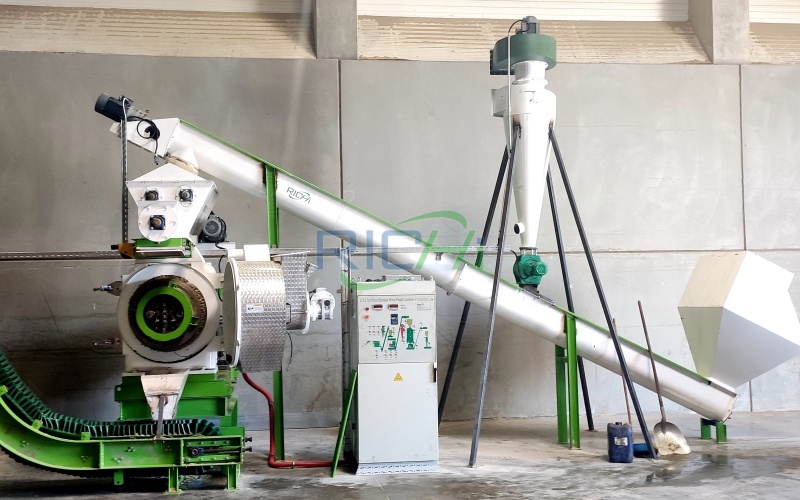
2 T/H Cassava Pellet Machine in Romania
Raw materials: cassava residue, cassava peel, and cassava processing scraps.
Pellet diameter: 6mm
The customer is a biomass energy service provider. They wanted to supply fuel pellets to heating boilers and small industrial heat sources. They decided to buy a tapioca pelleting machine to process purchased cassava byproducts. Based on the customer’s use, we simplified this cassava pellet making machine and removed the conditioning stage. This produces pellets with lower ash content and stable combustion.
RICHI Cassava Pelleting Machine Advantages
Our cassava pelleting machines are sold worldwide and bring economic benefits to many customers. This mainly comes from their own advantages.
Compared with ordinary cassava pellet machines on the market, our tapioca pellet machine has a specially designed conditioner. Its tube is thicker, and the overall unit is longer. This effectively increases the space and time for cassava conditioning. The material is cooked more thoroughly. The pellets also have better palatability.
Sufficient Conditioning
Key wear parts, such as the ring die and pressure roller, are made of wear-resistant materials. The blades in the conditioner are made of forged parts. They have stronger wear resistance and hardness. These features effectively extend the overall service life of the tapioca residue pellet machine.
Durable
This cassava pelletizer machine is equipped with a hydraulic quick-release cover. You can open the machine casing quickly without complex tools. This makes it easy to clean the machine chamber and replace the ring die and pressure rollers. It also has an automatic grease pump. The pump adds lubricating grease to the bearings at regular intervals. This saves the labor of frequent manual greasing and maintenance.
Easy to Repair
Our tapioca pellet machine supports pellet production with a diameter range of 2-12mm. One machine can be widely used to produce livestock and poultry feed, aquatic feed, cassava cat litter, and biomass fuel.
Highly Applicable

How to Make Cassava Pellets
If this is your first time working with cassava pelleting, you may wonder what steps and processes are needed to make high-quality cassava pellets. As a professional pelleting equipment supplier, we know the process and precautions for each stage. Below are some essential steps.
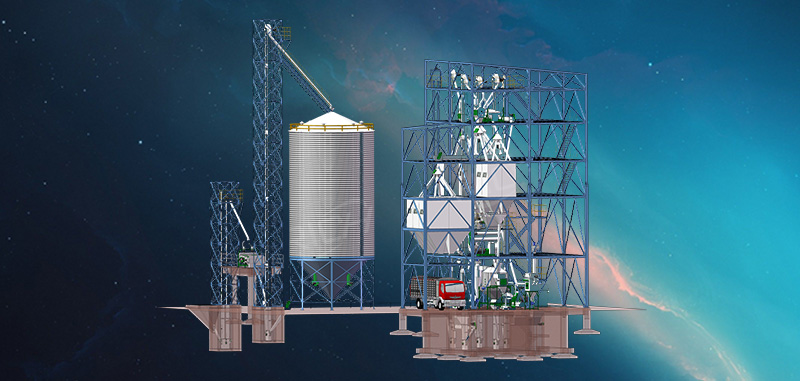
01.
Preprocessing
At the start of the cassava pellet production line, cleaning and crushing are essential. They ensure the cassava pellets are clean enough and the material size is suitable. This makes the pellets purer. If your raw material is cassava flour, you can skip the crushing step.
02.
Drying
If you use fresh cassava or moist cassava residue, the moisture content is high. If you pelletize it directly without treatment, there is a risk of blocking the cassava pelleting machine, damaging the die, and causing equipment downtime. Therefore, drying is essential. We recommend drying the raw material to 12%-15% moisture.
03.
Pelleting
The cassava pelletizer machine mentioned in this article mainly works in this step. The cassava raw material goes through conditioning, extrusion, and cutting. It finally forms smooth pellets with uniform length and diameter. Choosing a suitable model of cassava pellet making machine can avoid unnecessary energy waste.
04.
Cooling
The cooling section quickly lowers the temperature of pellets produced by the tapioca pellet machine to room temperature. The benefit is that the cassava pellets harden after cooling and have a stronger structure. During later storage, they will not mold or break because of high temperature and soft texture.
05.
Screening
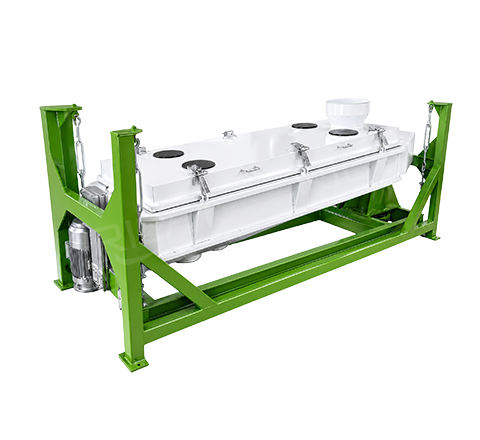
If you have high requirements for pellet appearance and quality, this step can meet your needs. In the screening section, oversized pellets, undersized pellets, and fines are filtered out. These are troublesome to pick out by hand. Only finished pellets with uniform size are left.
06.
Packaging
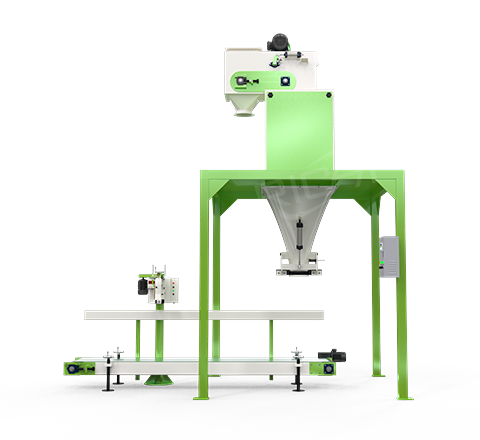
This is the last step in the whole production process. You can use packaging equipment to weigh and pack the finished cassava pellets uniformly. The higher the automation level of the packaging equipment, the lower the labor cost and the higher the packaging efficiency. After packaging, the pellets can be stored or transported for sale directly.
Auxiliary Equipment for Making Cassava Pellets
As mentioned above, making cassava pellets needs more than pelleting. In a complete cassava pellet production line, you need a series of auxiliary equipment in addition to the key cassava pelleting machine. If you lack any of the following equipment, contact us for customized service.
Raw Material Cleaning Machine
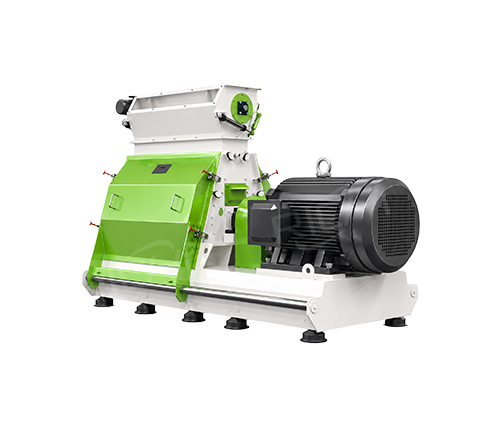
Cassava Grinder
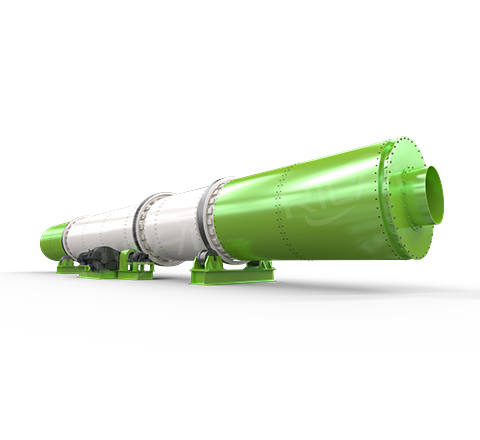
Cassava Dryer
Cassava Pellet Cooler

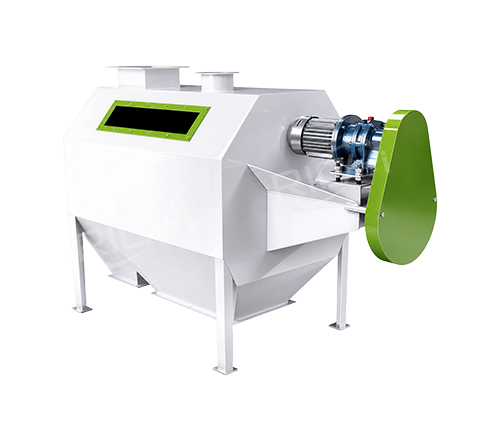
Cassava Pellet Screening Machine
Cassava Pellet Packaging Scale
FAQ
Below are some common customer questions and answers. You may have the same questions. The following content may help you. If you have other questions, welcome to contact us for free answers.
What are the benefits of using cassava to make pellets?
→
Cassava has a high starch content. It is easy to form pellets with dense and firm texture. Cassava feed is rich in energy and has strong binding properties. For aquatic feed, the pellets also have high water resistance. If cassava is processed into biomass fuel pellets, it has low ash content and burns cleanly.
Compared with raw materials such as corn and sawdust, cassava is abundant in Southeast Asia and Africa. It has a significant cost advantage.
Do all cassava raw materials need to be crushed first?
→
If your raw materials include blocky or stalky cassava, you must crush them. Cassava flour does not need crushing. The specific crushing fineness depends on the finished product you want to make. Generally, making aquatic feed and cat litter pellets requires higher crushing fineness for cassava.
For relatively moist cassava raw materials, can steam conditioning in a cassava pelleting machine be used instead of drying?
→
No. The conditioner in a cassava pellet mill machine only adds moisture and matures the cassava raw material in a short time. It cannot remove a large amount of free water from moist raw materials. If the cassava moisture content exceeds the standard, you must first use a dryer.
I already have other equipment and only want to buy a cassava pellet machine. Can it be used with my existing equipment?
→
We can provide customized service. We can make the cassava pellet making machine work with your existing equipment. Before you order, we will check the capacity of the whole production line, conveyor interface dimensions, raw material type, and finished product use with you. We will then make targeted adjustments to the interface, frame, and parameters of the cassava pelleting machine.
What is the warranty period for a tapioca pellet machine?
→
After you buy our cassava pellet press, you enjoy a 12-month warranty period. During this period, if the equipment has a fault (except human factors), you can contact us directly to apply for free repair service. Wear parts such as ring dies, pressure rollers, and cutters are not covered by the warranty. However, we have sufficient original spare parts for you to purchase again.

Why Choose RICHI
Our tapioca residue pellet machines have been sold to more than 140 countries and regions around the world. They have received wide praise from customers. This feedback comes from RICHI’s long-term project experience and a series of its own advantages.
Project Experience
30+
Years

Countries and Regions Served
140+

Projects Delivered
2000+

Factory Area
100,000+
㎡

About Us
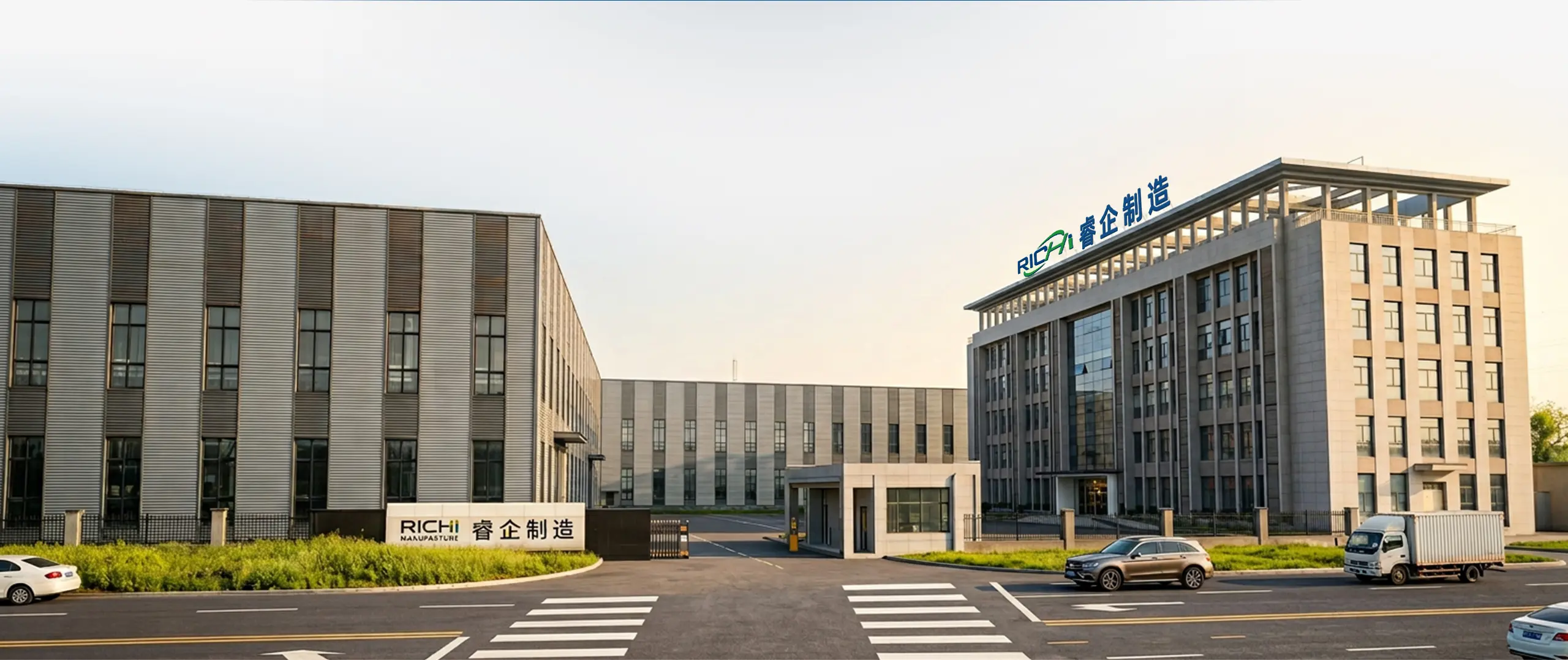
Henan RICHI Machinery Co., Ltd., established in 1995, primarily focuses on the research and development and manufacturing of feed machinery, biomass pelleting equipment, organic fertilizer pelleting equipment, and complete pelleting production lines. After more than 30 years of development, RICHI has become a professional pelleting machinery manufacturer. Our products are exported to over 140 countries and regions worldwide, earning the trust of customers both domestically and internationally.
Qualification Advantages
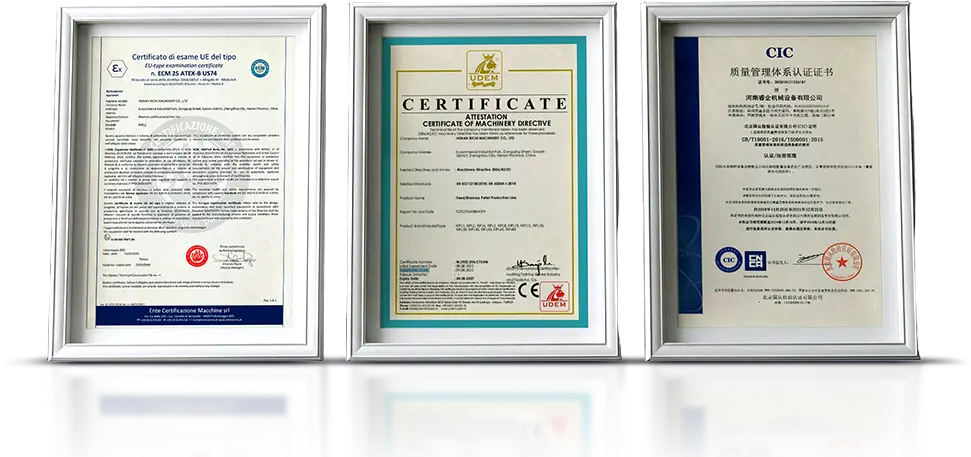
RICHI boasts numerous international authoritative certifications and patents, including ISO9001, CE, SGS, and TÜV. This means that the equipment you purchase can smoothly pass through customs and quality standards in various countries, with no customs clearance risks and compliant delivery. Choosing RICHI means choosing a guarantee of smooth global access and worry-free production.