Counterflow Pellet Cooler

What Is a Counterflow Pellet Cooler
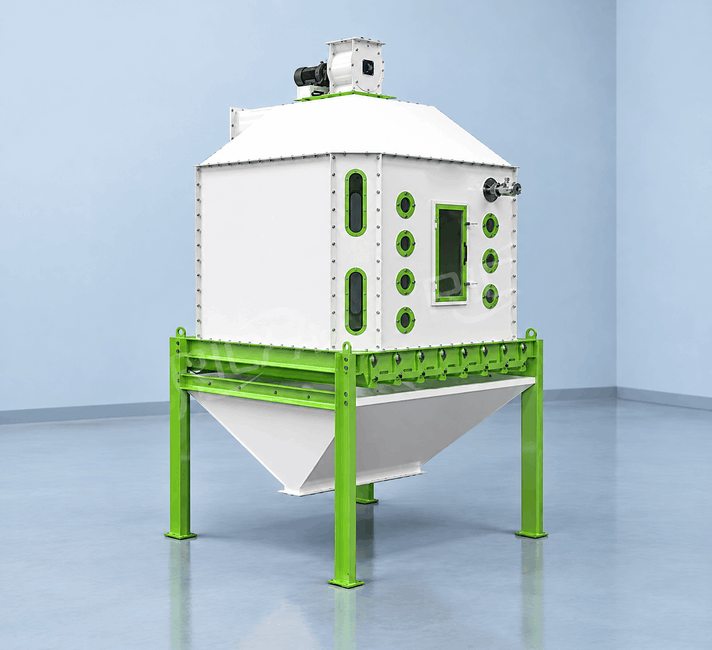
The counterflow pellet cooler is a machine specially used to cool pellets and reduce pellet temperature and moisture. It is mainly installed after the pelletizing process in a pellet production line. Its main working principle is that pellets move downward while cold air moves upward, forming counterflow heat exchange. The horizontal pellet cooler has high cooling efficiency and uniform cooling. It can effectively reduce pellet breakage and improve pellet storage performance and transportation stability.
1-40T/H
Production Capacity

Counterflow Pellet Cooler Composition
A reasonable design structure is key to the smooth operation of the pellet cooling machine. Its different components work together to achieve the best cooling effect on pellets.
Feeding Device
It is located at the top of the counterflow pellet cooler. It is used to feed high-temperature pellets evenly into the cooling chamber. This allows the pellets to form a stable material layer inside.
Cooling Chamber
This is the key working area of the horizontal pellet cooler. It is responsible for heat and moisture exchange between pellets and cold air. It uses an octagonal structure to reduce cooling dead zones.
Material Level Control Device
Its function is to monitor and adjust the height of pellets in the cooling chamber. It prevents too much material from increasing ventilation resistance. It also prevents too little material from reducing the cooling effect.
Discharge Device
It is installed at the bottom of the pellet cooling machine. It can discharge cooled pellets continuously and evenly. The residence time of pellets in the cooling chamber can be controlled by adjusting the discharge speed.
Air Intake System
This is the key part for achieving counterflow cooling. The air intake system can introduce external cold air into the cooling chamber. It lets the cold air pass through the high-temperature pellets from bottom to top, carrying away heat and some moisture.
Exhaust and Dust Removal System
The exhaust and dust removal system is used to extract the dust-laden airflow generated during cooling. The airflow is purified by cyclone dust collectors, pulse dust collectors, and other equipment. The dust is collected, and the purified air is discharged.

Counterflow Pellet Cooler Parameters
For different pellet characteristics and cooling needs, RICHI has designed and developed two series of counterflow pellet coolers. There is no obvious difference in their parameters. However, they are suitable for completely different pellets. You can contact us and tell us your pellet situation. We will recommend the most suitable model for you.
Counterflow Pellet Cooler Cases
RICHI counterflow pellet coolers have been delivered to thousands of production projects of all sizes worldwide. They cover feed pellet and biomass pellet production lines. The following cases will show you the on-site delivery results of the pellet cooling machine.

1-2 T/H Feed Pellet Cooler in Burundi
This is an animal feed production line. The customer uses it to evenly cool livestock and poultry feed pellets, reduce moisture content, and keep the breakage rate well controlled.

2 T/H Feed Pellet Cooler in Cape Verde
In the feed production line, pellets cooled by the counterflow pellet cooler alleviate the problem of pellets becoming moldy in high-temperature and humid environments.

5-6 T/H Feed Pellet Cooler in Russia
The customer mainly produces fish feed. Because the feed pellets are small and easy to break, the customer chose a flap-type horizontal pellet cooler. It discharges smoothly and effectively reduces powder loss.

2-2.5 T/H Wood Pellet Cooler in Romania
This is a wood pellet production line. We configured a flap-type wood pellet cooler for the customer. It addresses the loose and brittle problem of wood chip pellets and ensures pellet quality.

5 T/H Pellet Cooler for Sale in Kazakhstan
The customer purchased a sunflower meal production line. Sunflower meal pellets easily absorb moisture and clump. After using the horizontal pellet cooler, excess heat and moisture are effectively removed. The finished product is dry and suitable for local storage.
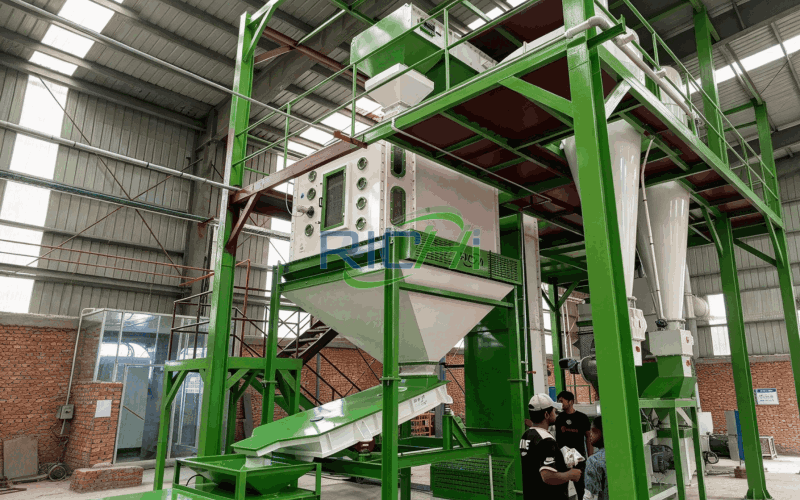
20 T/H Pellet Cooler for Sale in Bangladesh
This is a large wood pellet production project. The customer chose a large-size wood pellet cooler to match high capacity. The cooling effect is stable and reliable.

Counterflow Pellet Cooler Advantages
As one of the most commonly used pieces of auxiliary equipment, the RICHI pellet cooling machine relies on its unique advantages. It performs well in various production lines and gives customers a perfect pellet cooling experience.
The RICHI counterflow pellet cooler mainly uses counterflow heat exchange to cool pellets gradually. The temperature of the cooled finished product is no higher than room temperature plus 3°C to 5°C. It is equipped with a four-way adjustable distributor. This spreads pellets evenly and makes the cooling effect more uniform and stable.
Good Cooling Effect
Take the SKLF flap-type horizontal pellet cooler as an example. It uses a swing-type flap discharge mechanism controlled by a flexible hydraulic transmission system. The discharge action is gentler, and discharge is smoother. This can effectively reduce pellet breakage. The octagonal cooling box and rounded-corner hopper reduce material accumulation in dead corners. Cleaning is also more convenient.
Low Material Residue
The top and airlock feeder of the RICHI pellet cooling machine are both made of stainless steel. This reduces the risk of corrosion from humid hot vapor. It also lowers the equipment damage rate and extends the overall service life.
Long Service Life
Our equipment uses advanced mechanical material level control. It can monitor the high and low material levels in the cooling chamber. It also automatically controls the start and stop of the bottom discharge mechanism. No frequent manual intervention is needed.
High Degree of Automation
You can freely choose cylinder drive or hydraulic drive according to on-site conditions. If you need a large counterflow pellet cooler, you can also choose an electric rotating material leveling mechanism. This makes the material layer in the bin flat and even, further improving cooling uniformity.
Flexible Configuration Options

How to Choose a Suitable Horizontal Pellet Cooler
As shown above, RICHI pellet cooling machines are divided into two series: flap-type counterflow pellet coolers and impeller-type pellet coolers. They are further divided into several different models. A suitable horizontal pellet cooler needs to match your production process and capacity. The following are factors to consider.

Production Capacity
The processing capacity of the counterflow pellet cooler needs to match the capacity of the pelletizing machine at the front end of the production line. Cooling is not completed all at once. Pellets need to stay in the cooling chamber long enough to cool fully. If the cooler is too small, cooling will be insufficient. If it is too large, it will increase investment cost and energy consumption.
Pellet Type
Different types of pellets differ obviously in hardness and density. Livestock and aquatic feed pellets are relatively dense. Some biomass and organic fertilizer pellets are more brittle and easy to break. They tend to chip or crack when squeezed or impacted. For fragile pellets, it is recommended to choose the flap type first, so discharge is smoother. For pellets with high hardness and good flowability, you can choose the impeller type.
Feeding Status
Feeding status mainly refers to feed temperature, initial moisture content, and powder content. If there is a lot of pellet dust, it can easily block the material layer and increase air resistance. In this case, the configuration of the induced draft dust removal system also needs to be adjusted. If both feed temperature and moisture content are high, the heat exchange air volume needs to be calculated. Conventional models and parameters cannot be directly applied.
Finished Product Requirements
If your finished products will undergo long-distance transportation or long-term storage, there are usually higher requirements for the breakage rate. In this case, you need to ensure gentle counterflow heat exchange and strictly control the discharge speed. If you have strict requirements for the dust content of finished products, it is best to equip a suitable dust removal system.
FAQ
We have compiled some common questions and answers about the counterflow pellet cooler. We hope they are helpful to you.
What causes air leakage and powder loss during the use of the pellet cooling machine?
→
This is usually caused by an inadequate sealing structure or improper air pressure ratio. If there is only slight powder loss, it will not affect final product quality. However, cooling efficiency will decrease, and raw materials will be wasted. Our counterflow pellet cooler is equipped with a dedicated sealing structure. It has strong airtightness and can reduce this situation.
Do I need to change the model to produce pellets of different pellet sizes?
→
Generally, the pellet cooling machine supports cooling standard pellets of 2-8mm. If your pellets are ultra-fine or extra-long irregular pellets, you can tell us in advance. We will adjust the material distribution structure, exhaust speed, and air pressure parameters accordingly.
Does a larger air volume in the horizontal pellet cooler mean better cooling?
→
No. If you blindly increase the air volume, fragile pellets may be broken by the air before discharge. It may even cause the surface to be cooled while the inside is not fully cooled. The ideal cooling condition should match three factors: air volume, material level, and pellet residence time.
What should I pay attention to during routine maintenance?
→
The pellet cooling machine has relatively few wearing parts, so maintenance is simple. It does not require frequent upkeep. Usually, you only need to regularly clean the air ducts, remove dust from the filter elements, check the flexibility of the discharge mechanism, and inspect the seals.
Why do cooled pellets become damp again after being stored for a period of time?
→
This situation is probably related to the storage environment. After finished pellets are cooled to the required level, if the air humidity in the storage space is too high, or if packaging and sealing are not done in time, or warehouse ventilation is poor, the pellets may absorb moisture again.
Project Experience
30+
Years

Countries and Regions Served
140+

Projects Delivered
2000+

Factory Area
100,000+
㎡

About Us
Henan RICHI Machinery Co., Ltd., established in 1995, primarily focuses on the research and development and manufacturing of feed machinery, biomass pelleting equipment, organic fertilizer pelleting equipment, and complete pelleting production lines. After more than 30 years of development, RICHI has become a professional pelleting machinery manufacturer. Our products are exported to over 140 countries and regions worldwide, earning the trust of customers both domestically and internationally.

Qualification Advantages
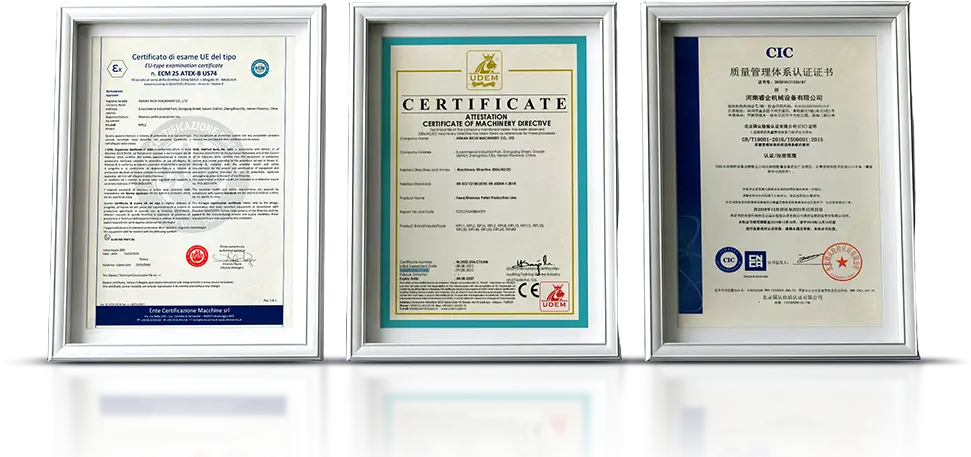
RICHI boasts numerous international authoritative certifications and patents, including ISO9001, CE, SGS, and TÜV. This means that the equipment you purchase can smoothly pass through customs and quality standards in various countries, with no customs clearance risks and compliant delivery. Choosing RICHI means choosing a guarantee of smooth global access and worry-free production.