
Fuel Pellet Mill


Product Introduction
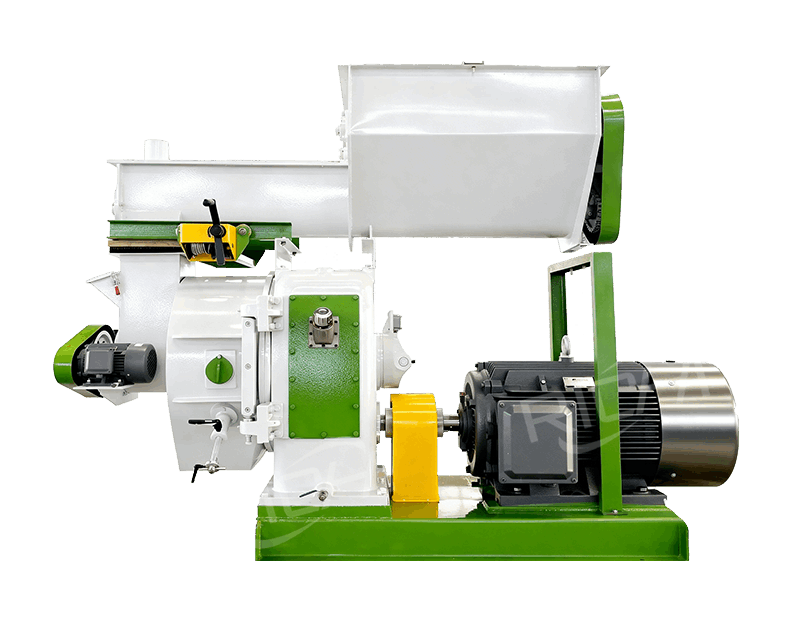
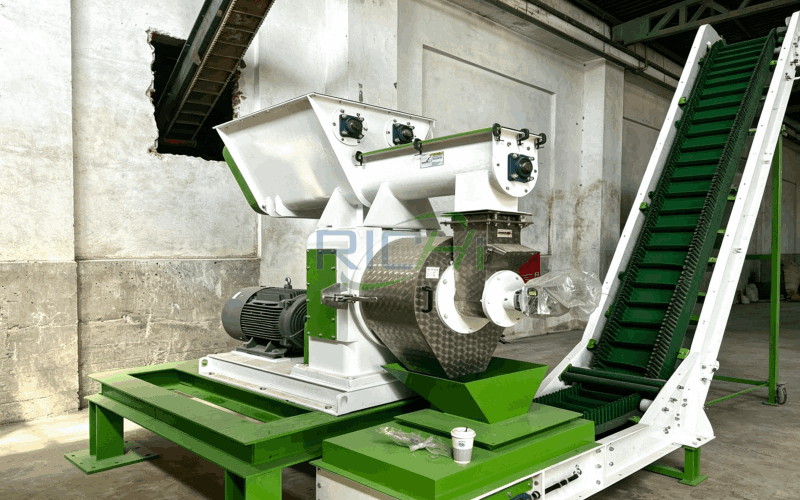
Fuel Pellet Making Machine

Capacity: 0.2-4 T/H
RICHI’s fuel pellet making machine is designed to compress agricultural and forestry biomass into fuel. Wood chips, straw, tree branches, rice husks, peanut shells, palm fibers – you name it. This machine squeezes and cuts them into fuel pellets that are 4–12 mm in diameter and nice and uniform in density.
You can use these pellets in home heating fireplaces, industrial hot-air furnaces, biomass boilers, or even small power plants. Compared to burning raw logs or straw, pellet fuel burns more completely, produces less smoke and dust, and gives you better thermal efficiency. Plus, they’re easy to store and transport.
Fuel Pellet Mill Videos
Here are two videos of our fuel pellet mills running on actual production lines. Click to watch them – you’ll get a clear, firsthand look at how well our equipment performs in real‑world operation.
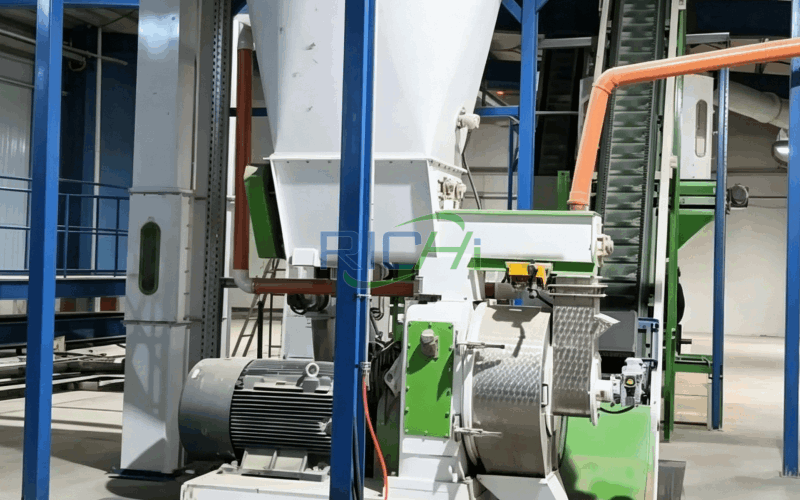
2 T/H Fuel Pellet Mill in Romania

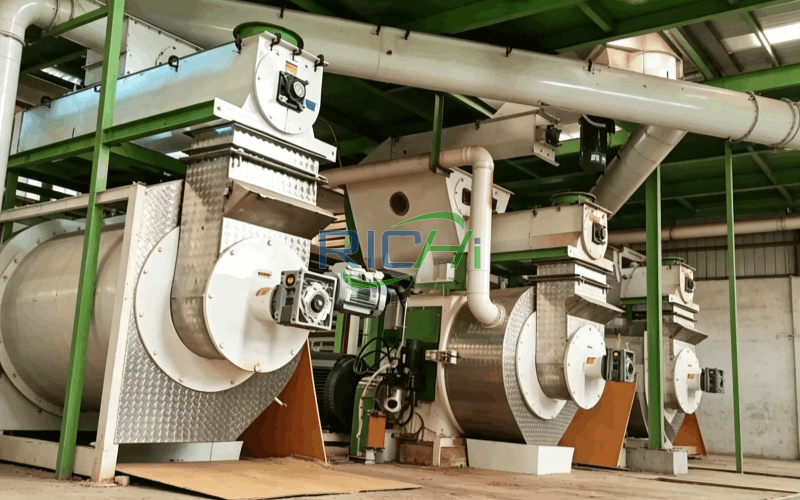
20 T/H Fuel Pellet Mill in Bangladesh
Components of Fuel Pellet Mill
The real genius of a fuel pellet mill is often in the details. If you want to understand what makes this fuel pellet machine so good, start with its main components. That’s how you’ll see the thoughtful design behind the product.
Feeding and Conveying System
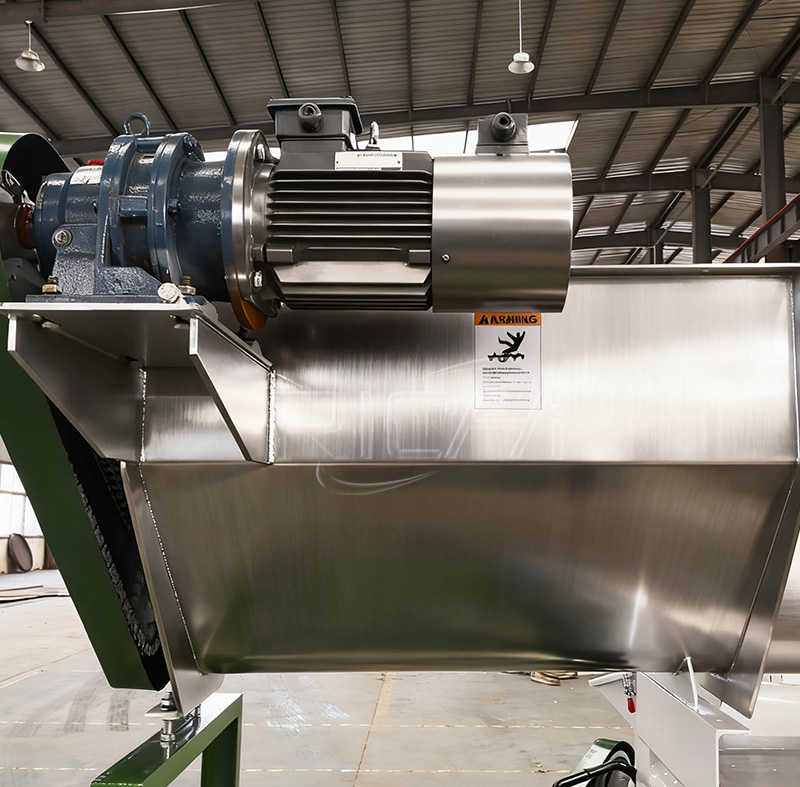
1. Variable-Frequency Arch-Breaking Feeder
This fuel pellet mill has a dual-roller arch-breaking design and a large feed opening. The variable-frequency motor drives the two rollers in opposite directions, breaking up lighter materials like sawdust and forage grass. That stops arches from forming, so you don’t get bridging or feeding problems right at the source.
2. Forced Feeder
This is the backup of the feeding system. It uses mechanical thrust to push low-density materials into the pelletizing chamber, making sure the hopper keeps supplying material and preventing the fuel pellet machine from running empty.
Granulation System
1. Ring Die
The ring die is forged from 42CrMo alloy steel and then carburized and hardened. It’s way more wear-resistant than standard ring dies. You can choose a compression ratio between 1:10 and 1:18, which lets you adjust the pellet diameter.
2.Press Rollers
We use rollers that are specially designed for biomass. They fit precisely against the ring die and can handle high pressure. When you’re processing high-fiber materials, they bite into the material well, squeeze it thoroughly, and give you a high forming rate.
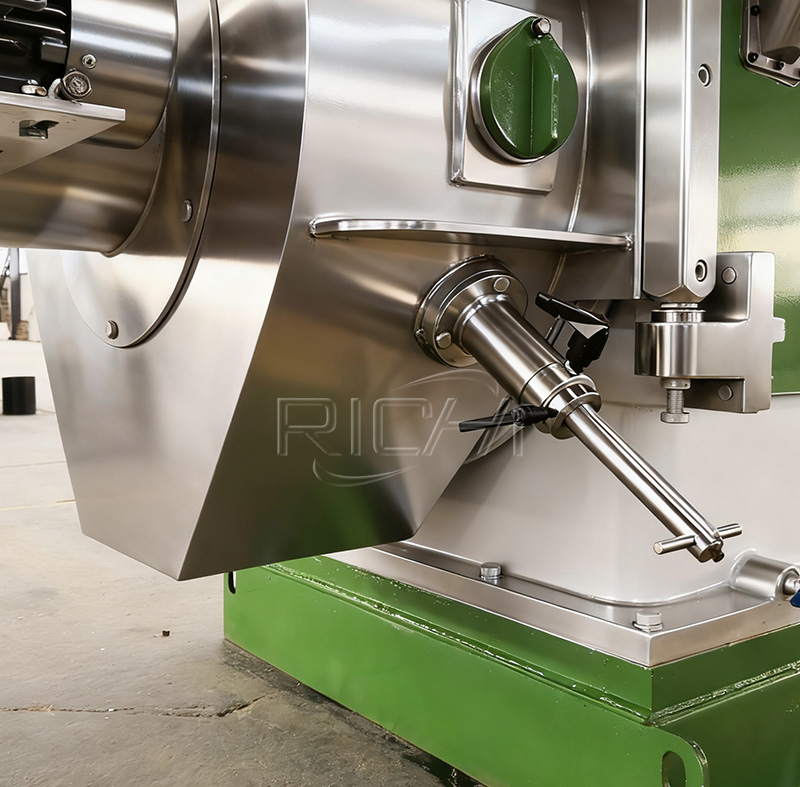
3.Cutting Mechanism
You need a cutter to cut the pellets. We did something special here – we use two rollers and a single-sided cutter. Why? So the pellets get compressed by both rollers before they’re cut, which gives you longer pellets. If you need something different, we can install multiple cutters to adjust the pellet length.
Drive and Transmission System
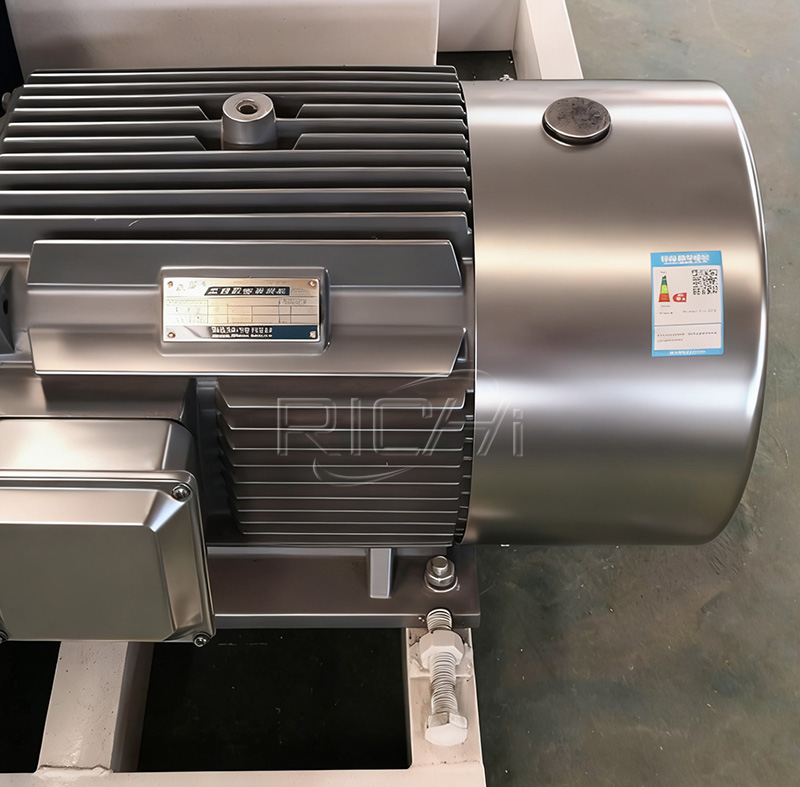
1. High-Power Motor
We use Siemens motors – a well-known brand. You can choose from 22 kW up to 250 kW. They’re powerful and can run 24/7 under heavy load.
2. High-Precision Gear Transmission
The main unit uses a transmission with precision-ground, carburized gears. Power loss is very low, and torque is high. Even when resistance spikes suddenly, the output stays stable. That means no slipping during pressing, and smoother operation.
Safety Protection System
1. Heavy-Duty, Reinforced Machine Body
We’ve thickened the whole frame. That cuts down on vibration when the fuel pellet mill runs, giving the ring die, rollers, and transmission a stable platform to work on. Even under heavy load, everything runs together smoothly, and the machine lasts longer.
2. Overload Safety Protection Device
If material gets jammed or the pellet fuel maker is overloaded, safety components automatically break, and a limit switch shuts everything down immediately. That protects key parts like the ring die and pressure rollers.


Parameters of Fuel Pellet Mill
Here are some models and specifications for RICHI fuel pellet mills. If you’re not sure which one would be the best fit for your setup, just get in touch with us directly. We’ll have our professional engineers give you free, personalized guidance – they’ll walk you through the options and help you pick the right fuel pellet making machine for your needs.
| Model | MZLH320 | MZLH350 | MZLH420 | MZLH520 | MZLH678 | MZLH768 |
| Main Motor Power (kW) | 22 | 37 | 90 | 132 | 200 | 250 |
| Anti-Bridge Feeder Power (kW) | 2.2 | 2.2 | 3 | 3 | 3 | 4 |
| Forced Feeder Power (kW) | 0.75 | 0.75 | 1.5 | 1.5 | 1.5 | 1.5 |
| Ring Die Inner Diameter (mm) | 320 | 350 | 420 | 520 | 673 | 762 |
| Finished Pellet Diameter (mm) | 4-12 | |||||
| Output (T/H) | 0.2-0.3 | 0.3-0.5 | 1.0-1.2 | 1.5-2.0 | 2.5-3.0 | 3.0-4.0 |
Note: The output numbers above are for a full production line under ideal conditions. In the real world, your actual output depends on your raw materials and their moisture content – so don’t take these as hard guarantees.
Global Cases of Fuel Pellet Mill
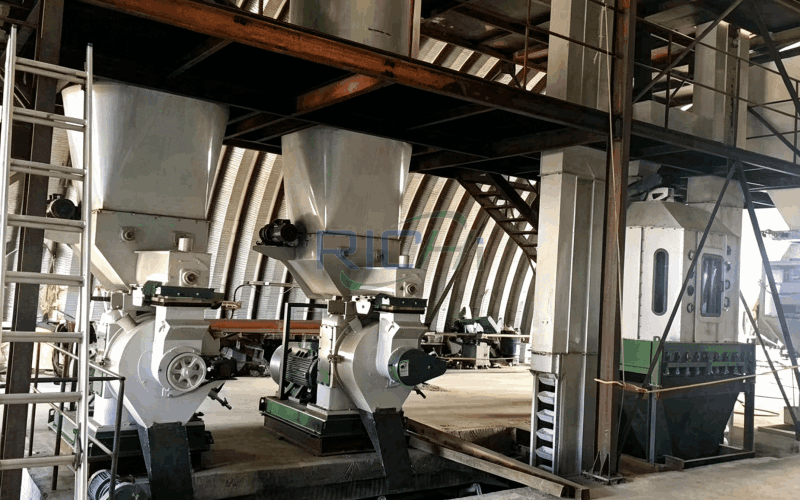
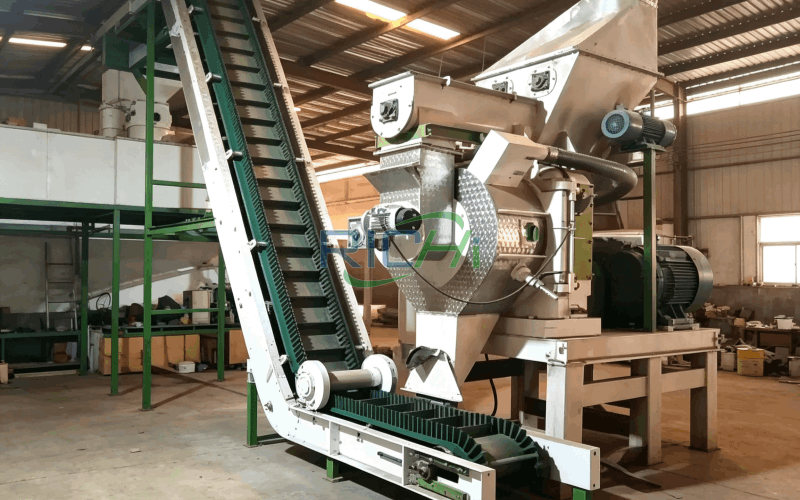
We’ve covered a lot about this fuel pellet mill already. We showed you its structure, its technical parameters, and how it runs on the job. If you’d like to dig deeper and get some practical help with choosing the right model, take a look at the following case studies. They might be just what you need.

Advantages of Fuel Pellet Mill
So why do so many customers pick RICHI? Because our fuel pellet mills are truly hassle-free, easy to use, and reliable.
The variable-frequency arch-breaking plus forced feeding design specifically solves the problems of arching, bridging, and feeding issues that you get with lightweight materials like sawdust, forage grass, and straw.
No Clogging
The ring die is made of 42CrMo alloy steel and carburized. It’s more wear-resistant than regular stainless steel, so it can handle long-term pressing of high-fiber materials..
Better Wear Resistance
The 304 stainless steel conditioner has dual-shaft paddles, so the material and steam mix really well. That softens the fibers more effectively. The ring die compression ratio is adjustable from 1:10 to 1:18, so you can customize the pellet diameter.
Thorough Conditioning
We use Siemens motors (22 kW to 250 kW) paired with precision-ground gearboxes. The fuel pellet mill can run 24/7 under heavy load – smooth and steady the whole time.
Rock-Solid Stability
Applications of Fuel Pellet Mill
Different raw materials and output levels call for different models. Here are the specs for RICHI’s mainstream fuel pellet mill models and some common applications. Pellet diameter can be adjusted from 4 to 12 mm as needed.
Small / Farm-Scale
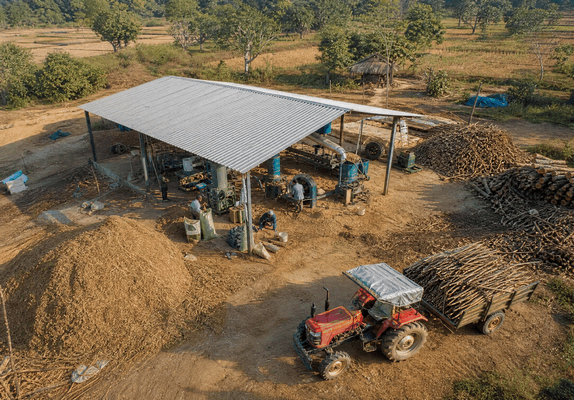
Recommended Model: MZLH320/MZLH350
Output Range: 0.2 – 0.5 T/H
These two compact models are great for small farms that want to produce their own fuel pellets, and they also work well in small rural processing workshops. They handle common materials like sawdust, shavings, straw, rice husks, cotton stalks, peanut shells, palm fiber, and corncobs – all turned into clean fuel pellets. You can also use them for small‑scale fuel production or for testing boiler fuels at the village or town level. Typical pellet sizes are 6mm or 8mm.
Medium Industrial Scale
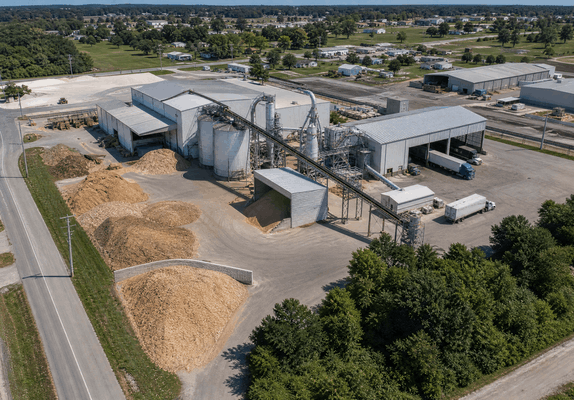
Recommended Model: MZLH420/MZLH520
Output Range: 1.0 – 2.0 T/H
These two models are a solid choice for medium‑sized biomass fuel pellet plant projects, hot‑air furnaces, steam boilers, and industrial boiler systems. They handle a wide variety of materials – mixed sawdust, waste wood, bamboo powder, hardwood sawdust, pine, poplar, bark, and even wood construction debris. They’re also commonly used to supply fuel for biomass power plants and district heating projects. Typical pellet sizes are 8mm or 10mm.

Large / High-Output Scale
Recommended Model: MZLH678/MZLH768
Output Range: 2.5 – 4.0 T/H
These heavy‑duty machines are built for large‑scale pellet production lines, export‑grade manufacturing, and power plant fuel supply. They can process just about any agricultural or forestry waste – straw, husks, shells, high‑fiber biomass blends, and waste wood. They’re also the preferred choice for large biomass power stations. Typical pellet sizes are 10mm or 12mm.

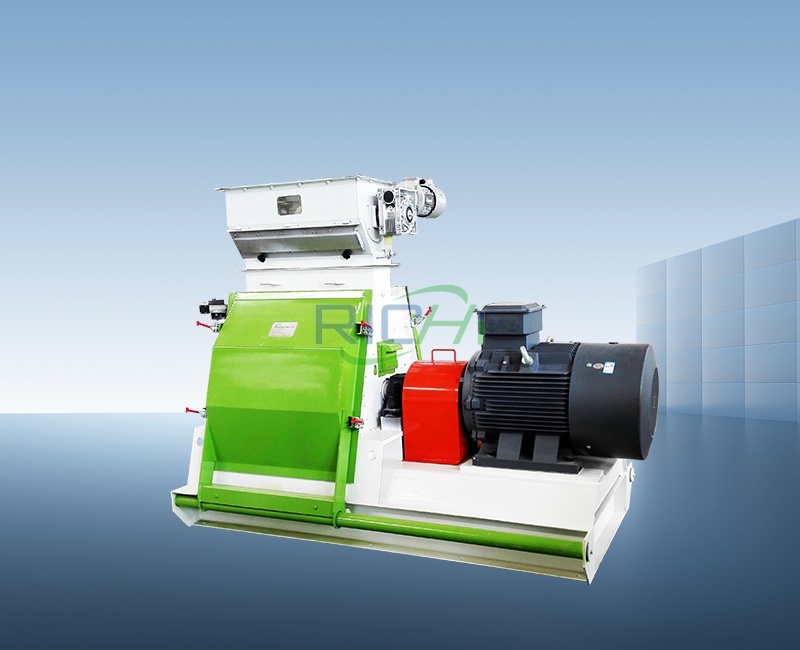
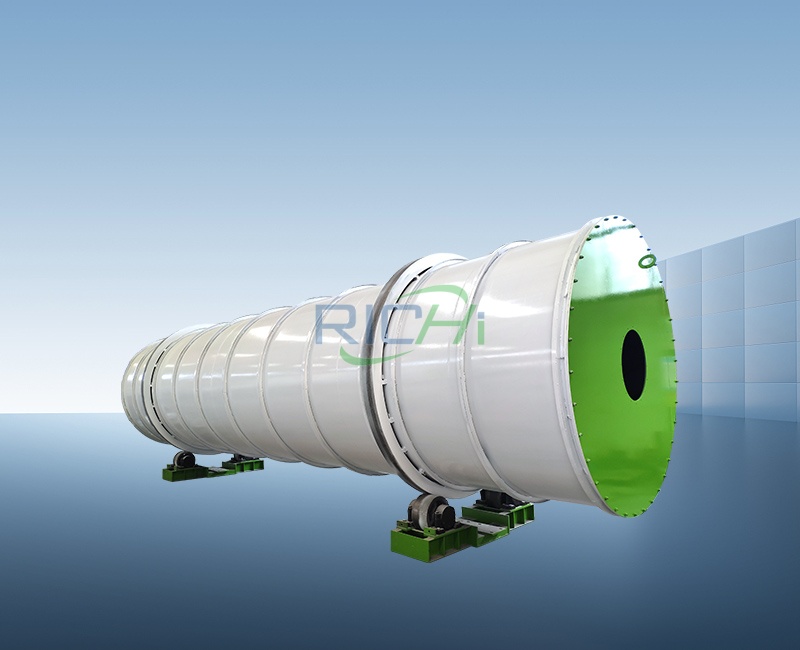
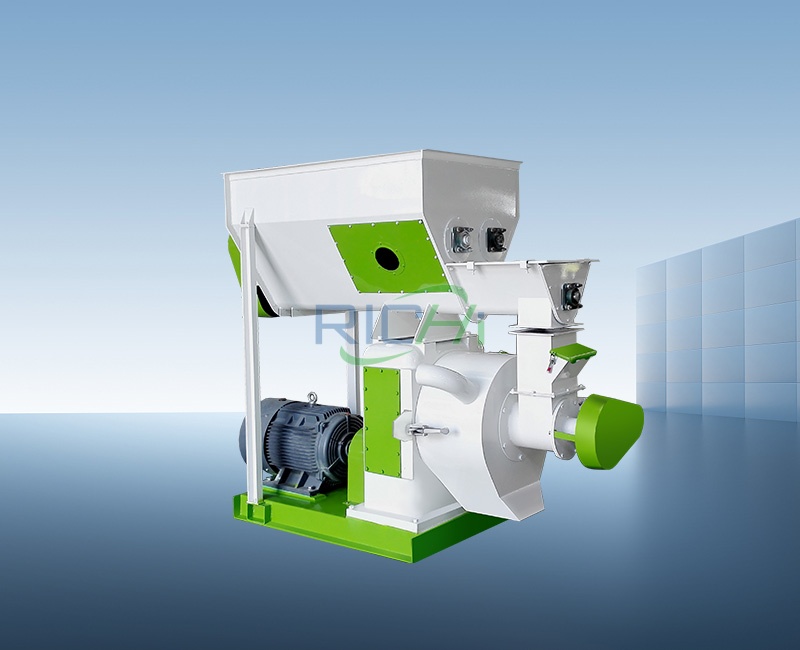
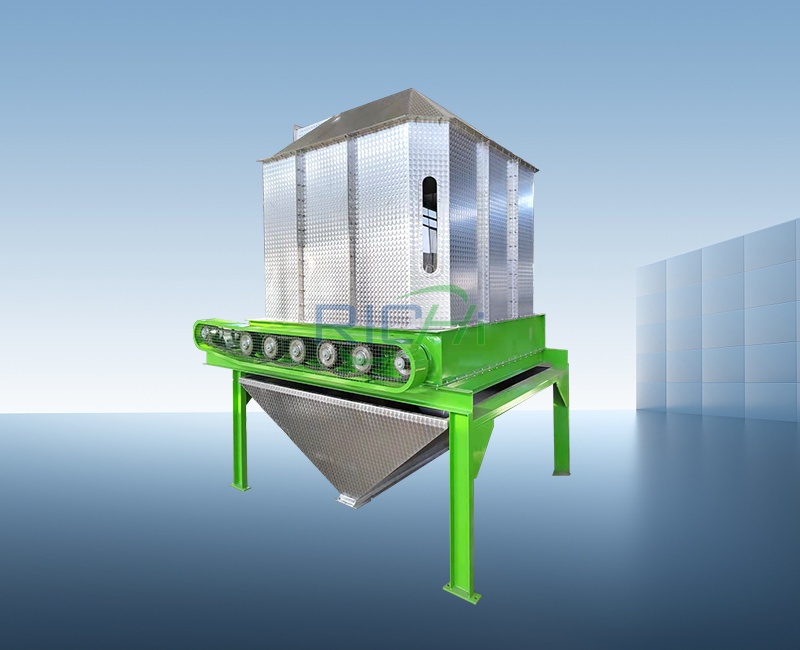
Fuel Pellet Manufacturing Process and Procedures
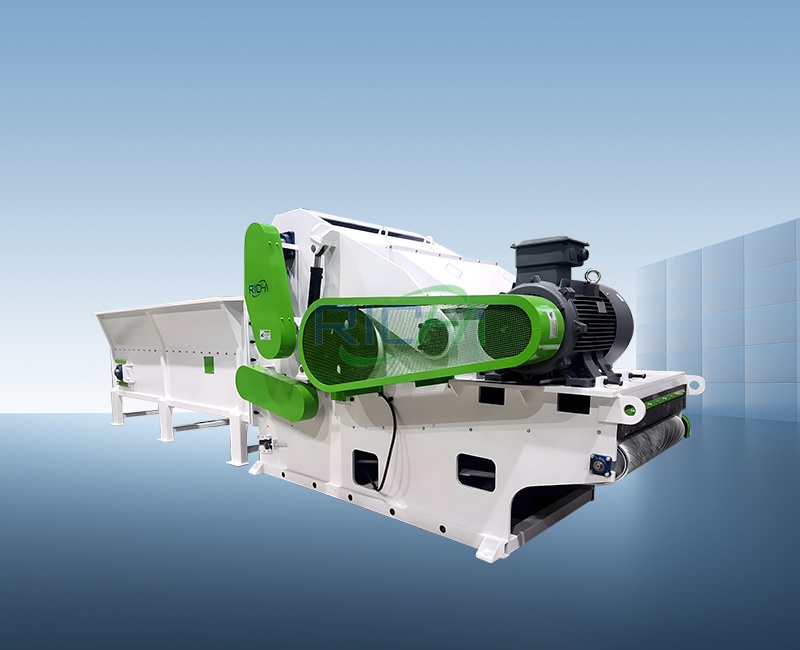
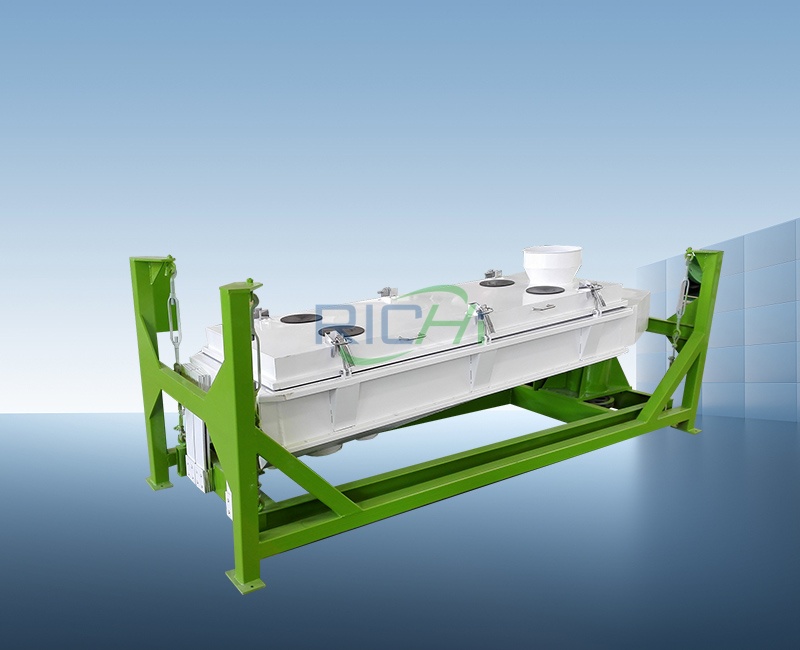
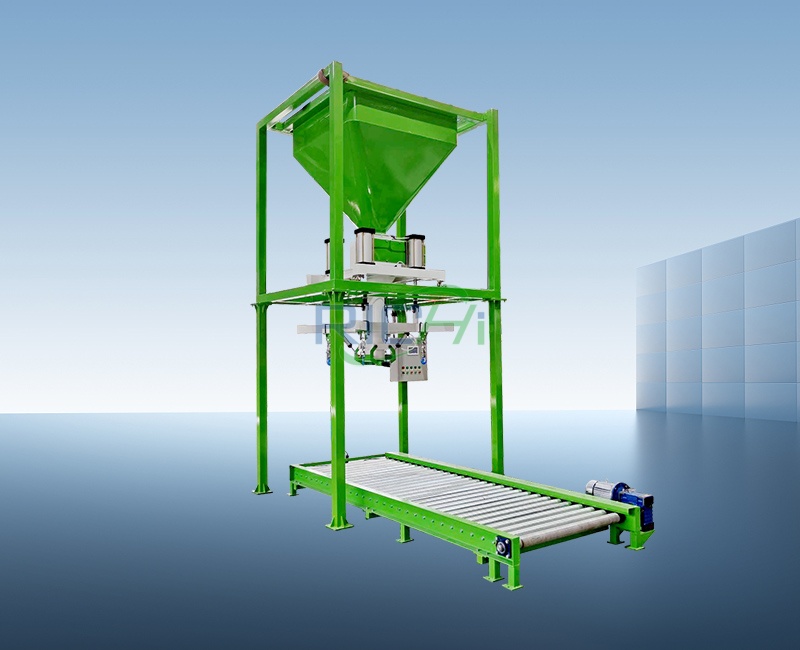
Here’s an introduction to the fuel pellet production process. It’ll give you a clearer picture of how we process fuel pellets. We can also supply the equipment for each step along the way.

Service Process
When you’re buying equipment, you really only care about two things: Does the fuel pellet mill work well? Is the service any good? RICHI has built a complete, full-lifecycle project management system. At every stage, we treat our customers’ business like it’s our own.
Project Experience
30+
Years

Countries and Regions Served
140+

Projects Delivered
2000+

Factory Area
100,000+
㎡

About Us
Henan RICHI Machinery Equipment Co., Ltd., established in 1995, primarily focuses on the research and development and manufacturing of feed machinery, biomass pelleting equipment, organic fertilizer pelleting equipment, and complete pellet production lines. After more than 30 years of development, RICHI has become a professional pelleting machinery manufacturer. Our products are exported to over 140 countries and regions worldwide, earning the trust of customers both domestically and internationally.

Qualification Advantages
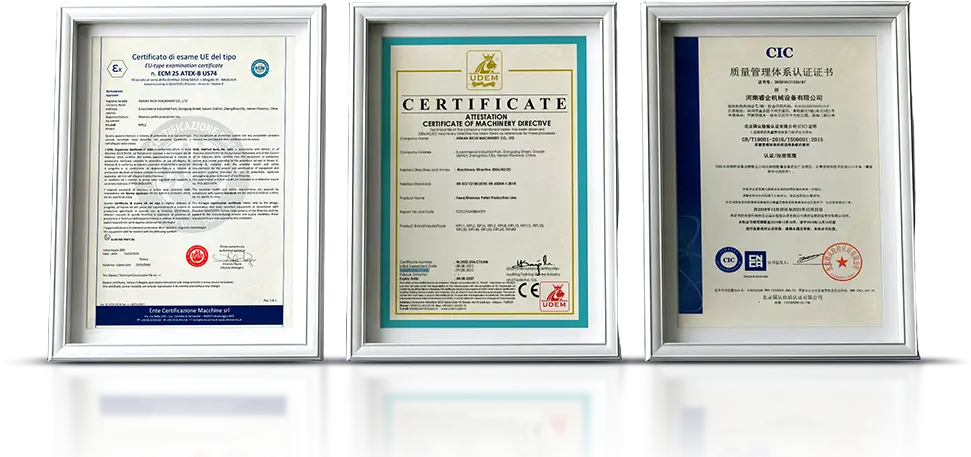
RICHI boasts numerous international authoritative certifications and patents, including ISO9001, CE, SGS, and TÜV. This means that the equipment you purchase can smoothly pass through customs and quality standards in various countries, with no customs clearance risks and compliant delivery. Choosing RICHI means choosing a guarantee of smooth global access and worry-free production.
FAQ
Below are answers to common questions from past customers. You might have the same ones. If not, feel free to reach out anytime.
What raw materials can this fuel pellet mill process?
→
RICHI’s fuel pellet making machine is very versatile. Here’s what it mainly handles:
Wood materials: shavings, pine, poplar, mixed hardwoods, sawdust
Biomass: crop stalks, peanut shells, rice husks, palm fibers
Feed materials: corn, soybean meal, grass meal
Before processing, we recommend using a dryer to get the moisture content between 13% and 18%.
Do I need additional auxiliary equipment with a fuel pellet maker?
→
It depends on your raw materials.
In the pretreatment stage, here are a few scenarios: If your material has stones or metal bits, you need a screening machine to filter them out. If moisture is above 18%, you’ll want a dryer to bring it down to 13–18%. If the pellet size is too big, you need a crusher.
For post-processing: if you’re doing large-scale production, you can add a cooler and a bagging machine. That lets you package the cooled pellets quickly for easy storage.
How often do the ring die and pressure rollers need to be replaced?
→
They’re wear parts, so there’s no fixed schedule. It really depends on how you use the fuel pellet mill. If you’re processing hard, coarse fibers like rice husks or cotton stalks, they’ll wear down faster. Good maintenance also matters – clean the machine regularly and lubricate it properly.
But don’t worry too much. Our ring die is made of high-quality alloy steel and carburized. The rollers are designed specifically for biomass. They handle high-fiber materials well, so they last longer than standard parts.
Any precautions for normal operation?
→
While the fuel pellet mill is running, never open the cover or touch rotating parts like the pressure rollers.
Don’t feed hard things like stones, metal, or glass into the machine – that’ll damage the core components.
If something seems off (weird noises, material jamming, overheating), cut the power immediately. Don’t restart until you’ve figured out the problem.
It’s also a good idea to check wiring, screws, and lubricant regularly – that’ll prevent electrical issues or loose parts.
How much does a wood fuel pellet making machine cost? Can I see one in person?
→
We have several models, with different specs and prices. Better to just contact us directly – one of our staff will give you a one-on-one quote and a detailed proposal.
We have multiple factories in Henan, China. You can contact us to arrange an on-site visit, or we can do a remote video inspection. We have demo units on-site, and you’re welcome to bring your own materials for a test run.
What after-sales services do you offer? What if the machine breaks?
→
We offer a 12-month warranty. If something goes wrong, contact our after-sales team. For minor issues, we can guide you remotely. For bigger problems, a professional technician will get in touch and come to your site for repairs.
For common wear parts like ring dies or pressure rollers, just contact us to arrange delivery. RICHI has a large parts inventory in Henan, China, so we can get you what you need quickly.

