
Rotary Drum Dryer


Product Introduction
What’s Rotary Drum Dryer?
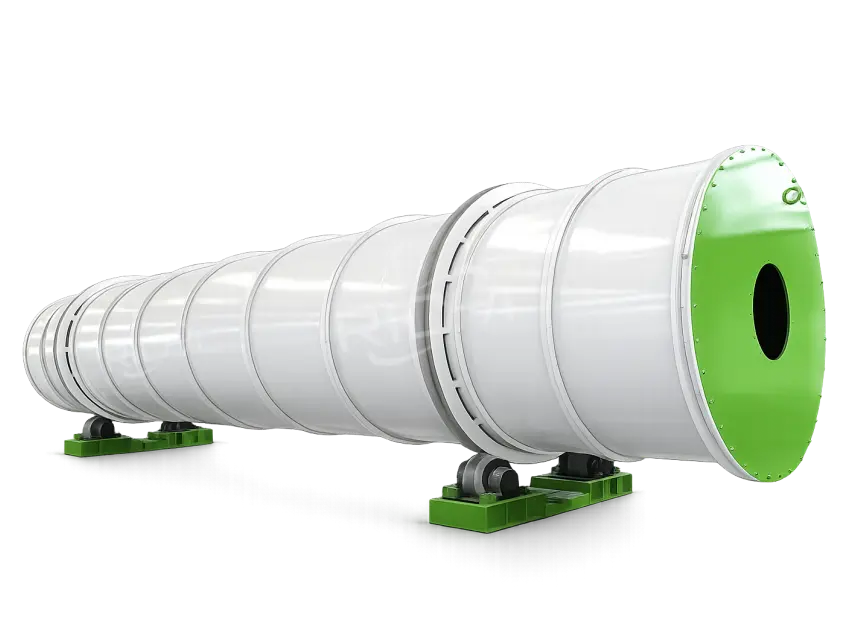
Rotary drum dryers are a type of drying equipment widely used in mining, building materials, chemicals, grain, feed, organic fertilizer, and other industries.
RICHI rotary drum dryers use a standard rotating drum structure with a zoned lifting plate design. This allows the material to be evenly scattered inside the drum and fully exposed to the heated air. The result is fast dehydration and uniform drying. The overall structure is very robust and easy to maintain. We also support customers in selecting the right model based on their production capacity, material moisture content, and heat source conditions.
Related Videos of Rotary Drum Dryer
Rotary drum dryers are a flexible addition to any pelleting production line. We’ve included them in many of the production lines we’ve built for overseas clients. They’re the perfect partner for keeping material moisture under control.
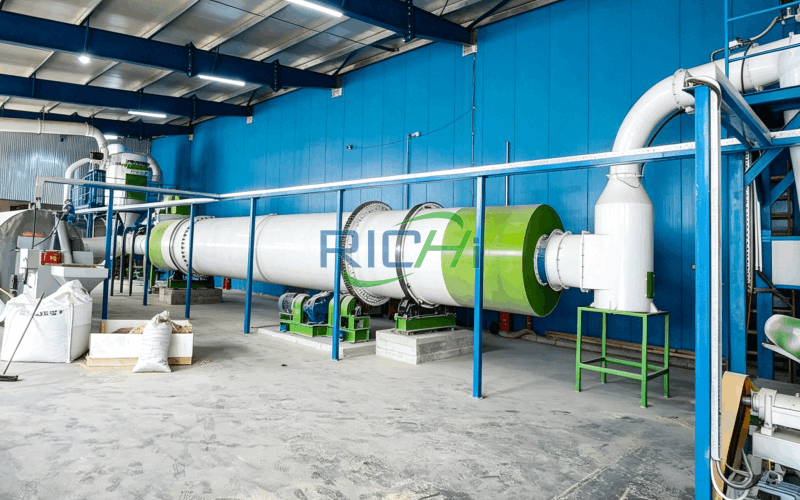
Rotary Drum Dryer in a Romanian 2 T/H Wood Chip Production Line

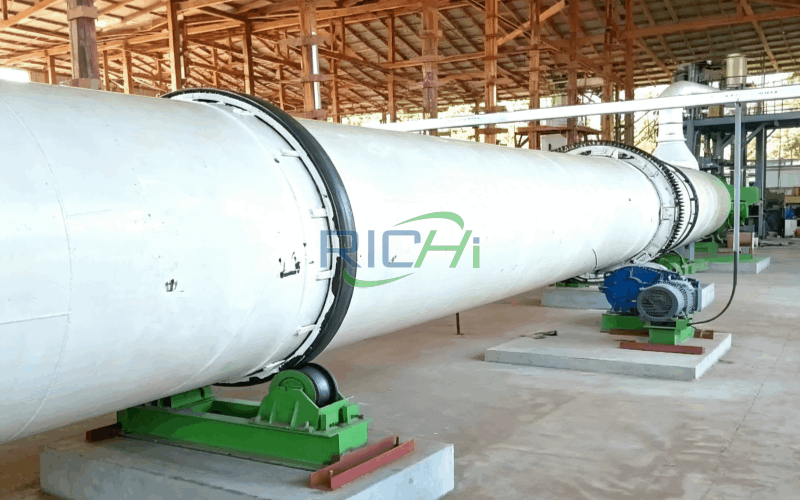
Rotary Drum Dryer in 1 T/H Biomass Pellet Production Line in South Africa
Components of Rotary Drum Dryer
A complete rotary drum dryer is like a whole drying team—every part has its own job, and you can’t miss any. The main components of a RICHI drum dryer machine are: the feeding device, discharge device, drum body and induced draft system. Let’s go through what each one does.
Feeding Device
This is the “gate” where material enters the rotary drum dryer. Your wet material gets fed into the drum evenly and steadily from here – no surges, no drops.
With this device, the drying process stays smooth and continuous, with no jams or blockages. No matter what form your wet material takes, it goes in without trouble. The adaptability is fully covered.
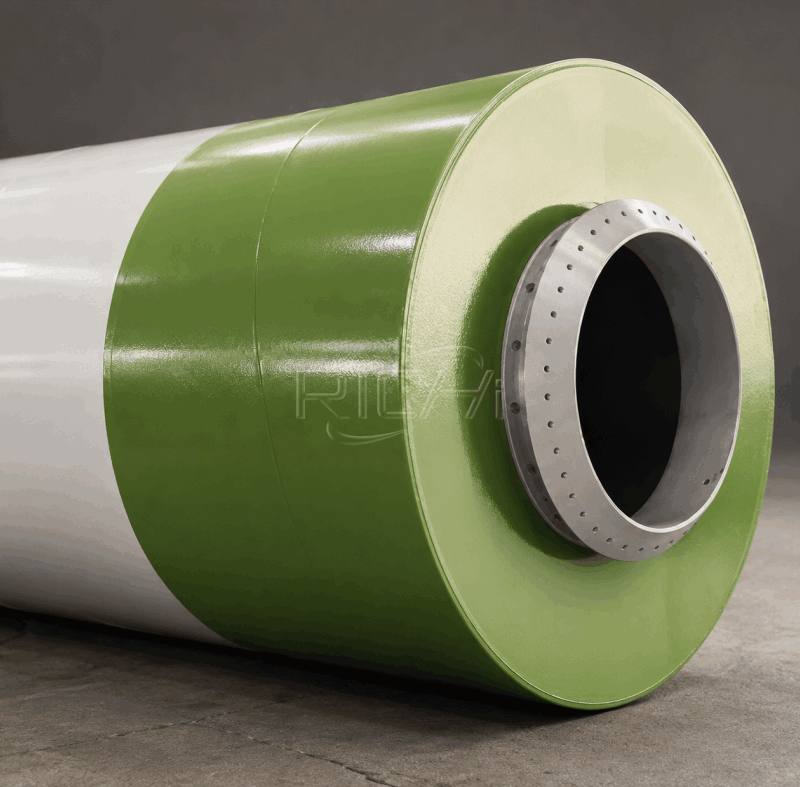
Discharge Device
This is installed at the end of the rotary drum dryer – it’s where the dried material “exits.” Its main job is to collect the dried material and discharge it smoothly.
At the same time, it blocks the hot air inside the drum from escaping, so you don’t waste heat. This ensures that after the material is fully dried, it can move smoothly into the next production stage.
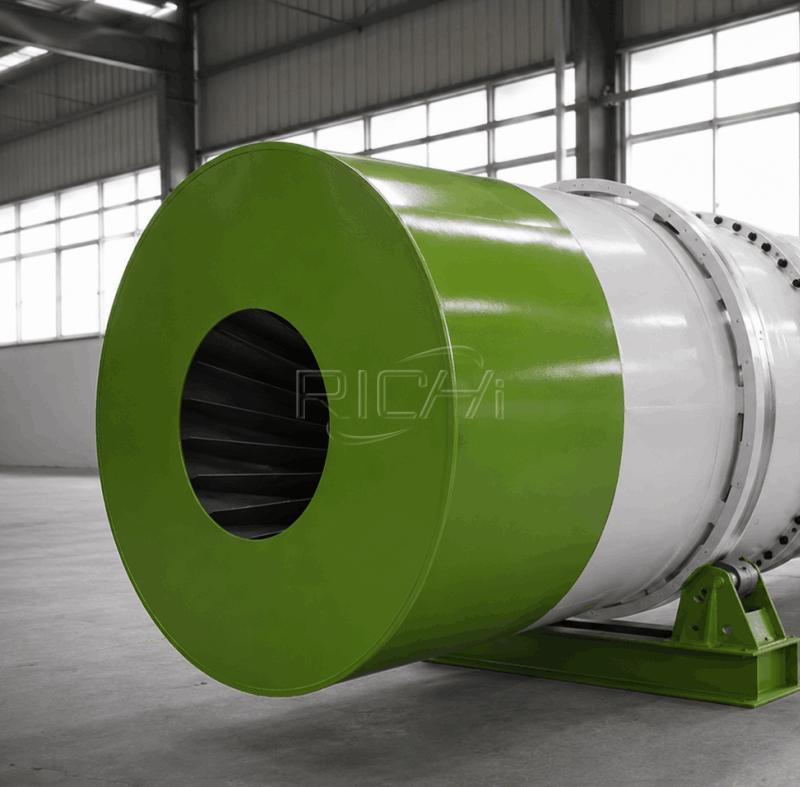
Drum
The drum is the core “battlefield” of the entire drying operation. It’s made of thickened, wear‑resistant steel plates, so it’s sturdy and durable.
Inside the drum, we’ve installed many lifting plates in a well‑designed layout. When the drum rotates, these plates lift and scatter the material evenly. That increases the contact area between the material and the hot air, so the material dries evenly and efficiently.
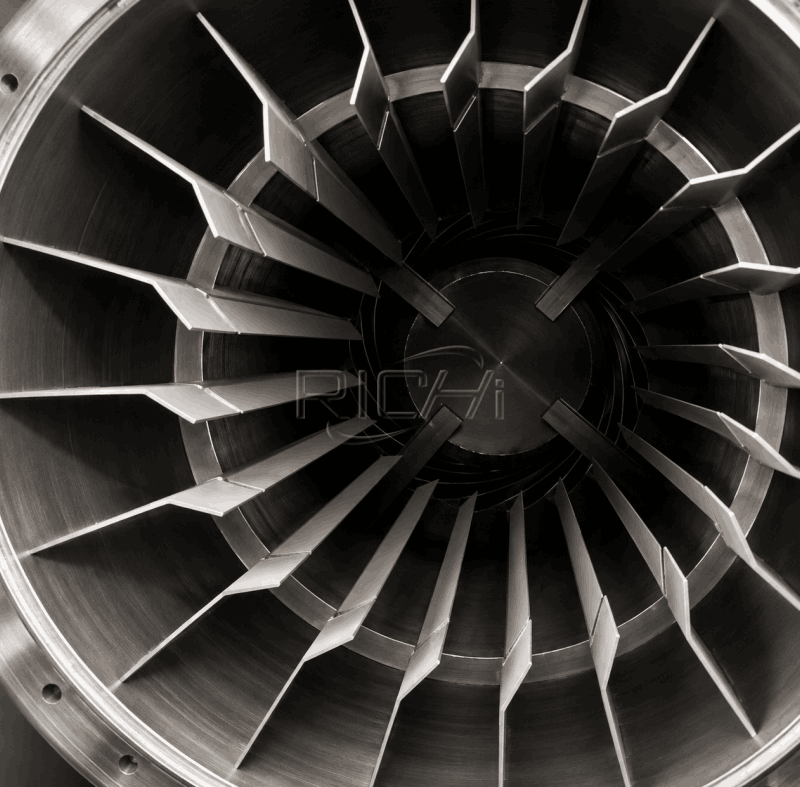
Induced Draft System
This system consists of an exhaust fan, air ducts, and dust control components. It works like the dryer’s breathing and exhaust system. On one side, it guides the hot air to flow properly inside the drum. On the other, it promptly removes the moisture that evaporates from the material during drying, keeping the drying environment stable.
The dust control device also prevents dust from leaking out, so the equipment meets environmental emission requirements.
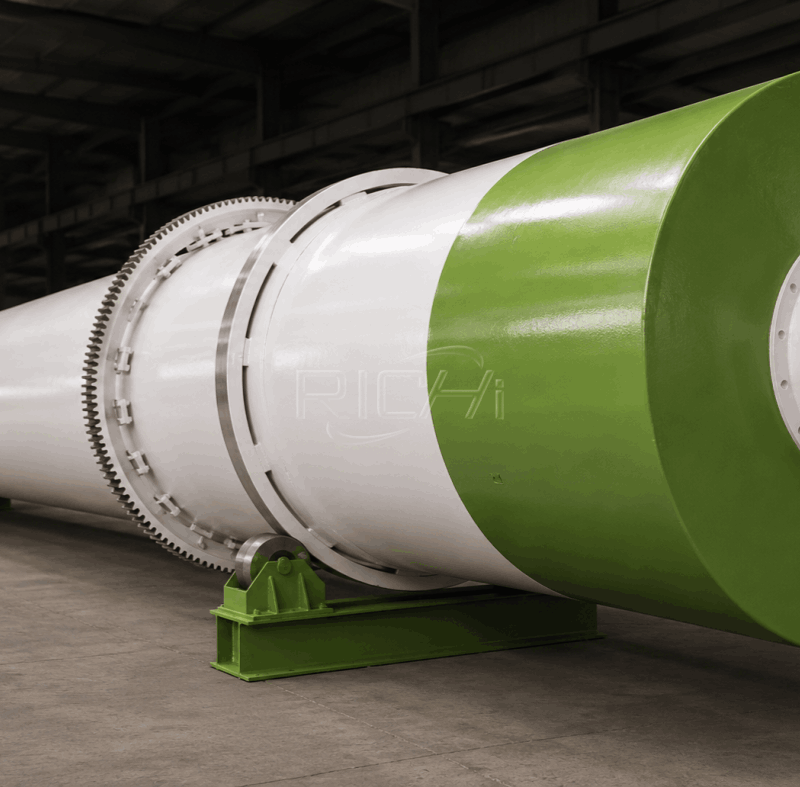

Parameters of Rotary Drum Dryer
Rotary drum dryers are auxiliary equipment, but we still offer many models. They come in different sizes, with different numbers of layers, and suit different applications. If you’re not sure which one fits your needs, just contact us. We’ll recommend the best solution based on your requirements.
| Model | φ0.6*6 | φ0.8*8 | φ1.2*12 | φ1.5*15 | φ1.8*18 | φ1.8*20 | φ1.8*36 | φ1.8*12*3C | φ1.8*24*3C |
| Diameter (m) | 0.6 | 0.8 | 1.2 | 1.5 | 1.8 | 1.8 | 1.8 | 1.8 | 1.8 |
| Length (m) | 6 | 8 | 12 | 15 | 18 | 20 | 36 | 12 | 24 |
| Number of Floors | 1 | 3 | |||||||
| Drum Speed (rpm) | 3~12 | ||||||||
| Inlet Air Temperature (°C) | 400~500 | ||||||||
| Air Outlet Temperature (°C) | 70~80 | ||||||||
Rotary Drum Dryer Customer Cases
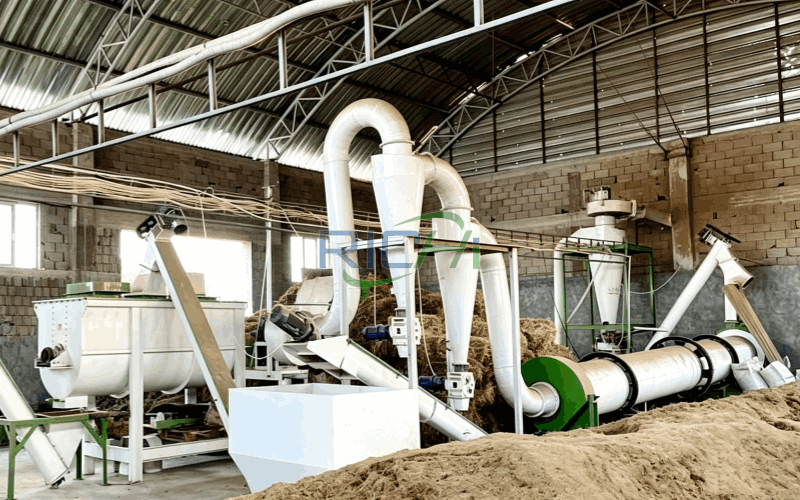
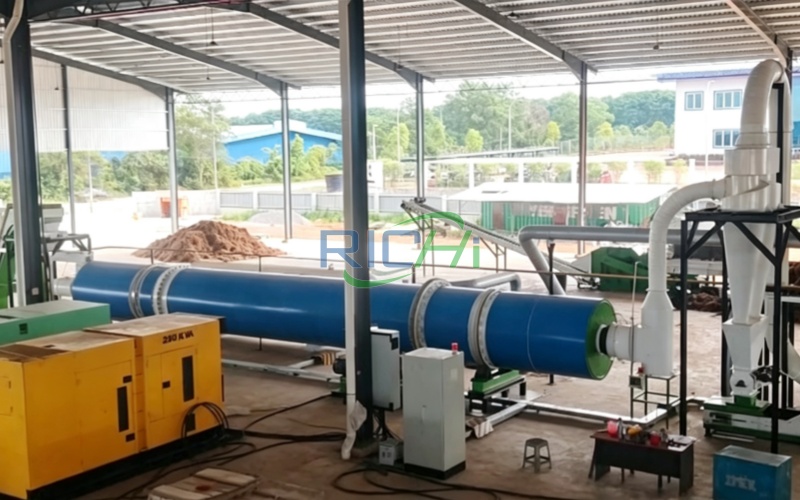
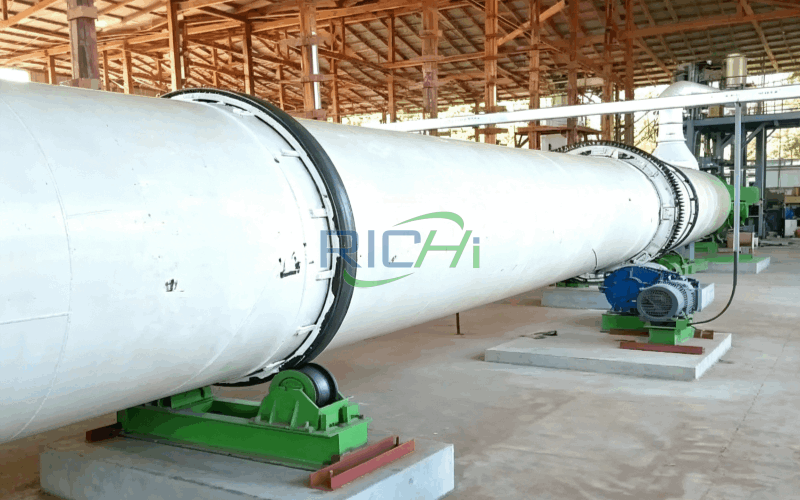
Rotary drum dryers are often used in feed lines that contain forage, as well as in biomass pellet production lines. They sit at the front end of the line, drying raw materials and lowering their moisture content to prevent clogging in downstream equipment. RICHI rotary drum dryers have been installed in production lines across many countries and have received strong feedback from users.

Advantages of Rotary Drum Dryer
A lot of customers get stuck when picking drying equipment—worried they won’t find the right one. Hey, that’s normal. But RICHI’s drum rotary dryer might just take all those worries away. Every advantage hits exactly what you need.
RICHI’s rotary drum dryer uses a new composite lifting system and a bunch of optimizations based on drying principles—basically a “speed boost” engine for the dryer. The positive spiral lifting plate at the feed inlet is a great example: wet material jumps straight into the drying phase without hanging around at the inlet. That’s how you push up efficiency.
High Drying Efficiency
Different customers dry different materials, and they want different levels of dryness. RICHI thought about that, so we put a control cabinet right next to the industrial drum dryer. It lets you adjust the drum’s rotation speed via a frequency converter. Want a lighter dry? Slow it down—less contact with hot air. Want it more thorough? Speed it up—more tossing, more contact, and you get a drier result. Simple.
Flexible and Controllable
Every customer wants their equipment to last—fewer repairs, fewer replacements. RICHI put real effort into durability here. The roller rings and thrust rollers are a cast steel one-piece design—great wear resistance and keeps the drum running steady. Plus, the feed and discharge ends use wear-resistant steel plates. Easy to install, and they help the rotary drum dryer last for years. You’ll save a lot on maintenance and replacement down the road.
Long Service Life
Project Experience
30+
Years

Countries and Regions Served
140+

Projects Delivered
2000+

Factory Area
100,000+
㎡

About Us
Henan RICHI Machinery Equipment Co., Ltd., established in 1995, primarily focuses on the research and development and manufacturing of feed machinery, biomass pelleting equipment, organic fertilizer pelleting equipment, and complete pelleting production lines. After more than 30 years of development, RICHI has become a professional pelleting machinery manufacturer. Our products are exported to over 140 countries and regions worldwide, earning the trust of customers both domestically and internationally.

Qualification Advantages
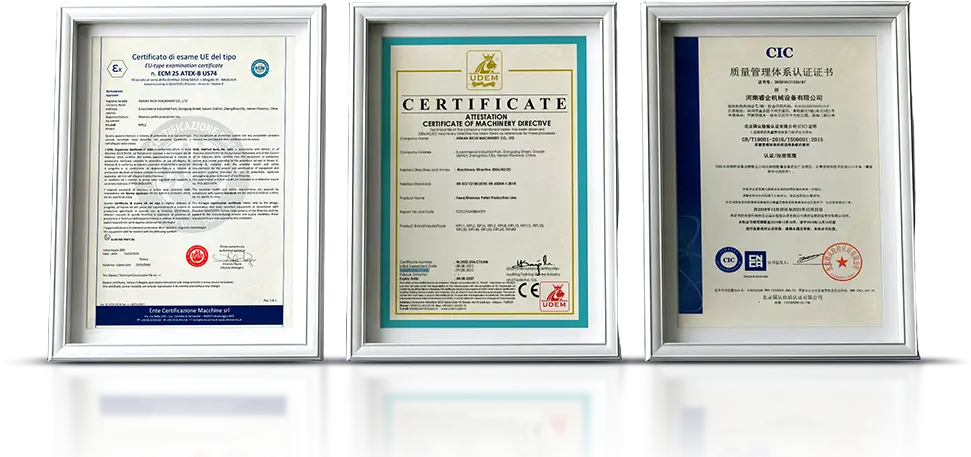
RICHI boasts numerous international authoritative certifications and patents, including ISO9001, CE, SGS, and TÜV. This means that the equipment you purchase can smoothly pass through customs and quality standards in various countries, with no customs clearance risks and compliant delivery. Choosing RICHI means choosing a guarantee of smooth global access and worry-free production.
FAQ
After reading about the structure and advantages, you’ve probably got a general idea of the RICHI drum dryers. Here are some questions customers ask a lot—we’ve answered them one by one.If you’re looking for a rotary drum dryer for sale, you’ve come to the right place. Got something else? Just reach out.
Which materials are not suitable for drying?
→
Not everything can go in here. Strongly corrosive stuff, flammable or explosive materials that catch fire easily, toxic hazardous chemicals, high-viscosity goo that sticks to the walls and won’t break apart, and anything with special explosion-proof or corrosion-proof requirements—yeah, don’t put those in this small rotary drum dryer.
What heat sources can I use?
→
Lots of options. We support coal, natural gas, biomass pellets, diesel, electric heating, steam—you name it. Pick whatever works for you based on your situation or local regulations. Whatever’s most convenient and cost-effective.
What’s the max moisture content it can handle?
→
If you’ve got special high-moisture needs, we can customize it—up to around 60% moisture. Under normal conditions, anything under 40% is totally fine. And depending on the material and your process, we can usually get it down to between 5% and 12% moisture, which meets most industry standards.
How’s the sealing? Will dust leak out?
→
Don’t worry about that at all. The feed inlet, discharge outlet, and drum connections on the RICHI rotary drum dryer all have special sealing structures—like putting sealing tape on the gaps. That keeps hot air from escaping and dust from spilling out, so you meet environmental requirements.
What’s the difference between a drum dryer machine and a mesh belt dryer?
→
They differ in what materials they work best with, capacity, and drying method. Basically, use the right tool for the job.
Rotating drum dryer:
Best for high-moisture materials: biomass (wood chips, straw, leaves, bagasse, coffee grounds), organic fertilizer (chicken manure, cow manure, poultry litter), ore and slag (quartz sand, slag, mineral powder), plus pellets like distiller’s grains, soybean residue, feed, etc.
How it works: the drum rotates, lifting plates toss the material, and it exchanges heat fully with hot air. Drum dryers handle high heat well, process large volumes, and have low operating costs. They’re used a lot in feed, mining, and building materials.
Mesh belt dryer:
Smaller capacity than a drum dryer. Better for loose, fragile materials: forages and feeds (hay, hay powder, hay cubes, flake feed), dried fruits and veggies (potato slices, carrots, dehydrated vegetables), Chinese herbs (honeysuckle, goji berries, astragalus), and anything that can’t take high heat or breaks easily.
How it works: multi-layer mesh belts carry the material. It’s spread flat and moves slowly, while hot air passes through it. That’s static drying.
What’s the rotary drum dryer price?
→
There’s no fixed price—it depends on the model, configuration, heat source, dust removal setup, etc. RICHI drum dryers range from tens of thousands to hundreds of thousands of US dollars. The differences come down to drum size, material thickness, heat source type, automation level, and things like shipping and installation. If you’re looking to buy, just tell us what you need. We’ll give you an accurate quote based on your actual requirements—no hidden fees.

