
Cattle Feed Pellet Making Machine
Get in touch. RICHI’s machine helps you lock in every bit of nutrition and build a solid reputation with every batch.


Product Information
Cattle Feed Pellet Making Machine
Capacity: 0.5-40 T/H
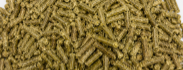
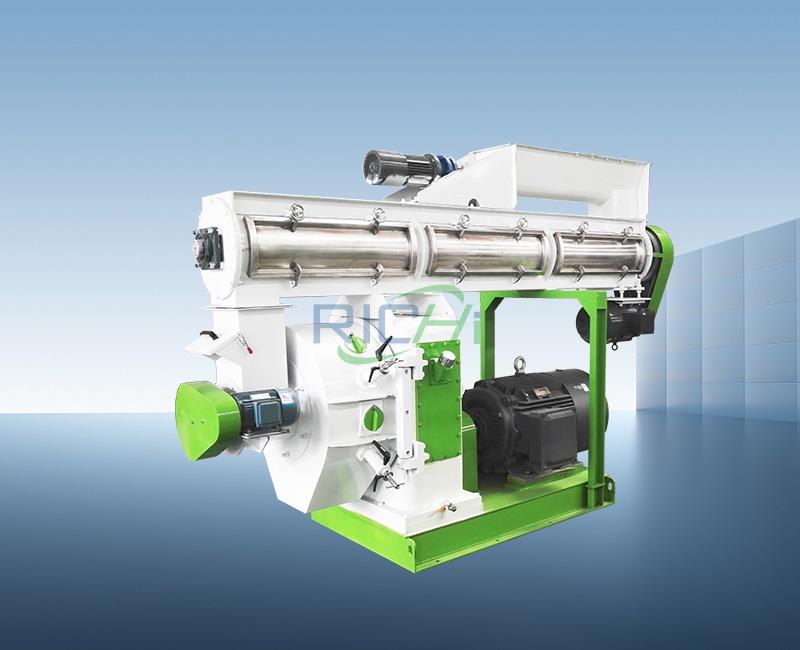
It’s equipment that turns powdery stuff—corn, soybean meal, wheat bran, grass meal, you name it—into neat, uniform pellets through conditioning and physical pressure.
Unlike pigs or poultry, cattle are ruminants. They need pellets with just the right hardness and fiber content. A decent cattle feed pellet making machine has to handle lots of crude fiber, produce pellets that are tough enough for transport, but not so hard that cows won’t eat them.
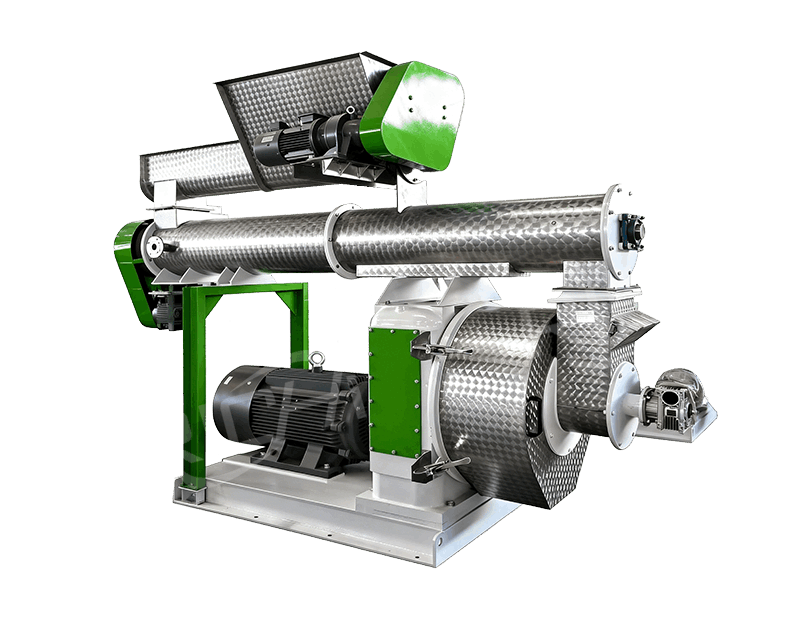
RICHI’s pellet machine for cattle feed uses a ring die and rollers working together, to help feed producers get consistent quality. Feel free to contact us for the latest cattle feed pellet machine price.
Cattle Feed Pellet Making Machine Videos
Reading only text might not give you a clear sense of the pelleting effect of our cattle feed pellet making machine. Below, I will provide several cattle feed production line operation videos to help you understand our equipment more intuitively. These videos are all taken on-site by our customers.

1-2 T/H Cattle Feed Pellet Making Machine in Uzbekistan

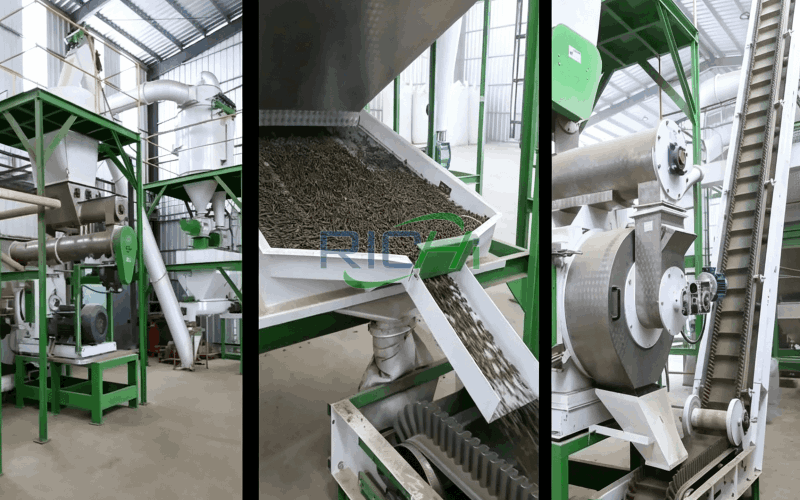
5-6 T/H Cattle Feed Pellet Making Machine in Brazil
Composition of Cattle Feed Pellet Making Machine
To meet our customers’ needs, we keep refining every processing component. Their coordinated work together produces high‑quality cattle feed pellets. Below is an introduction to the different components of the RICHI cattle feed pellet making machine.
Feeder
Think of the feeder as the cattle feed pellet making machine’s mouth. It swallows all kinds of cattle feed ingredients—even light stuff like straw and hay—without clogging or bridging. Plus, it’s driven by a variable-frequency motor, so you can adjust the feed speed on the fly to control how fast pellets come out.
Conditioner
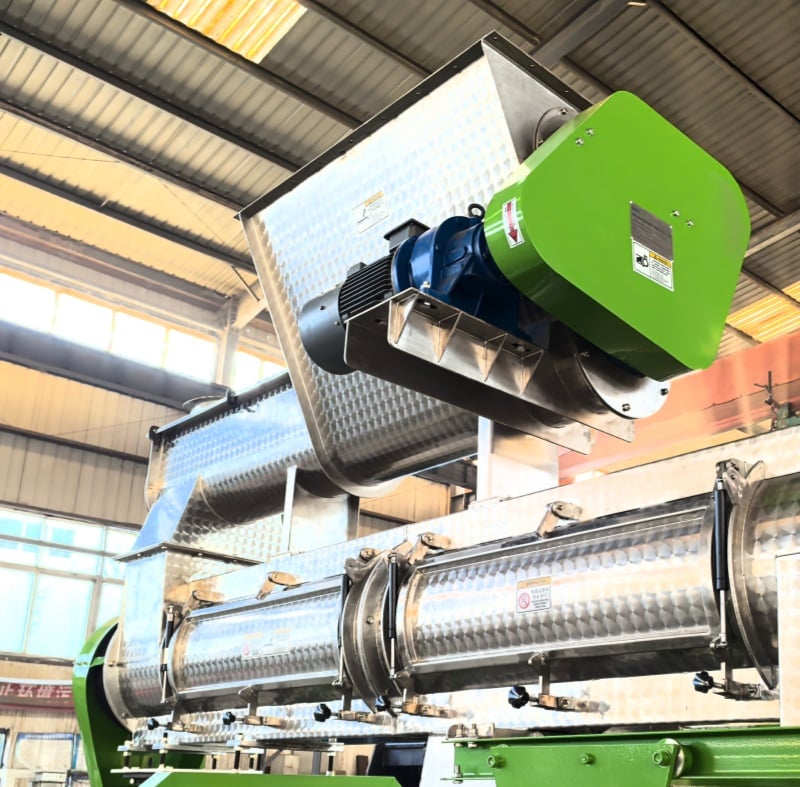
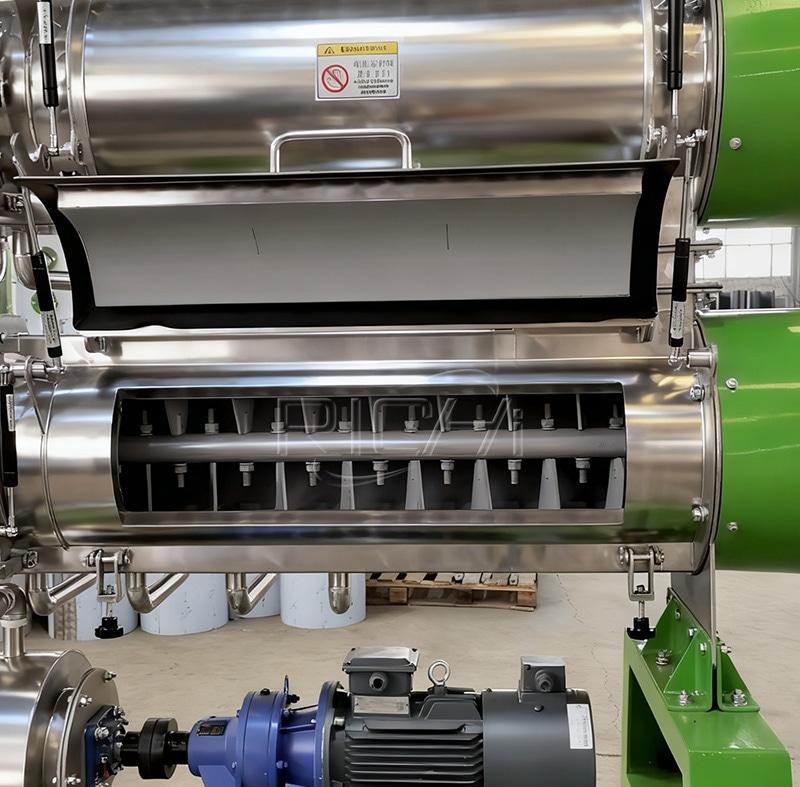
The conditioner cooks, gelatinizes, and sterilizes the mix. Inside, paddles toss the material up so it blends thoroughly with steam. That softens the coarse fiber, makes the ingredients more pliable, and gets them ready for easy pressing.
Pelletizing Chamber
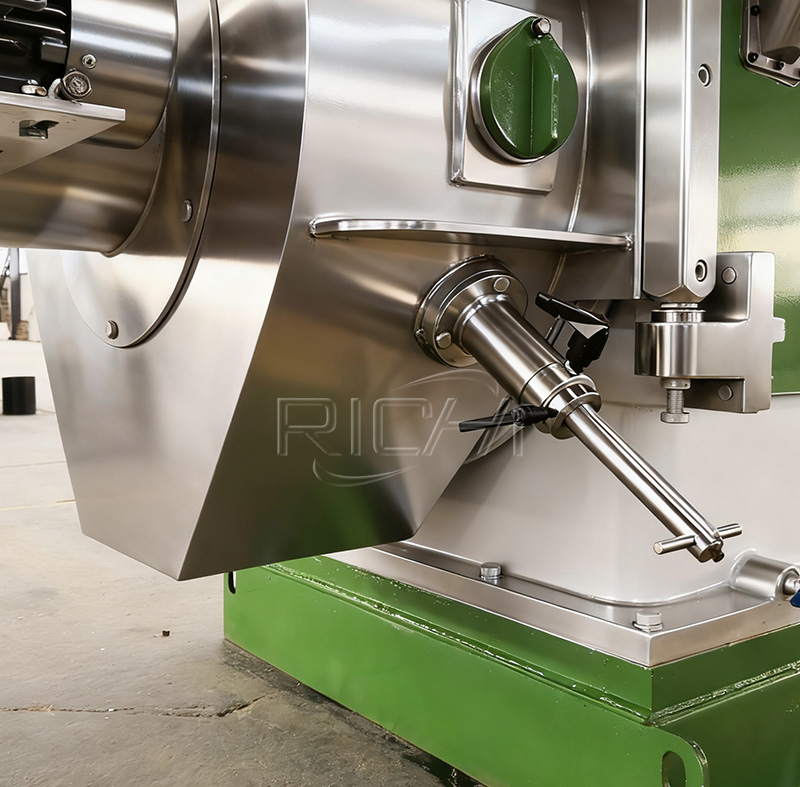
After the conditioner, everything moves into the pelleting chamber. The once-loose, now-gelatinized raw materials get squeezed by the rollers, pushed through the ring die, and cut into tight, evenly sized pellets. Want to change pellet length? Just adjust the gap between the cutter and the die.
Drive Motor
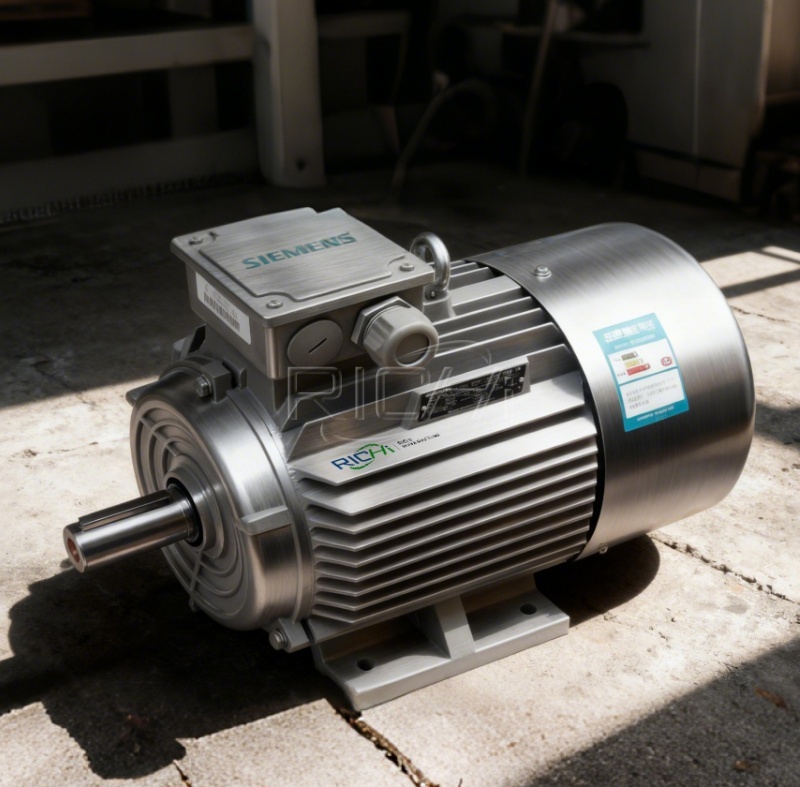
To keep things fast, stable, and efficient, we’ve put in a high-power Siemens motor. It feeds consistent power to every part—rollers, ring die, you name it—so nothing lags behind and the whole pelleting process runs smoothly.

Product Parameters
Because cattle need a lot of crude fiber in their feed, our machines are built specifically for that job. We’ve got several models—I’m pretty sure one will fit your needs.If you are interested in our pellet machine, please contact us for more information.
| Model | SZLH250 | SZLH320 | SZLH350 | SZLH420 | SZLH508 | SZLH558 | SZLH678 | SZLH768 |
| Main Motor Power (kW) | 22 | 37 | 55 | 110 | 160 | 185 | 250 | 315 |
| Anti-bridge Feeder Power (kW) | 1.1 | 1.5 | 1.5 | 1.5 | 1.5 | 1.5 | 1.5 | 2.2 |
| Forced Feeder Power (kW) | 1.5 | 4 | 4 | 7.5 | 7.5 | 11 | 11 | 11 |
| Ring Die Inner Dia (mm) | 250 | 320 | 350 | 420 | 508 | 558 | 673 | 762 |
| Pellet Size (mm) | 2-12 | |||||||
| Output (t/h) | 1.0-1.5 | 3-4 | 5-6 | 10-12 | 15-16 | 20-22 | 30-33 | 38-40 |
| Model | CZLH320 | CZLH350 | CZLH420 | CZLH520 | CZLH678 | CZLH768 |
| Main Motor Power (kW) | 22 | 37 | 90 | 132 | 185 | 250 |
| Anti-bridge Feeder Power (kW) | 2.2 | 2.2 | 3 | 3 | 3 | 4 |
| Forced Feeder Power (kW) | 0.75 | 0.75 | 1.5 | 1.5 | 1.5 | 1.5 |
| Ring Die Inner Dia (mm) | 320 | 350 | 420 | 520 | 673 | 762 |
| Pellet Size (mm) | 4-12 | |||||
| Output (t/h) | 0.5-0.6 | 1.0-1.2 | 1.8-2.0 | 2.8-3.0 | 4.0-5.0 | 6.0-8.0 |
Note: The output numbers above are rated values for a complete feed line. In real life, actual output can vary depending on your specific conditions and materials.
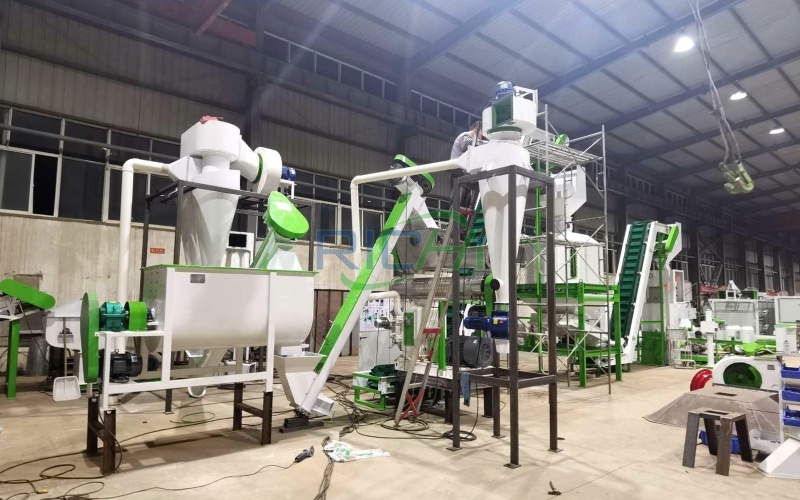
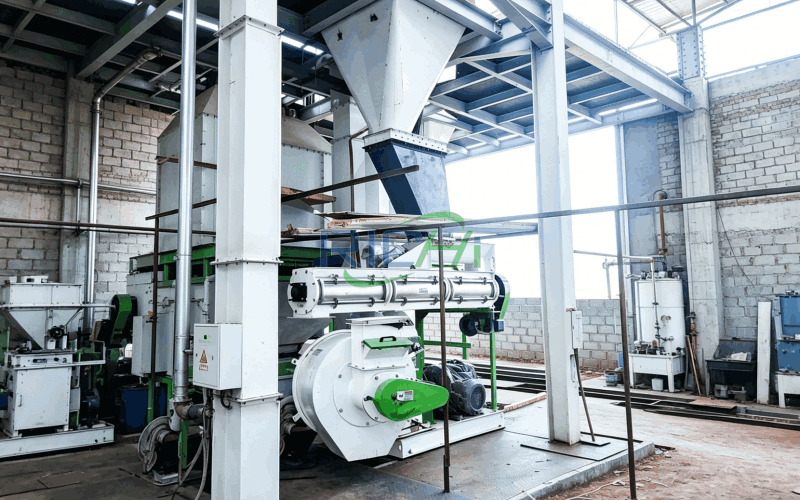
Global Cattle Feed Pellet Project Cases
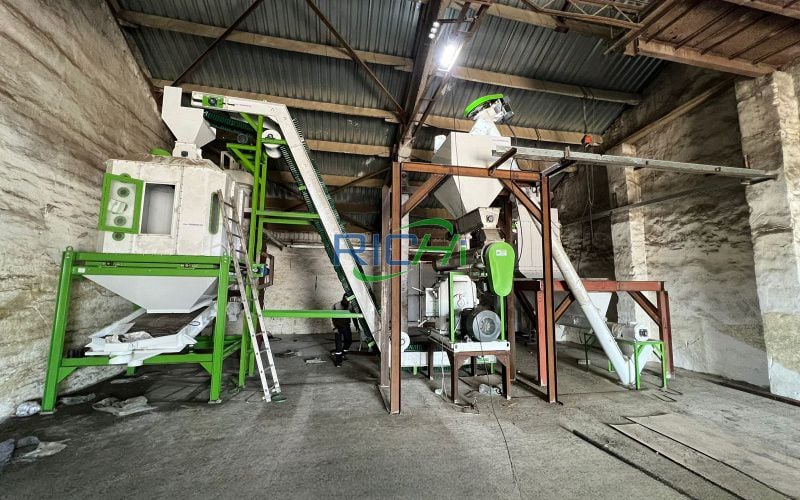
RICHI has supplied cattle feed pelleting solutions to over 140 countries. We’ve learned a lot along the way. Here are a few examples that might help you.
Advantages of Cattle Feed Pellet Machine
We use a bunch of advanced manufacturing techniques on our cattle feed pellet mills. That makes the machine last longer and produce better feed.
The cattle feed pellet making machine’s body is 304 stainless steel—very corrosion-resistant. The conditioner paddles are forged, so they work fine with all kinds of biomass. The ring die is forged from 42CrMo alloy steel, with a carburized surface up to HRC58-62 hardness. That’s way more wear-resistant than regular stainless steel, and it handles those hard, coarse fibers without trouble. With these sturdy parts, the machine runs smoothly for a long, long time.
Long Service Life
Honestly, our conditioner has a pipe diameter and length that are relatively long—definitely longer than a lot of what’s out there. That extra size gives you more conditioning time, so better cooking and gelatinization.
Because cattle feed has so much coarse fiber, we’ve added a special roller that mates perfectly with the ring die. The wide-groove teeth on the roller grab the material better, squeeze it harder, and give you a higher forming rate. Better pellets, plain and simple.
High Pellet Quality
If a cattle feed pellet making machine can’t even keep itself running safely, all the fancy features don’t mean much. This one is solidly built—thickened frame, high rigidity, low vibration, and it stays steady even under heavy load. Plus it’s got mechanical overload protection. If something jams or overloads, the safety parts automatically disengage and the machine stops right away. That saves your ring die, rollers, gearbox—all the expensive parts. Cuts down your repair costs.
Safe and Reliable
Applications Range of Cattle Feed Pellet Machine
There are many different types of cattle, and what kind of pellets are suitable for each type? We have provided you with a classification list of cattle feed pellet applications, so you can choose the pelleting solution that suits your needs.
Application of Calf Feed Pellets
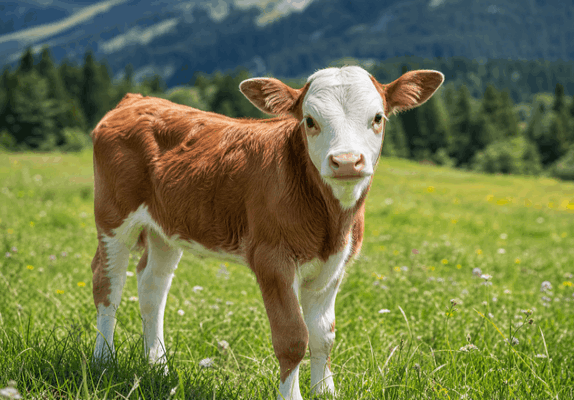
Calves’rumens aren’t fully developed yet. Their digestive systems are delicate, so they need soft, easy-to-eat pellets. We recommend using RICHI’s cattle feed pellet making machine to make 4-6mm small pellets with a moderate compression ratio. That gives you relatively loose pellets that won’t hurt their mouths. Keep the pelleting temperature at or below 70°C to preserve heat-sensitive nutrients like whey powder and vitamins—this helps calves wean smoothly.
Application of Beef Cattle Feed Pellet
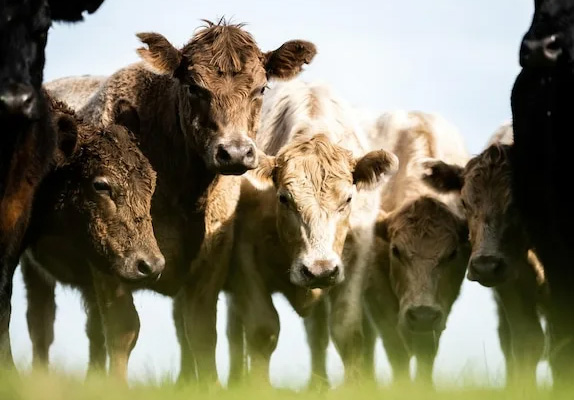
During fattening, beef cattle eat a lot, and there’s competition at the trough. They can get picky, which leads to uneven nutrition. Try making 6-10mm pellets with a higher compression ratio. That makes the pellets tighter and more wear-resistant, with less dust. It also prevents feed from separating or stratifying, so every bite gives the animal complete nutrition.
Application of Feed Pellets for Lactating Cows
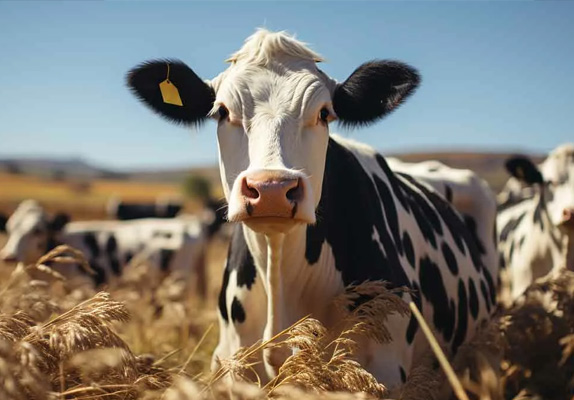
Dairy cows have high energy needs. If pellets are too hard, they’ll lose interest. Too soft, and you get waste. We recommend 8-12mm pellets with a medium compression ratio—they break apart easily in the mouth without hurting the rumen. A good conditioner will also improve starch gelatinization, helping to stabilize and boost milk yield and fat content.

Production Process of Cattle Feed Pellets
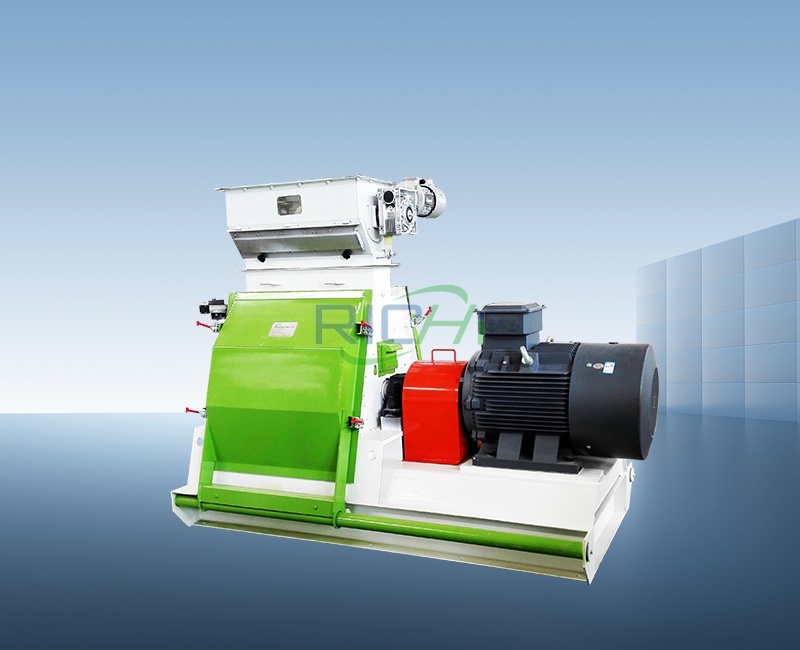
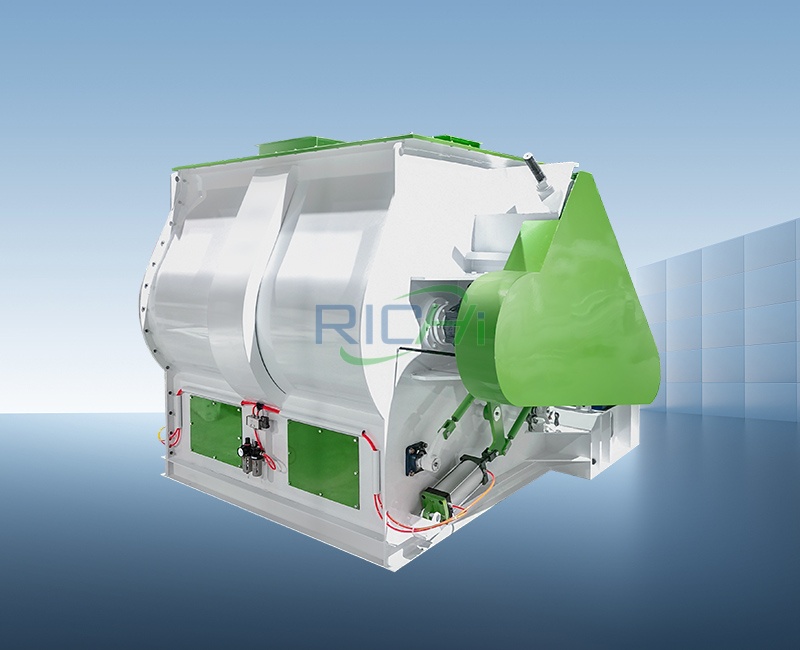
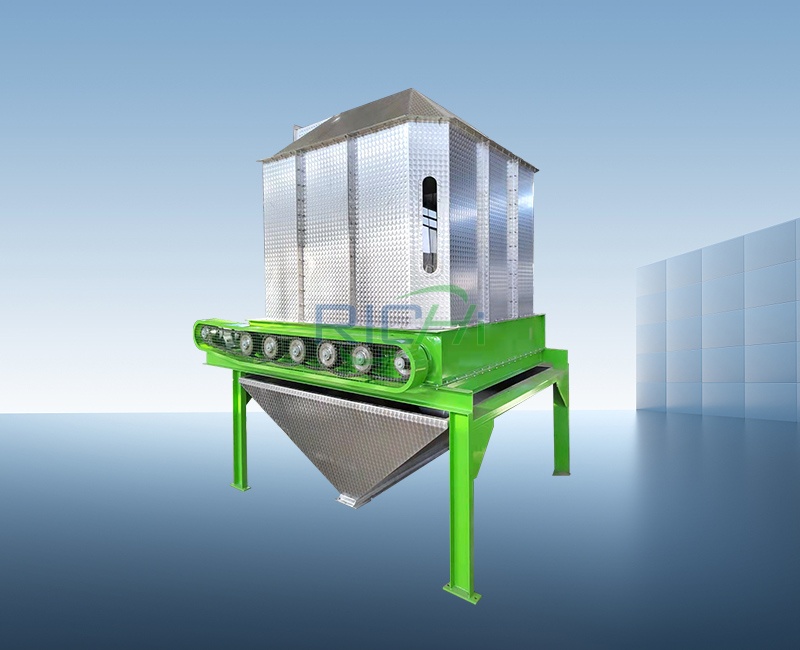
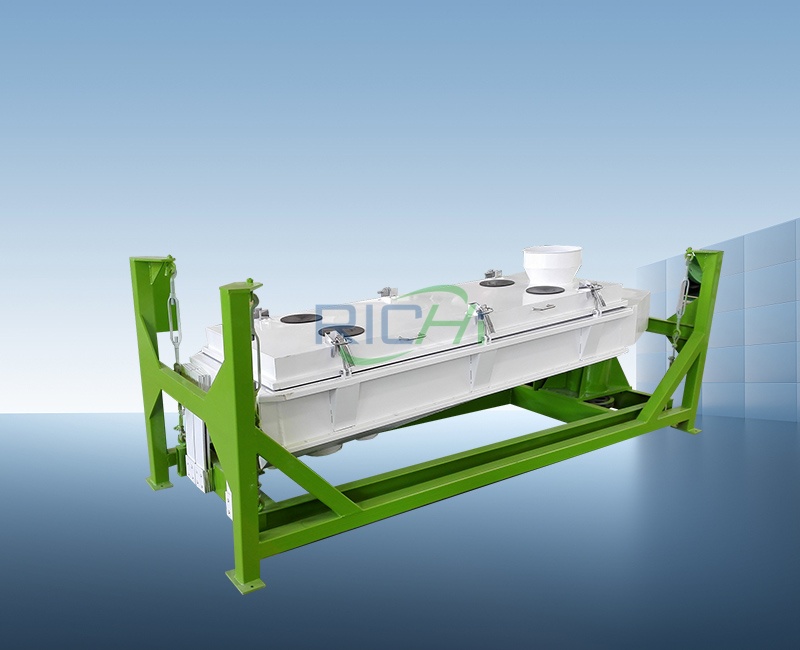
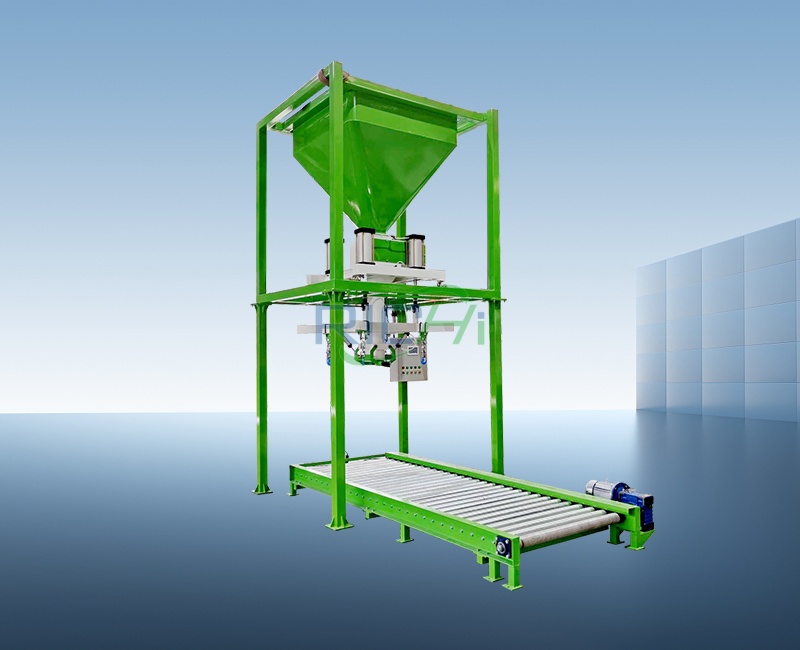
So how do you make perfect cattle feed pellets? A pellet making machine for cattle feed alone isn’t enough—you also need a full processing line. Steps like grinding, mixing, cooling, and screening are just as important. If you’re missing any piece of the puzzle, give us a call and we’ll custom-build it.


Our Services
Buying a cow feed pellet making machine isn’t just a transaction—it’s about your long-term production stability and efficiency. To make things easy for you, we’ve built a complete service process covering selection, manufacturing, delivery, installation, and after-sales.
Project Experience
30+
Years

Countries and Regions Served
140+

Projects Delivered
2000+

Factory Area
100,000+
㎡

About Us
Henan RICHI Machinery Equipment Co., Ltd., established in 1995, primarily focuses on the research and development and manufacturing of feed machinery, biomass pelleting equipment, organic fertilizer pelleting equipment, and complete pelleting production lines. After more than 30 years of development, RICHI has become a professional pelleting machinery manufacturer. Our products are exported to over 140 countries and regions worldwide, earning the trust of customers both domestically and internationally.

Qualification Advantages
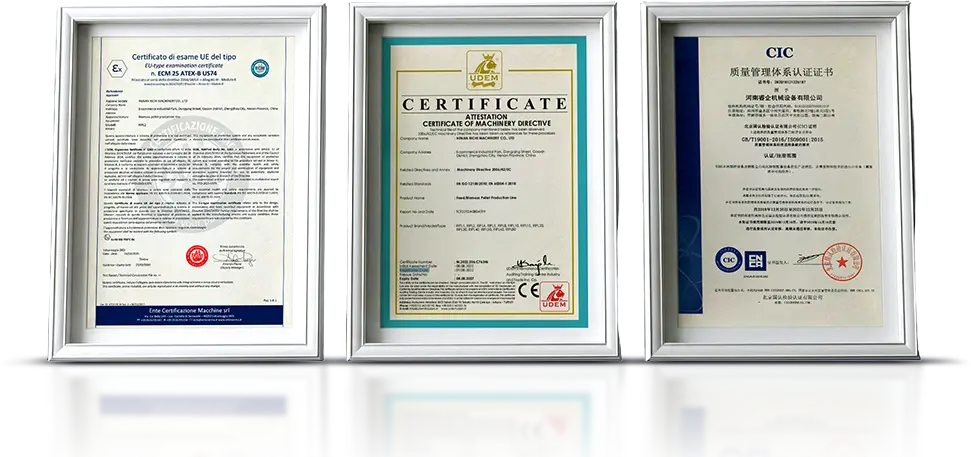
RICHI boasts numerous international authoritative certifications and patents, including ISO9001, CE, SGS, and TÜV. This means that the equipment you purchase can smoothly pass through customs and quality standards in various countries, with no customs clearance risks and compliant delivery. Choosing RICHI means choosing a guarantee of smooth global access and worry-free production.
FAQ
Here are answers to common questions we’ve gotten. Got a different one? Feel free to reach out.
What raw materials can this cattle feed pellet making machine handle?
→
Our cattle feed pellet mill handles most common feed ingredients—corn, soybean meal, wheat bran, straw, hay, cottonseed cake, and more. It works for complete feeds, concentrates, and premixes for beef cattle, dairy cows, and calves. Whether you’re pelleting a single ingredient or a complex mix, it forms stable pellets.
How do I choose the right pellet diameter?
→
You can change the ring die to get diameters from 2mm to 12mm. As a rule of thumb: 4-8mm for dairy cows, 3-4mm for calves. But it really depends on the animal’s age and your formula. Not sure? Get in touch—our engineers will help you figure it out.
What are the benefits of pelleted feed over powdered feed?
→
Pellets are more solid—no dust flying around, and cows can’t pick out their favorite bits and leave the rest.
Pellets are better cooked. The high heat during pelleting kills some bacteria.
Pellets give balanced nutrition. Because everything is pressed together, cows get a complete mix in every bite.
Pellets also store and ship better—they don’t mold or clump easily and last much longer.
My workshop is small. Can you customize the size?
→
Absolutely. If your site is tight, ceiling height is low, or feeding/discharging is awkward, just tell us. We’ll adapt the cattle feed pellet making machine to your real-world space.
How should I store the pellet mill if I won’t use it for a long time?
→
First, clean out the pelleting chamber and ring die holes thoroughly—no feed residue left. Then apply anti-rust grease to all bearings and rollers, and coat the ring die surface as well. Finally, power off the control cabinet and keep the room dry.
Do you offer technical guidance after I buy the machine?
→
Of course. We provide 24/7 remote technical support for all our customers. That means online help through every step, plus – if you need it – recipes and tips for making the perfect cattle feed pellets.

