Rice Straw Pellet Mill

Anti-Clogging Rice Straw Pellet Mill
Unlike traditional rice straw pellet mills, the RICHI rice straw pellet machine is an optimized and upgraded machine. It can process raw materials that are mainly composed of rice straw. Rice straw is loose and tends to bridge. It has high silicon content, which causes significant wear. It also has poor original binding properties. This machine handles these characteristics easily. The main working principle of the rice straw pelletizer is as follows. The ring die and pressure rollers forcefully compress the processed rice straw. The material is forced through the die holes. A cutter cuts it into uniformly sized pellets.
4-12 mm
Pellet Diameter
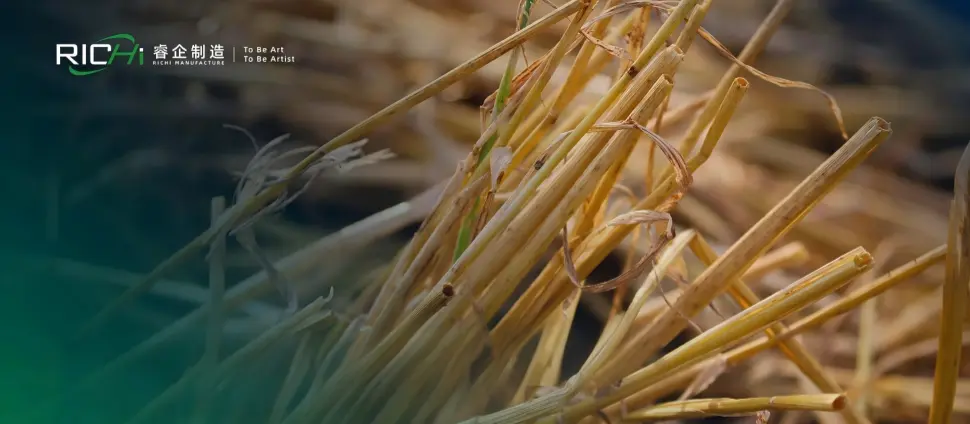
Rice Straw Pellet Mill Application
Rice straw pellet mills can produce pellets with different properties by adjusting process parameters. These pellets are suitable for various industries. Here are some common applications.
Biomass Fuel
This is the most important and most widespread application of rice straw pellet making machines. Rice straw has low raw material acquisition costs. After it is made into pellets, the pellets have high density and stable combustion. They are particularly suitable as a clean fuel to replace coal and firewood.
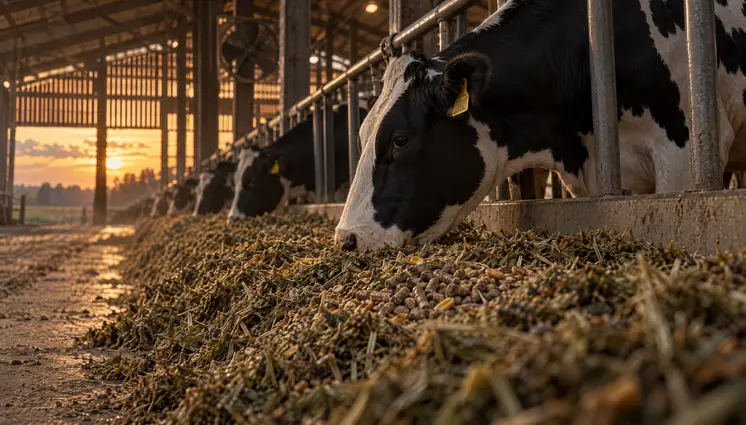
Ruminant Feed
Rice straw pellet mills can mix rice straw with corn, bran, soybean meal, premixed feed, and other materials. Then they pellet the mixture to make roughage for ruminants. This is suitable for farmers to use themselves. It is also suitable for selling the finished product nearby.
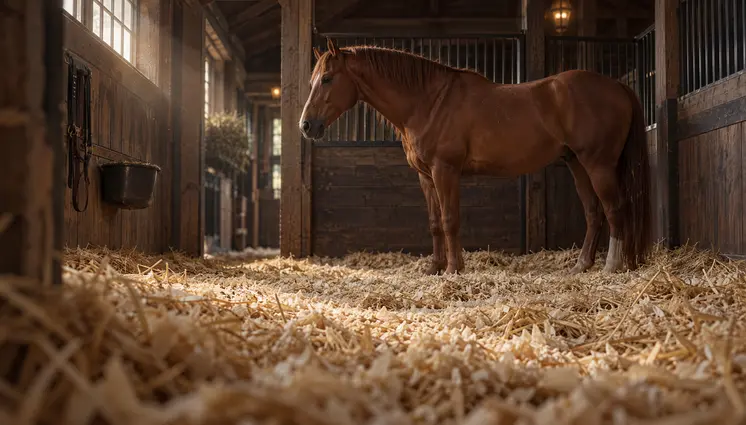
Animal Bedding
Rice straw has many internal pores. These pores can lock in moisture. Its fibers are soft. Therefore, rice straw can be used to make animal bedding with a rice straw pellet machine. The resulting pellets have good water absorption and low dust content. They will not harm the animal’s skin.
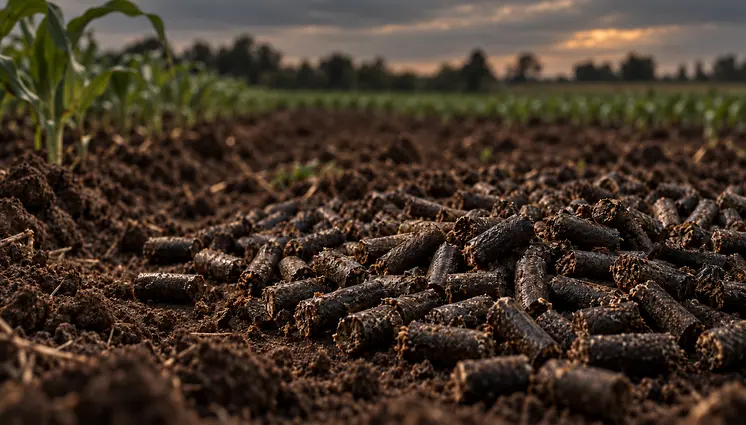
Organic Fertilizer Pellets
Rice straw and manure can be mixed and composted. Then they can be processed into organic fertilizer pellets with a rice straw pellet making machine. The rice straw acts as an organic matter carrier and adjusts the carbon-nitrogen ratio. Its fibrous structure can also loosen the compost.
Rice Straw Pellet Mill Design Highlights
RICHI has always focused on whether its rice straw pellet mills can provide customers with a better experience. To this end, we have made special design highlights and targeted optimizations in some details that are easily overlooked. These improvements can make the pelleting process smoother.
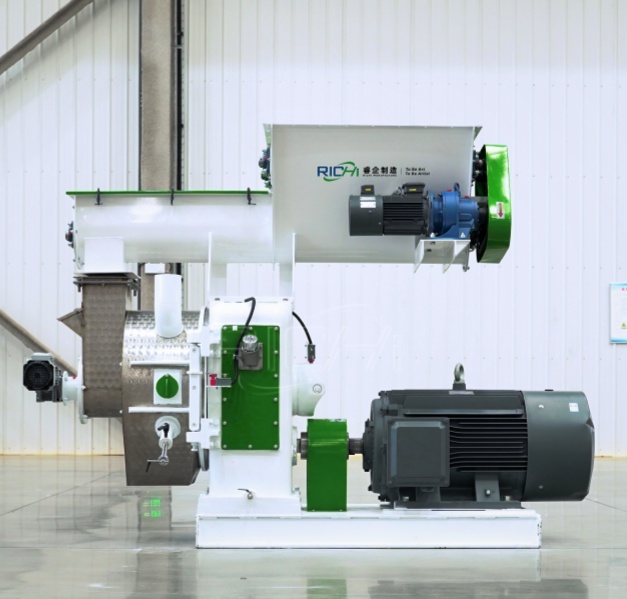
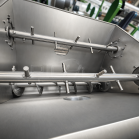
Feed Inlet
A double-roller arch-breaking feeder is installed. It addresses the loose rice straw and its low bulk density. It prevents arching and bridging. It also makes feeding more stable.
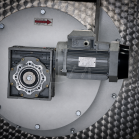
Forced Feeder
A motor powers the forced feeder. The lightweight rice straw raw material is forcibly fed into the pelleting chamber. This avoids blockage and speeds up the pelleting process.
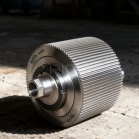
Pressure Roller
The surface grooves have been optimized. The groove shape is deeper. This enhances the ability to grip rice straw materials. It prevents slippage and free spin. It allows the materials to enter the die holes smoothly.
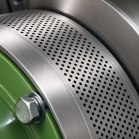
Ring Die
The surface has several round holes of uniform diameter. The ring die and pressure rollers press the rice straw material intensely. The material is extruded from these round holes into long cylindrical strips.
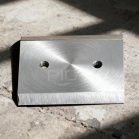
Cutter
The blade is sharp and even. It ensures clean cuts of the long cylindrical strips and minimizes burrs. The gap between the cutter and the ring die is adjustable. This allows control over the length of the rice straw pellets.
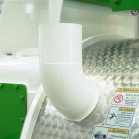
Exhaust Port
Rice straw heats up when it is squeezed and rubbed. The moisture inside the fibers vaporizes. This vapor can be expelled through the exhaust port. This prevents the pellets from clumping and becoming moldy due to moisture accumulation.

Rice Straw Pellet Mill Parameters
Below is a list of different models of RICHI rice straw pellet mills and their corresponding information. You can choose the appropriate model based on your production capacity needs. For other special requirements, please contact us for further discussion. We support customized services.
| Model | MZLH320 | MZLH350 | MZLH420 | MZLH520 | MZLH678 | MZLH768 |
| Main Motor Power (kW) | 22 | 37 | 90 | 132 | 200 | 250 |
| Anti-bridge Feeder Power (kW) | 2.2 | 2.2 | 3 | 3 | 3 | 4 |
| Forced Feeder Power (kW) | 0.75 | 0.75 | 1.5 | 1.5 | 1.5 | 1.5 |
| Ring Die Inner Diameter (mm) | 320 | 350 | 420 | 520 | 673 | 762 |
| Finished Pellet Diameter (mm) | 4-12 | |||||
| Output (T/H) | 0.2-0.3 | 0.3-0.5 | 1.0-1.2 | 1.5-2.0 | 2.5-3.0 | 3.0-4.0 |
Note: The above output data is the output of the entire production line under rated working conditions. Actual output depends on the raw materials and their moisture content. Please do not regard it as an absolute guarantee.
Rice Straw Pellet Mills Global Case Studies
With continuous optimization and iteration of rice straw pellet production machines, more and more customers are choosing our equipment. Some even purchase the entire rice straw pellet production line. They use it to process rice straw raw materials into high-quality rice straw pellets with a good appearance.
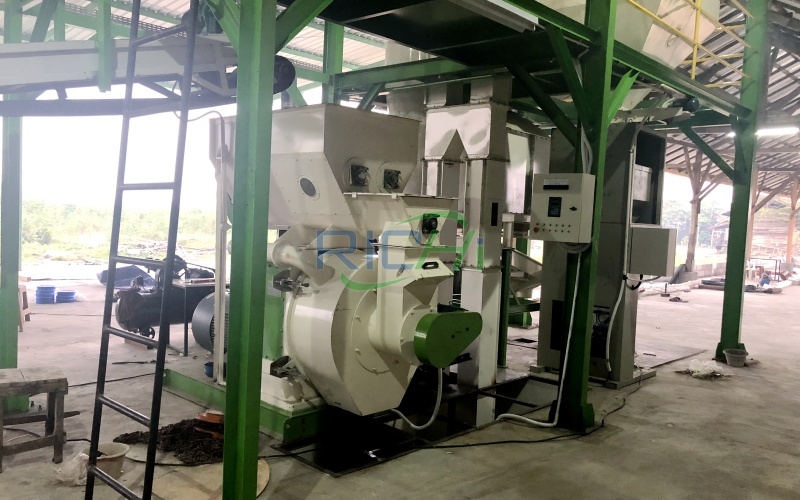
1.5 T/H Rice Straw Pellet Mill in Indonesia
This customer is a rice mill. The customer wants to use a rice straw pellet making machine to make 6mm biomass fuel pellets. Local rice straw has high moisture content and impurities. We optimized the forced feeding structure to enhance anti-clogging performance.
2 T/H Rice Straw Pellet Machine in Bangladesh
The customer is a straw recycling cooperative. The customer needs the rice straw pellet mill to process finished pellets into fuel. Some pellets are for farmers. Some are for small industrial boilers. The machine’s pressure rollers provide stable material gripping. This effectively prevents material slippage.
1.5-2 T/H Rice Straw Pelletizer in India
This is a straw collection and storage company. The client collects rice straw from farmers. The raw material is occasionally mixed with some sugarcane scraps. It is processed into 6mm biomass fuel pellets. The raw materials contain a high sand content. Sand easily wears down parts. We specifically reinforced the performance of these vulnerable components.
2 T/H Rice Straw Pellet Making Machine in Brazil
This project officially went into production in 2025. The customer purchased rice straw pellet mills for their own use. They turn the harvested rice straw from their own farm into fuel pellets. These pellets are first used in the farm’s grain drying boilers. Any surplus pellets are sold to the public.
2 T/H Rice Straw Pellet Mill in the United States
The customer uses rice straw from a rice mill as raw material. They process low-hardness bedding pellets. They have high requirements for dust control. We optimized the exhaust structure to reduce moisture accumulation and dust in the rice straw pellet machine chamber.
3 T/H Rice Straw Pellet Making Machine in Thailand
In this case, the client mainly used rice straw collected from fields as raw material. They needed to supply 8mm fuel pellets to surrounding factories. They also required continuous production. Our rice straw pelleting machine is highly wear-resistant and has a long service life. It rarely requires downtime for maintenance.

Rice Straw Pellet Mill Advantages
Our global clients have given our rice straw pelletizer rave reviews after using it. This is due to its superior performance and long service life. Its many advantages have brought them economic benefits.
The ring die of this rice straw pellet making machine is made of 42CrMo alloy steel. This material is more expensive, but it is also more wear-resistant. The ring die has also undergone carburizing treatment. This further enhances its wear resistance and extends the service life of vulnerable parts. In addition, the independent exhaust structure allows moisture in the pelleting chamber to be discharged promptly. This reduces material adhesion and corrosion in the die holes and protects the ring die.
High Wear Resistance and Long Service Life
The rice straw pellet mill has a neat layout. It has ample maintenance space. This makes it easier to clean accumulated material in the die cavity. It also makes it easy to replace pressure rollers and cutters. The control panel is simple and intuitive. Operators can clearly view the equipment status. They can also easily adjust the feeding speed.
Simple to Operate and Easy to Maintain
Our rice straw pellet machine is highly versatile. It can process previously idle straw into a wide variety of commercial pellets. These pellets can be widely used to produce fuel, livestock bedding, ruminant feed, and organic fertilizer pellets. The processed pellets have high density and a small footprint. This significantly reduces transportation costs.
Strong Applicability, Improving Economic Efficiency

How to Make Rice Straw Pellets
How does rice straw transform from its initial form into dense, high-quality pellets? This is not an overnight process. It involves several key steps: crushing, drying, pelleting, cooling, screening, and packaging. These steps together form a complete rice straw pellet production line.

01.
Crushing
Whether the rice straw you collect is in bundles or loose, it needs to be crushed first. We recommend crushing it into a coarse powder of 3–5 mm. This prevents it from getting tangled in the machine in subsequent processes. It also increases the contact area of the fibers. This is beneficial for extrusion molding.
02.
Drying
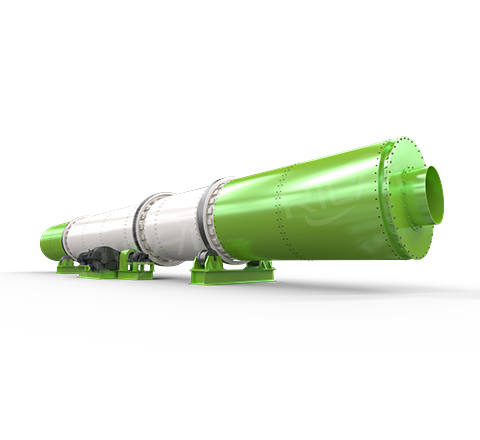
Freshly harvested rice straw has a high moisture content. Pelleting it directly can cause equipment blockage. Natural drying can be effective, but it is difficult to control precisely. The drying process mainly uses a drying machine. The machine precisely controls the moisture content of the rice straw between 12% and 18%. This results in more stable rice straw pellet formation.
03.
Pelleting
This step uses the crucial rice straw pellet mill. The pre-treated rice straw raw material is fed into the pelleting chamber and compressed. You can adjust the distance between the cutter and the ring die according to your needs. You can also replace the ring die with one of a different aperture. In this way, you can produce rice straw pellets of different sizes and for different purposes.
04.
Cooling
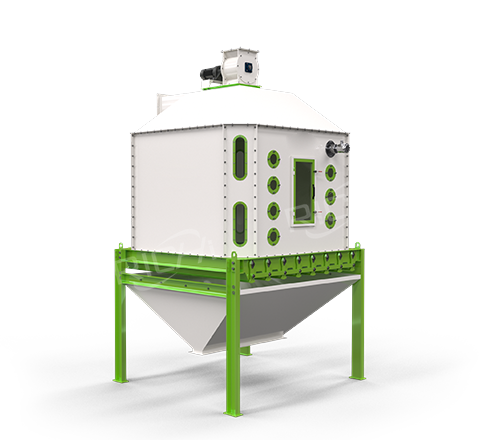
The ring die and pressure rollers in a rice straw pellet machine generate high temperatures through mutual compression and friction. The resulting pellets are hot and soft. They are not suitable for direct storage and transportation. Cooling is crucial to solving this problem. Cooling equipment can rapidly lower the temperature of the rice straw pellets. At the same time, it hardens them to reduce breakage.
05.
Screening
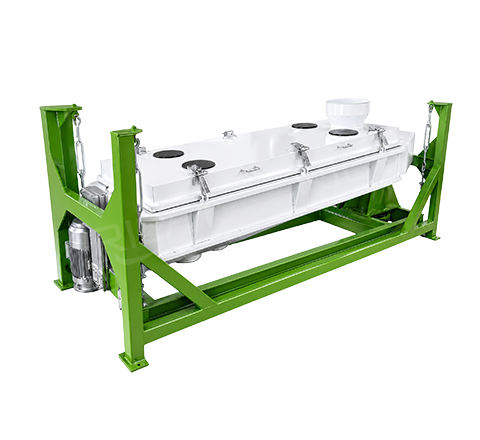
The screening process is usually linked to the cooling process. The screening equipment is typically located close to the cooling equipment. This saves floor space and optimizes the spatial layout. The screening process mainly involves carefully selecting the cooled and shaped pellets. Only pellets with good appearance and uniform size are retained.
06.
Packaging
This is the final step in making rice straw pellets. The qualified pellets remaining after screening are weighed and packaged. You can choose packaging equipment with different levels of automation. The higher the automation level, the faster the packaging speed and the lower the labor costs. We suggest you choose according to your budget.
Auxiliary Equipment for Producing Rice Straw Pellets
Some experienced customers know that rice straw pellet mills are just one piece of equipment used in a rice straw pellet production line. Other sections also require the following equipment.
Rice Straw Baler
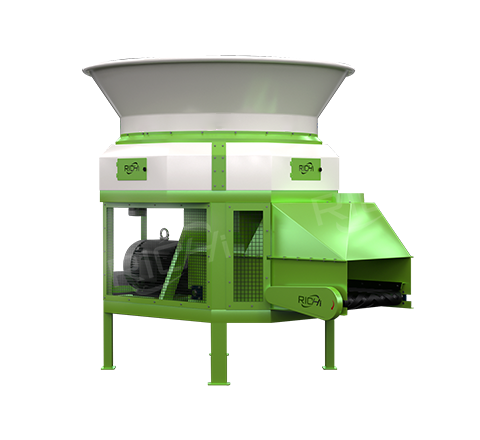
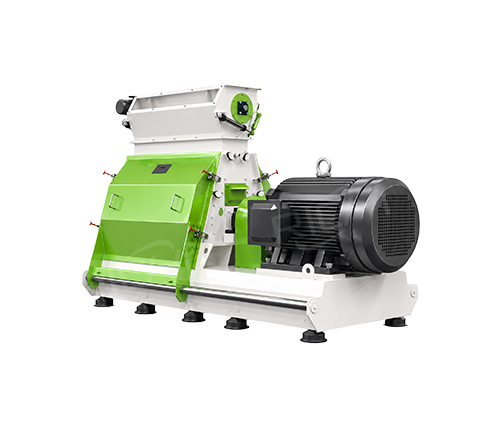
Rice Straw Crusher
Rice Straw Dryer
Rice Straw Pellet Cooling Machine
Rice Straw Pellet Screening Machine
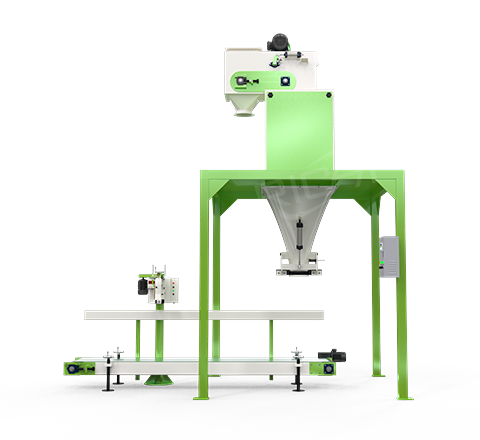
Rice Straw Pellet Packaging Scale
FAQ
We have compiled and answered some frequently asked questions from our customers when purchasing rice straw pellet mills. We sincerely hope this information will be helpful to you. If you have any further questions, please feel free to contact us.
What is the typical size of rice straw pellets?
→
The most common diameter of rice straw pellets on the market is 6-10mm. The required diameter varies by purpose. For fuel use, 6-8mm is the most common. 10mm is commonly used in some scenarios where pellets are needed as animal bedding or for specific purposes.
Our rice straw pellet maker can produce pellets with a diameter of 4-12mm. This can meet the needs of most customers.
Besides rice straw pellet making machines, can you provide rice straw pellet production lines?
→
Yes. As mentioned earlier, in addition to rice straw pellet mills, we also provide production equipment for different stages. If you need a complete production line, we can also customize a solution. We provide rice straw pellet production line solutions ranging from 0.2 to 4 T/H. We also support customized capacity expansion and upgrades for rice straw pellet production lines.
How can you judge the quality of rice straw pellets with the naked eye?
→
High-quality rice straw pellets have a smooth surface. They are not easily broken. They produce less dust. They also have a uniform color. You can also try breaking them open to observe. High-quality rice straw pellets will be more compact.
What is the warranty period for a rice straw pellet machine?
→
Our rice straw pelleting machine comes with a 12-month warranty. During this period, if the equipment malfunctions due to non-human factors, you can contact us for free repairs. Please note that easily worn parts such as the ring die, pressure roller, and cutter are not covered under warranty. If you require replacements, we have ample original parts available at affordable prices.
What precautions should be taken when storing rice straw pellets?
→
We recommend storing pellets in a dry, well-ventilated, and moisture-proof location. It is best to avoid direct contact with the ground. Also, avoid piling them too high. Ideally, the pile should be less than 2.5 meters to prevent heat buildup. Seal them properly during rainy weather. This prevents the rice straw pellets from absorbing moisture and becoming moldy.

Why Choose RICHI
Our rice straw pellet mills have been sold to more than 140 countries and regions around the world. They have received wide praise from customers. This feedback comes from RICHI’s long-term project experience and a series of its own advantages.
Project Experience
30+
Years

Countries and Regions Served
140+

Projects Delivered
2000+

Factory Area
100,000+
㎡

About Us
Henan RICHI Machinery Co., Ltd.,(睿企机械) established in 1995, primarily focuses on the research and development and manufacturing of feed machinery, biomass pelleting equipment, organic fertilizer pelleting equipment, and complete pelleting production lines. After more than 30 years of development, RICHI has become a professional pelleting machinery manufacturer. Our products are exported to over 140 countries and regions worldwide, earning the trust of customers both domestically and internationally.

Qualification Advantages
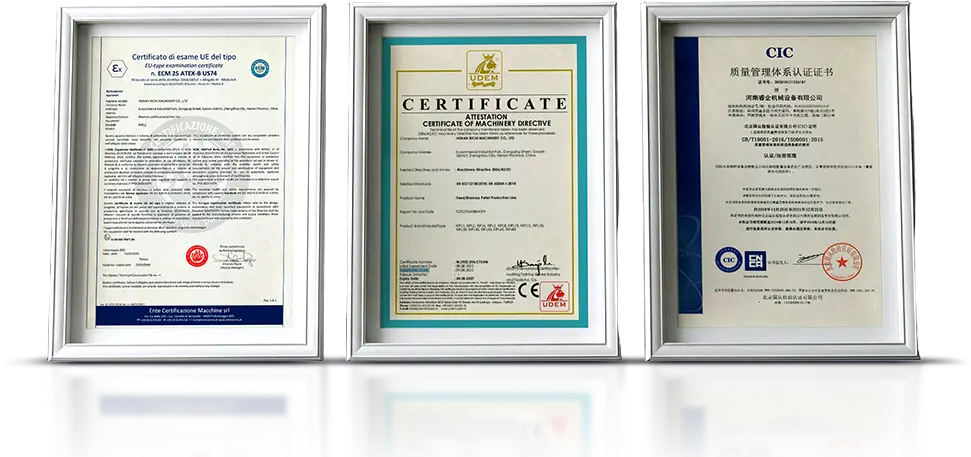
RICHI boasts numerous international authoritative certifications and patents, including ISO9001, CE, SGS, and TÜV. This means that the equipment you purchase can smoothly pass through customs and quality standards in various countries, with no customs clearance risks and compliant delivery. Choosing RICHI means choosing a guarantee of smooth global access and worry-free production.