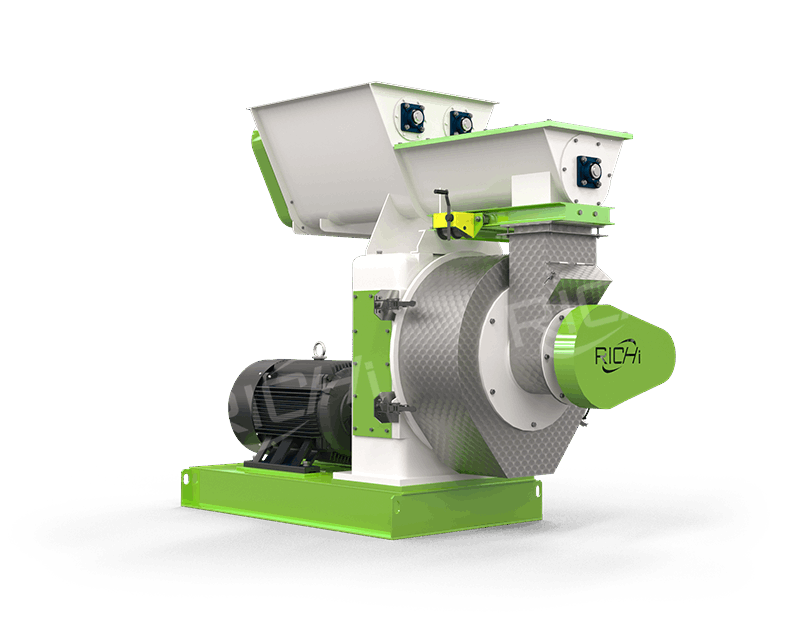
Bamboo Pellet Mill


Product Introduction
Wear-resistant Bamboo Pellet Mill

Capacity: 0.2-4 T/H
A bamboo pellet mill is a machine specifically designed to process bamboo raw materials. It is suitable for bamboo, a material with strong fibrous toughness. The ring die and pressure rollers press and rub the material strongly. This generates heat. The heat softens and binds the lignin inside the bamboo. The material finally forms cylindrical pellets.
RICHI bamboo pellet making machines have a sturdy structure and strong wear resistance. They can also produce bamboo pellets of different sizes. These pellets can be used as biomass fuel. They have low ash content and stable combustion.

Bamboo Pellet Mill Video
If you want to understand this machine more intuitively, you can watch a few videos. They show the pelletizing effect of the bamboo pellet making machine. They also show its actual application in pellet production lines.
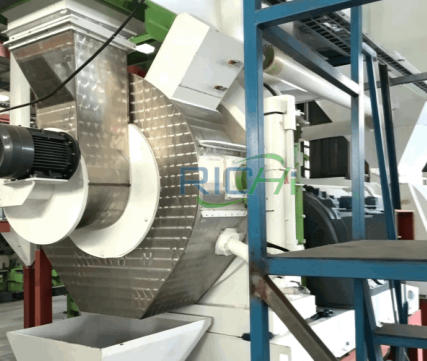
2T/H Bamboo Pellet Mill in Uganda


Demonstration of Bamboo Pellet Machine Test Run Results
Bamboo Pellet Mill Components Highlights
What makes RICHI bamboo pellet mills wear-resistant, efficient, and stable in operation? The answer lies in some unassuming structural parts. We have carefully researched and designed these parts. They play a crucial role in making bamboo pellets.

Feed Inlet
This area is equipped with a variable-frequency arch-breaking feeder. The opening has been widened. The purpose is to let raw materials flow down smoothly.
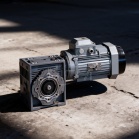
Forced Feeder
It is installed above the chute and driven independently by a motor. Its job is to force materials into the pelletizing chamber. It prevents blockage.

Ring Die
The surface has many round holes of the same diameter. By changing the ring die, you can change the diameter of the finished bamboo pellets.
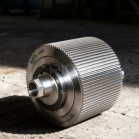
Pressure Roller
The roller surface has anti-slip grooves. They enhance the ability to bite and grip materials. They reduce slipping of bamboo raw materials. Molding becomes more stable.
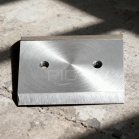
Cutter
The blade angle has been optimized. It is not easy to snag long bamboo fibers. The distance from the blade to the ring die surface is adjustable. This controls pellet length.
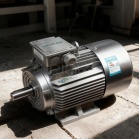
Main Motor
The main motor provides power for the bamboo pellet making machine. It has sufficient torque and strong overload resistance. It ensures bamboo raw materials are pressed stably.
Suitable Raw Materials
RICHI bamboo pellet mills are powerful. They can process various common high-fiber bamboo raw materials. They can also process other mixed biomass raw materials. If you have needs, you can also contact us for customized solutions.
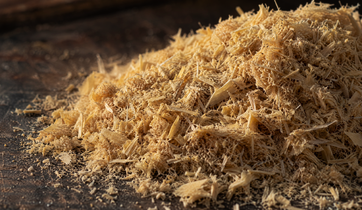
Bamboo Shavings
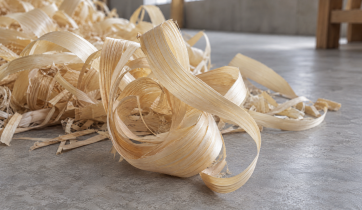
Bamboo Wood Chips
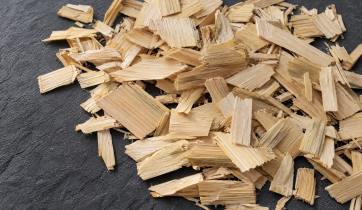
Bamboo Flakes
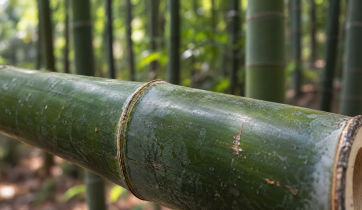
Bamboo Joints

Bamboo Leaves
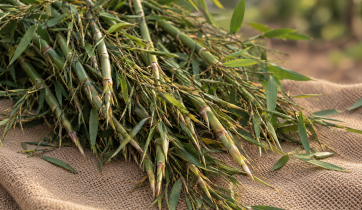
Bamboo Tips
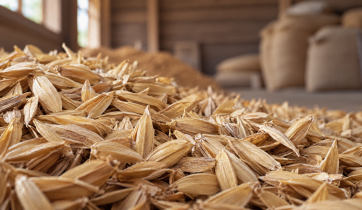
Rice Husks
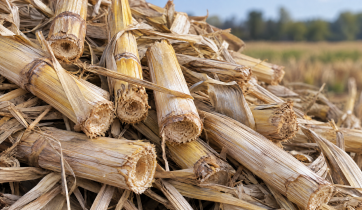
Corn Straw
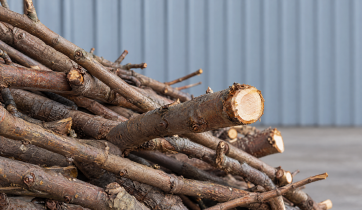
Branches
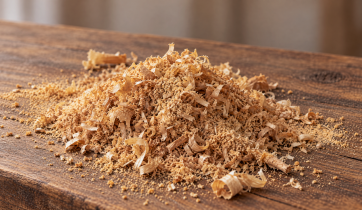
Sawdust
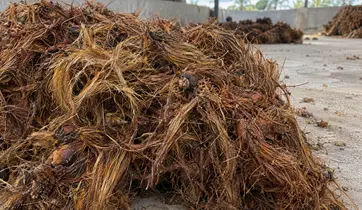
EFB
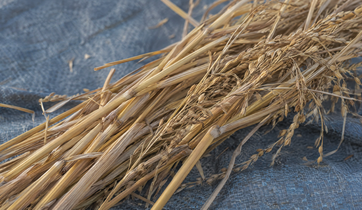
Rice Straw

Bamboo Pellet Mill Parameters
No single bamboo pellet mill can suit all scales and working conditions. In over 30 years of development, RICHI has fully understood customer demands. We have developed different models of bamboo pellet making machines. Below are detailed models, production capacities, and other information for your choice. If you need special customization, welcome to contact us at any time.
| Model | MZLH320 | MZLH350 | MZLH420 | MZLH520 | MZLH678 | MZLH768 |
| Main Motor Power (kW) | 22 | 37 | 90 | 132 | 200 | 250 |
| Anti-bridge Feeder Power (kW) | 2.2 | 2.2 | 3 | 3 | 3 | 4 |
| Forced Feeder Power (kW) | 0.75 | 0.75 | 1.5 | 1.5 | 1.5 | 1.5 |
| Ring Die Inner Diameter (mm) | 320 | 350 | 420 | 520 | 673 | 762 |
| Finished Pellet Diameter (mm) | 4-12 | |||||
| Output (T/H) | 0.2-0.3 | 0.3-0.5 | 1.0-1.2 | 1.5-2.0 | 2.5-3.0 | 3.0-4.0 |
Note: The above output data is the output of the whole production line under rated working conditions. Actual output depends on raw materials and their moisture content. Please do not treat it as an absolute guarantee.
Bamboo Pellet Mill Global Case Studies
Our goal has always been the global market. Therefore, we fully consider raw material resources and site conditions in different countries. Up to now, RICHI has customized bamboo pellet mill solutions for thousands of customers.
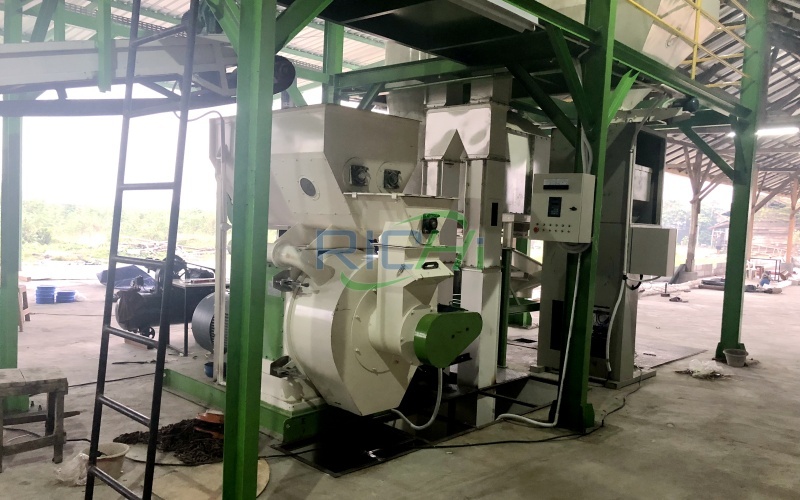
3 T/H Bamboo Pellet Machine in India
Raw materials: bamboo shavings, bamboo scraps, and crushed small-diameter bamboo.
Pellet size: 8 mm
This is a supporting biomass power plant project for a bamboo company in India. Local bamboo in India has high silicon content and strong abrasiveness. The customer pays special attention to the wear resistance of the ring die and pressure rollers in the bamboo pellet mill. After buying our product, they turn bamboo processing waste into pellets and supply them directly to nearby power plants.
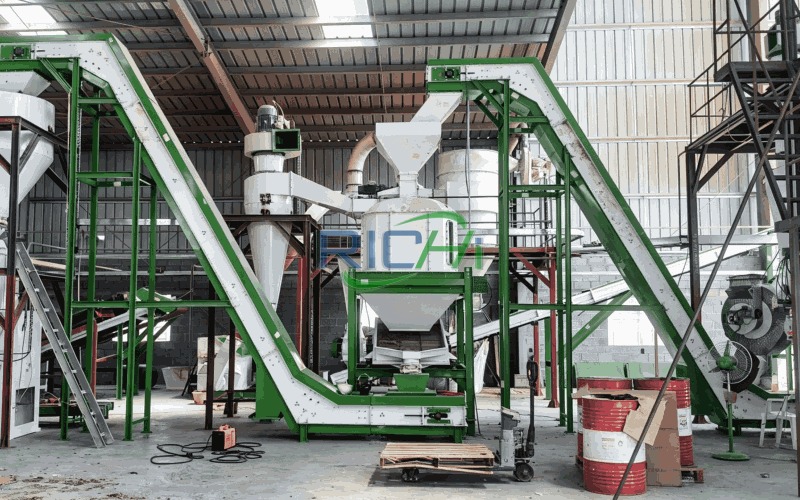
2-2.5 T/H Bamboo Pellet Mill in Ethiopia
Raw materials: bamboo forest harvesting residues, bamboo branches, and bamboo leaves mixed together.
Pellet size: 6-8 mm
The customer bought the bamboo pellet making machine and put it into production in 2023. It serves a new energy company project. When collecting bamboo materials, the customer easily mixes in mud and sand. We optimized the feed protection structure of this bamboo pellet making machine. This reduces damage to the main machine caused by debris.

2 T/H Bamboo Pellet Making Machine in Brazil
Raw materials: bamboo forest tending and thinning materials, and scraps from bamboo processing companies.
Pellet size: 8 mm
A forestry company in Brazil plans to use its own bamboo pelleting machine. It will make pellets for the factory’s drying kilns and boilers. The aim is to save the cost of buying coal and liquefied gas from outside. The supply of bamboo raw materials has low and peak seasons. The customer will use the variable-frequency feeding function to flexibly adjust output within the rated range.
3-4 T/H Bamboo Pellet Machine in Colombia
Raw materials: mainly bamboo shavings, with a small amount of eucalyptus wood shavings.
Pellet size: 6 mm
This is a biomass export project. The customer put it into production in 2024. They need to sell the pellets to Europe and South Korea. Therefore, they have strict requirements for finished product quality. We helped the customer adjust the ring die hole parameters. This ensures stable molding. The fines rate is controlled within 2%.
0.5-1 T/H Bamboo Pellet Making Machine in Fiji
Raw materials: bamboo garden trimming waste, and scraps from bamboo products.
Pellet size: 8 mm
This is a micro project jointly run by a Fiji resort and a bamboo workshop. The customer bought this small bamboo pellet machine to make fuel pellets. The pellets are specially supplied to the resort for heating. Local bamboo waste is scattered. There is no need for large-scale storage. They can pellet on site.
2 T/H Bamboo Pellet Maker in Mexico
Raw materials: mixed and crushed branches, bamboo tips, and bamboo husks.
Pellet size: 8 mm
A customer in Mexico contacted us for a food factory boiler renovation project. They want to use a bamboo pellet mill to make bamboo pellets and replace coal. The factory’s production plan fluctuates greatly. This bamboo pellet making machine starts and stops easily. It can arrange production at any time according to the factory’s needs.
Bamboo Pellet Mill Advantages
RICHI bamboo pellet mills have been successfully sold to many countries around the world. We have accumulated a wide range of customer cases. We have helped customers increase income. We have received widespread praise. In essence, all this comes from the advantages of the mill itself.
This pellet mill is equipped with a 42CrMo alloy steel ring die. After carburizing and quenching heat treatment, its hardness can reach HRC58-62. Its wear resistance is better than ordinary stainless steel. It can easily handle the pain point that bamboo has high silicon content and easily wears equipment.
Long Service Life
When choosing a suitable bamboo pellet mill, you should not only check whether pelletizing is efficient and finished product quality is good. You should also pay attention to its safety. RICHI bamboo pellet making machines are equipped with safety pins. If iron blocks and other impurities enter the machine, or if overload occurs due to too much feeding, the safety pin will shear off. This triggers an emergency stop of the equipment. It protects expensive parts such as the ring die, pressure rollers, and main shaft from damage.
High Safety
RICHI bamboo pellet machines can process various bamboo materials. They support pelletizing a single raw material. They also support mixed production with other agricultural and forestry waste. They are suitable for bamboo shavings, bamboo tips, sawdust, straw, and more. They flexibly respond to changes in raw material supply. They improve raw material utilization. They help achieve diversified monetization.
High Compatibility with Raw Materials

Bamboo Pellet Production Process
If you are new to bamboo pelletizing, you may wonder: what is a complete bamboo pellet production process like? Below are several important production stages. Almost all of them are indispensable.

01.
Crushing
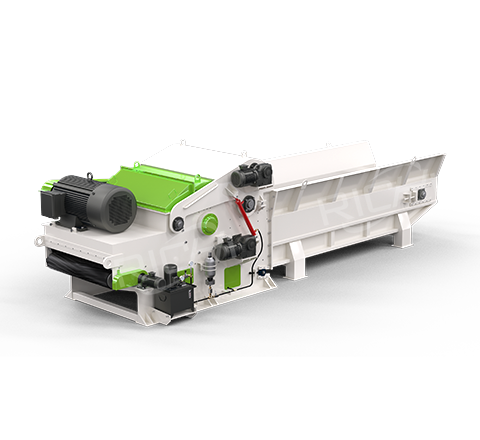
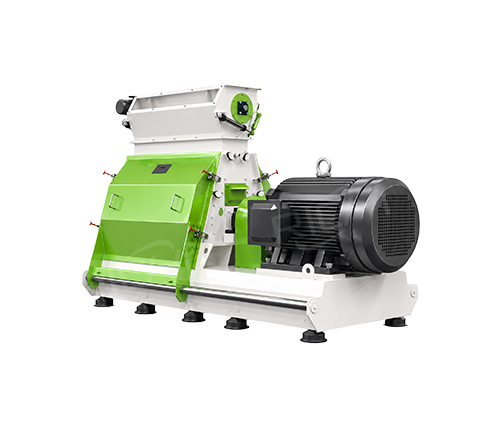
Each customer uses different raw materials. They may be bamboo joints, bamboo shavings, or bamboo chips. If the raw material is large, it first needs to be crushed into 3-5 mm powder. This cuts bamboo fibers. It helps the material enter later stages smoothly. It prevents wear and damage to the machine.
02.
Drying
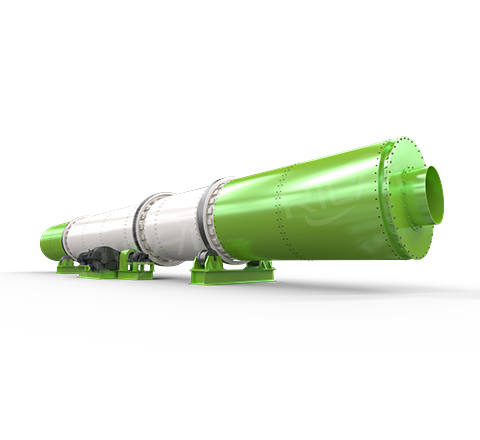
Some customers use freshly cut bamboo tips as raw materials. Or the raw materials may become damp due to storage conditions. If such high-moisture raw materials are used directly for pelletizing, the pellets will be loose and not form well. They will block the ring die of the bamboo pellet machine. In this case, drying is especially important.
03.
Pelletizing
No matter what size your factory is, this step is essential if you produce bamboo pellets. The pelletizing step needs a bamboo pellet mill. Bamboo powder is pressed by the ring die and pressure rollers. Friction generates heat. This softens and binds the lignin in the bamboo material. The material is then extruded through the ring die holes and forms long pellets.
04.
Cooling
After pelletizing, the pellets generally need to be cooled. This is because bamboo pellets coming out of the pellet mill have some temperature and are soft. They are not suitable for direct storage. Otherwise, there is a risk of breakage. The cooling step can quickly lower the pellets to room temperature. It also makes the pellet structure more stable.
05.
Screening
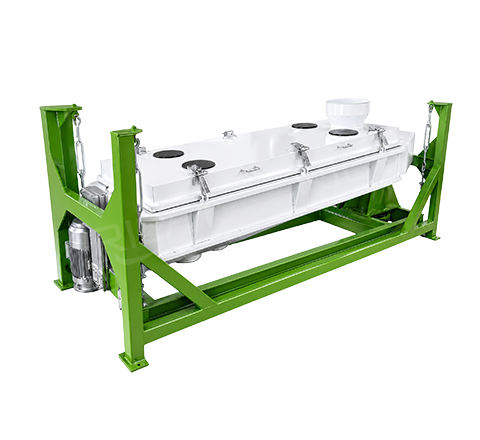
Screening not only ensures the quality of bamboo pellets themselves. Their appearance also affects whether many customers can get more economic benefits. This step removes broken pellets, fine powder, and oversized pellets. It makes the finished product look more uniform and consistent.
06.
Packing
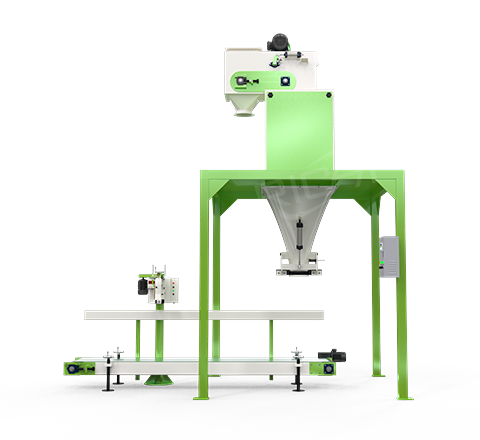
To reduce labor costs and make finished pellets easier to store and transport, we suggest you do not ignore the importance of packing. This step is the last step in the whole production process. It weighs, bags, and seals qualified pellets after screening in batches according to a certain weight.
Auxiliary Equipment for Bamboo Pellet Production
As mentioned earlier, producing high-quality bamboo pellets requires a series of complete steps and processes. Accordingly, besides the bamboo pellet mill, a series of auxiliary equipment is also needed. You can decide whether to add corresponding equipment according to your own needs.
Bamboo Crusher
Bamboo Grinder
Raw Material Dryer
Bamboo Pellet Cooler

Bamboo Pellet Screener
Bamboo Pellet Packer
Conveying Equipment

FAQ
If you want to know more about bamboo pellet mills, you can browse the common questions and answers below. You can also contact us directly. Professional engineers will answer your questions online.
Will bamboo from different origins affect the pelletizing effect?
→
Yes, there will be differences. Bamboo from different producing areas may have different silicon content and fiber hardness. The higher the silicon content, the easier the ring die and pressure rollers wear. We support trial runs. If you are not sure how your raw material will perform in bamboo pellet production, you can contact us and send raw materials for a trial run.
Does the capacity listed on the bamboo pellet making machine represent the capacity of bamboo shavings? Can it actually be achieved during production?
→
The capacity on the bamboo pellet press machine nameplate is tested when moisture content, raw material size, and cleanliness all meet the standards. If your raw material contains a lot of mud and sand, or has too high moisture content, it will affect final actual capacity. Therefore, we recommend that you fully process the raw material before pelletizing.
Is a dust removal system required when producing bamboo pellets?
→
Yes. During bamboo pellet production, dust is usually generated at crushing and screening points. Therefore, dust removal systems should be installed mainly in the pre-treatment and finished product screening sections. This can meet workshop environmental protection requirements. It can also reduce dust entering equipment bearings and causing wear.
How do I choose the appropriate ring die hole diameter?
→
Our bamboo pellet mill can produce 4-12 mm pellets. Common bamboo pellet diameters on the market are 6-10 mm. By use, 6-8 mm pellets are mostly used in small boilers and fireplaces. 8-10 mm bamboo pellets are more suitable for large industrial boilers.
Besides being used as biomass fuel, are bamboo pellets used for other purposes?
→
Some high-quality bamboo powder can be processed into bamboo cat litter and seedling substrate. Pure bamboo pellets without impurities (such as carbonized bamboo charcoal pellets) can be used as organic fertilizer carriers. However, these uses all have high requirements for raw material cleanliness. If you have such needs, welcome to contact us for a customized solution for bamboo pelletizer machines.

Why Choose RICHI
Our bamboo pellet mills have been sold to more than 140 countries and regions around the world. They have received wide praise from customers. This feedback comes from RICHI’s long-term project experience and a series of its own advantages.
Project Experience
30+
Years

Countries and Regions Served
140+

Projects Delivered
2000+

Factory Area
100,000+
㎡

About Us
Henan RICHI Machinery Co., Ltd., established in 1995, primarily focuses on the research and development and manufacturing of feed machinery, biomass pelleting equipment, organic fertilizer pelleting equipment, and complete pelleting production lines. After more than 30 years of development, RICHI has become a professional pelleting machinery manufacturer. Our products are exported to over 140 countries and regions worldwide, earning the trust of customers both domestically and internationally.

Qualification Advantages
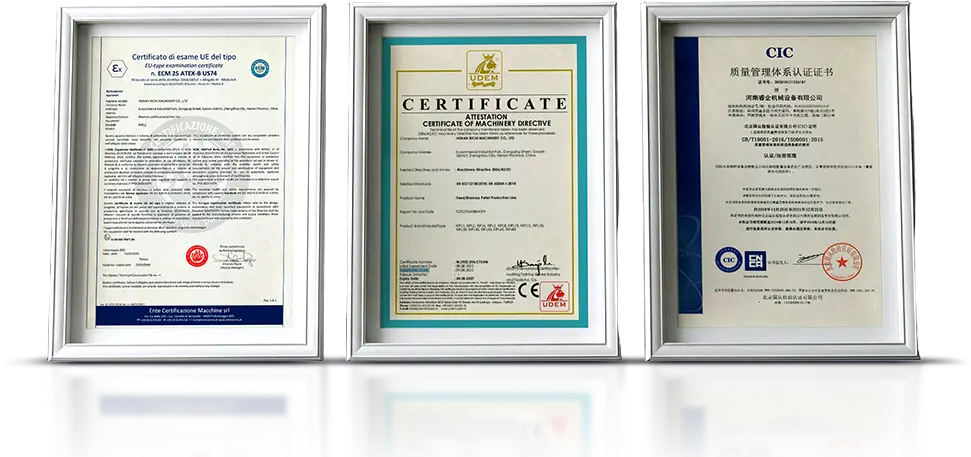
RICHI boasts numerous international authoritative certifications and patents, including ISO9001, CE, SGS, and TÜV. This means that the equipment you purchase can smoothly pass through customs and quality standards in various countries, with no customs clearance risks and compliant delivery. Choosing RICHI means choosing a guarantee of smooth global access and worry-free production.