
Poultry Feed Mixer Machine Price
Mechanical mixing ensures even distribution of poultry feed ingredients. It prevents nutrient enrichment or imbalance. Poultry feed mixer machine prices range from $2,800 to $36,500. Contact us to order.
Overview of Poultry Feed Mixer Machine Prices
The table below shows general price ranges for poultry feed mixer machines. If you mainly produce chicken feed, you can also refer to this table for chicken feed mixer machine prices.
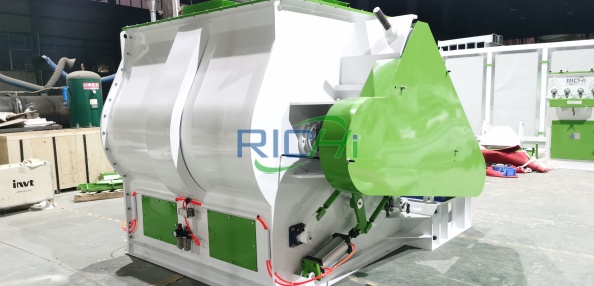
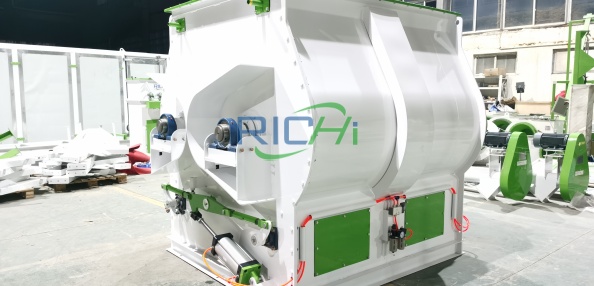
| Model | Effective Volume | Material | Price Range (USD) | Applicable Scale |
| SLHSJ0.5A | 0.5 m³ | Carbon Steel | $2,800 – $4,200 | small-scale farms, 5,000–10,000 birds |
| SLHSJ0.5B | 0.5 m³ | Stainless Steel | $4,200 – $5,800 | small farms that require hygiene and corrosion resistance |
| SLHSJ1.0A | 1.0 m³ | Carbon Steel | $5,800– $8,500 | medium-sized farms, 10,000–30,000 birds |
| SLHSJ1.0B | 1.0 m³ | Stainless Steel | $8,500 – $11,500 | medium farms that produce both premix and multiple poultry feed varieties alternately |
| SLHSJ2.0A | 2.0 m³ | Carbon Steel | $11,500 – $20,000 | medium to large-scale farms / small feed mills, 30,000–100,000 birds |
| SLHSJ4.0A | 4.0 m³ | Carbon Steel | $20,000 – $36,500 | large-scale commercial feed mills, with more than 100,000 birds |
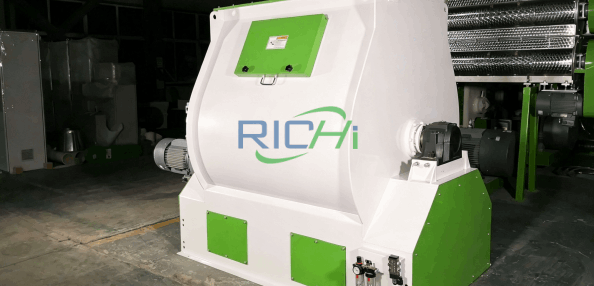
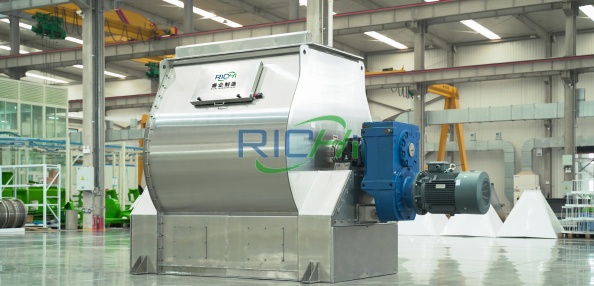
| Model | Effective Volume | Batch Capacity | Discharge Method | Power | Price Range (USD) |
| SLHY0.5A | 0.5 m³ | 250 kg | Manual Discharge | 4 kW | $2,800 – $3,800 |
| SLHY1.0A | 1.0 m³ | 500 kg | Manual Discharge | 7.5 kW | $3,800 – $5,000 |
| SLHY1.0A | 1.0 m³ | 500 kg | Pneumatic Discharge | 7.5 kW | $4,200 – $5,500 |
| SLHY2.5L | 2.5 m³ | 1,000 kg | Pneumatic Discharge | 18.5 kW | $5,500 – $9,000 |
| SLHY3.5L | 3.5 m³ | 1,500 kg | Pneumatic Discharge | 30 kW | $9,000 – $15,000 |
| SLHY5.0L | 5.0 m³ | 2,000 kg | Pneumatic Discharge | 37 kW | $15,000 – $24,000 |
| SLHY7.5L | 7.5 m³ | 3,000 kg | Pneumatic Discharge | 45 kW | $24,000 – $36,500 |
Not sure which poultry feed mixing machine model fits your needs? Tell us your required capacity. You will get an accurate poultry feed mixer price quote within 24 hours.
Factors Affecting Poultry Feed Mixer Machine Price
√
Body Material
For machines of the same size, carbon steel models are cheaper. Stainless steel models cost more. Carbon steel is inexpensive and sturdy. It works well for making ordinary mixed feed. Stainless steel does not rust after long use. It is also easier to clean. This makes it more hygienic for customers who process multiple types of poultry feed on one production line. Whether you buy a chicken feed mixer machine or other poultry feed mixers, the body material is an important factor.
√
Effective Volume
Poultry mixer machines are usually classified by batch volume. Volumes range from about 0.5 m³ to 7.5 m³. Each batch can mix 250 kg to 3 tons of feed. Larger volumes require thicker steel plates, more powerful motors, and stronger frames. So when choosing a model, consider your daily output needs. Avoid picking one that is too large or too small.
√
Discharge Method
The discharge method also affects the poultry feed mixer machine price. It influences mixing efficiency and cross-contamination risk. Small-capacity models mostly use single-door manual or pneumatic discharge. Their structure is simple and cost is low. Medium and large models generally use double-door pneumatic discharge. These have a wide opening angle and fast discharge speed.
√
Motor Configuration
There is an “invisible cost” in the poultry feed mixer machine price. This mainly refers to the motor cost. Small-capacity mixers typically use 5.5–7.5 kW motors. Large-capacity mixers need 18.5–45 kW motors. In addition, our motors come from international brands. Their procurement cost is higher than standard ones. But they improve stability, noise control, and service life.
So the poultry feed mixer machine price is not a single number. It is the result of many factors. When comparing prices, do not just look at the total cost. Check each core configuration to see if it suits your production needs.


Hidden Costs of Low-Price Poultry Feed Mixer Machines
Many customers want to buy poultry feed mixer machines at low prices. This seems to save money in the short term. But over time, these machines develop many problems.
01
Uneven mixing
Lower-priced poultry feed mixers often simplify the impeller layout, spindle speed, and mixing time. This leads to poor mixing uniformity. For poultry feed, uneven mixing means some birds do not get nutritious feed. As a result, birds grow unevenly.
02
Frequent breakdowns
To lower the poultry feed mixer price, some manufacturers use ordinary brand motors and soft-tooth reducers. Under long-term heavy load, the reducer wears out and bearings get damaged. This forces production to stop. Repair costs and output loss from downtime are easy-to-overlook hidden costs.
03
Short lifespan
Low-price poultry feed mixture machines use thinner steel plates, weaker welding, and poor anti-corrosion treatment. After two or three years, you may see rust and loose structures. This also affects the quality of the poultry feed you produce.
How to Get an Accurate Price
To get the latest and most accurate poultry feed mixer machine price, or to order a chicken feed mixer, please provide us with the following information.
- feed weight per hour, or weight per batch
- types of ingredients you mix, and whether you add oils, trace elements, etc.
- voltage and frequency at your site
- available space and infrastructure
Frequently Asked Questions
You may have other questions about the poultry feed mixer machine price. Let’s see if the following information can answer your questions.
+
What is the cheapest poultry feed mixer machine price?
Currently, the cheapest model is SLHSJ0.5A (0.5 m³ carbon steel) and SLHY0.5A. It starts at about $2,800. This suits small farms. The actual price depends on your final configuration (motor brand, shipping cost, etc.). Contact us with your detailed needs, and we will give you the most accurate quote.
+
How many years can a poultry feed mixer machine be used? What is the payback period?
If you don’t blindly buy the cheapest poultry feed mixer, its lifespan can reach 8-10 years with normal maintenance. The payback period mainly depends on the scale of your farm and the frequency of use.
+
Can you customize poultry feed mixers? How much does it cost to customize one?
Yes, we support customization. Common options include upgrading material-contact parts to stainless steel, adding a liquid dispensing system, and adjusting the volume. Customization usually adds 10%–30% to the standard model price. The exact cost depends on the modifications.
+
Can you provide on-site installation after I purchase a poultry feed mixer machine?
Yes. We offer on-site installation and commissioning services, as well as on-site training for your operators. Our goal is to help every customer get started quickly.
RICHI After-Sales Support
If you purchase our poultry feed machine, you can enjoy the following after-sales services. RICHI will act as your excellent consultant during production. We will help you solve various after-sales problems.

12-month warranty period
After purchasing the poultry feed mill machine, we will provide a 12-month warranty period. During this period, you can contact us to resolve or repair any non-human-caused malfunctions.

On-site Operation Training
Engineers will provide on-site training and guidance to your operators, including how to operate poultry feed making machines, troubleshoot common problems, and replace parts.

Remote long-term Service
RICHI’s after-sales team will be online 24 hours a day. You can contact us regularly to check the operating status of your poultry feed mill machines or raise any problems you encounter during production. We will respond promptly and provide solutions.

